COVENTRY, R.I. — You were hit with an overwhelming sense of outrage and self-righteous indignation after your follow of Twitch streamer Henry_Headsh0t was met with total silence, sources report.
“What the fuck, dude,” you complained shortly after the onscreen announcement of your gesture was met with nothing. “I’ve been watching this guy’s stream for like 20 minutes and thought I’d give him a follow because I’ve been getting really into VALORANT lately. I even waited until his match ended and he was back in the lobby so he would see that AlwayzBlazedRI was now following him. He wasn’t even addressing anyone in chat or looking at his phone at the time; he just completely ignored it. I guess this guy just doesn’t appreciate his fans.”
Henry_Headsh0t reacted to your irritation.
“I was gearing up for the next match,” Henry_Headsh0t said dismissively as he navigated through Fracture. “While I certainly appreciate the follows, I can’t be bothered to individually call out every new one that pops up on my screen. This is my job, man, not a meet and greet. My skills are what got me all these viewers, and I need to be at the top of my game so I can max my creds and get better gear. Why doesn’t this guy throw me some subs for a few months? I’ll be more than happy to give him a shoutout then.”
Sociologist Carl Yng discussed the prevalence of this phenomenon.
“The ability to interact with our idols is higher now than it’s been in the modern era,” Yng mentioned. “Whether it’s social media or gaming platforms like Twitch, fans are now able to carry on conversations in real-time with their heroes. At surface level, this seems great, but it’s resulted in some heightened senses of entitlement among people who expect to receive unlimited attention from those they’re following. In their eyes, public figures are just vessels for them to boost their own clout amongst their peer groups.”
At press time, you had switched to Hasan’s channel and became upset again when he scrolled past your “lol based” comment in the chat.
An archetype I’ve always been fascinated by in my many years on this Earth, but especially after I started work in the sales and criticism side of comics, is the hero that has to confront his ‘shadow-self.’ From Luke in the cave in Empire Strikes Back to Joker in Persona 5, few things I like more than a decent person confronting the version of themselves that still views the world in a similar way, comes from a similar background, but made different, often more selfish, choices. One of the most common recurring themes that industry experts and fans alike pointed to in talking about Daredevil was that he was a kind of “shadow version” of Spider-Man. While Spider-Man is also defined by tragedy and struggle, he is forever the bright-and-shining optimist, quipping and swinging his way through the daytime and advertising himself as ‘friendly.’ Daredevil is the opposite in most ways except for, critically, still believing the better in most people.
This didn’t happen intentionally, at least at first, the character was an also-ran more than anything else. A different gimmick and a weapon more reminiscent of a utility belt than a themed signature were all that separated the two, but then along came Frank Miller with an idea to completely overhaul the character, going down to his very DNA. And because this was a time when C-list heroes were fertile ground for experimentation, he not only gave Daredevil a retcon that actually improved him, in tying him to a new mystic origin and explaining that his radar senses were honed by a skilled ninja master, he also introduced a new concept of his motivation.
The story Daredevil: Born Again wasn’t the first time Daredevil broke through the C-lister ceiling and had a real impact on mainstream comic readers, nor was it the first time Miller wrote the character, but it is the most prominent one. And it has, like a great deal of pop-art, aged poorly in some respects. It feels like Miller is a bit less restrained behind the typewriter when it’s not his art on the page, though I wouldn’t trade Mazzucchelli’s legendary work for any other artist, past or present. However, this seems to cause some of Miller’s worst recurring tropes to rear their heads, but I don’t want to get bogged down in that too far. Because unlike his work on Batman: Daredevil fits a grittier, darker tone to a tee without fully contradicting earlier portrayals. Part of that is the restriction of working within the limits of an ongoing story, being unable to reduce the character down to an unrecognizable husk only to build him into something else entirely meant DD couldn’t suddenly start killing if he felt like it, couldn’t go off on a massive campaign to shape New York into a dictatorship under his noble fist. His world couldn’t be unrecognizable from any other in the Marvel Universe at the beginning or end of the tale, his story couldn’t wallow in the muck of how transgressive it was to see a female Robin in short-shorts or a camp, effeminate Joker terrorizing heteronormative values across the city.
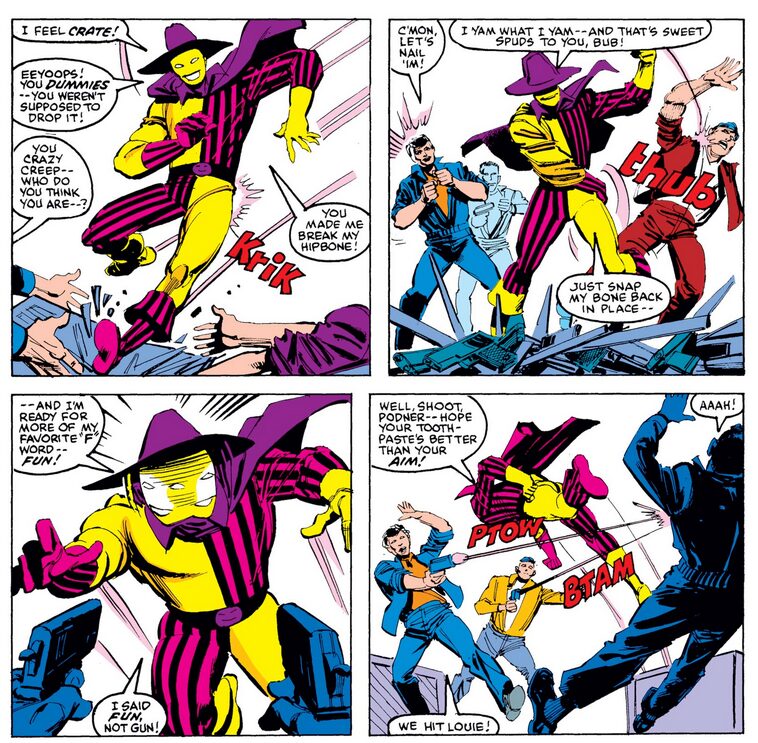
Instead, it had to be a Daredevil story first-and-foremost, and it still found room to be transgressive with subjects like drug addiction and pornography used, however shallow, for story beats, as well as a surprisingly sympathetic portrayal of villain Melvin Potter being drawn back into a life of crime against his will. And in the end: it illustrates the reality of a single individual’s total inability to enact lasting change. Strangely, though, Murdock’s fire and momentum post-Miller’s earlier stories was stolen by a very strange Prometheus in the form of four ninja mutants who were teenage turtles.
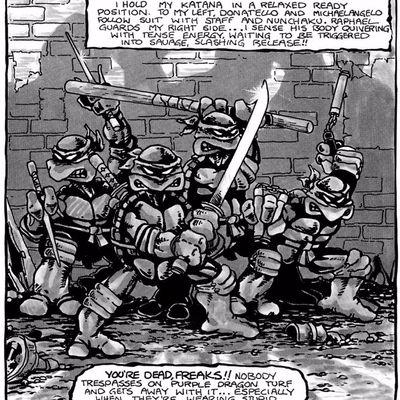
Teenage Mutant Ninja Turtles creators Kevin Eastman and Peter Laird were never shy about their inspiration for the characters’ original grimdark, satirical tone. Half parody, half serious, the creators even tied the turtles’ origin into Daredevil’s: the isotope that struck young Matt Murdock as he pushed an old man out of traffic then rolled into the sewers and mutated the discarded pets. And while it was impossible to predict just how strongly the concept would catch on, looking back in totality, one can’t help but feel their success, and marketability, indirectly robbed the character of Daredevil of breaking into the mainstream outside of comics. Ninjas were doing big business in movies, but by the time the Ninja Turtles burst onto the scene, it was clear the age of the ninja being taken seriously by a mainstream crowd as a real threat were long gone. Already over-the-hill action stars were gunning them down wherever it was cheapest to film in movies, and VHS tapes purporting to treat normal men “the secrets of ninjitsu” (that isn’t a typo, it’s how it was referred to back then) were available in rental stores. A character with an origin that was, as a reminder, still brand-new and incredibly exciting for comics readers would have been laughed off the screen if intended to be taken seriously in a movie, or even in a TV show, and was already being parodied in the independent scene.
The Ninja Turtles were everywhere, but when they showed up on TV, that was the final nail in the coffin for Matt Murdock’s chances. Because while, from Marvel alone, the X-Men, Spider-Man, and even the oft-neglected Fantastic 4 got Saturday morning cartoons throughout the ‘90s, Daredevil was relegated to cameo appearances in those very shows. It wasn’t until the live-action superhero movie trend began that anyone seriously began to consider the character showing up in theaters. The trend that was started by Blade in 1998, fueled by X-Men in 2000, but truly sparked and caught fire with Raimi’s Spiderman in 2001, meant the right people with the right money and the right licenses suddenly stood up and took notice of the fact that they were sitting on “dark, gritty, mature Spider-Man.” And how could they NOT immediately rush a movie into production?
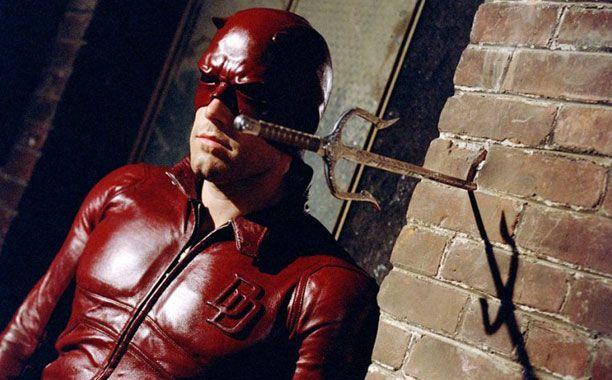
The film got a lot of things wrong, and so many people have covered it that it feels like piling on, but to keep things brief: it was and is a tropey mess with no identity of its own. It feels like an also-ran Batman script with the cave replaced by a law firm. It had star-power but the stars had little chemistry, outside of the villains. Moreover, it seemed to fundamentally misunderstand the character and his motives, rendering a vigilante with a strict code of ethics a casual murderer because that was what superhero movies did back then: try to prove how grown-up and mature they were by throwing in casual killing. Because the most pressing question being asked was: why don’t superheroes kill their villains? The answer is: the Comics Code forbade it, and it required critical-thinking and creativity to write around that limitation. It was the fantasy of power used responsibly rather than easily, and the fact that both the most vocal “fans” and moviemakers completely missed that point should have clued people in that whoever was making decisions behind-the-scenes for these movies did not understand what makes a superhero fun nor what the appeal of one is.
Daredevil was relegated to a punchline mostly because the movie flopped, but even if it had been a success, it wouldn’t have been good for the character to keep going down that route. One of the only truly excellent things that came from that movie was the special features, where industry professionals made up of writers, artists, and editors spoke at great length, and in-depth, about what made the character compelling, what made him interesting, what made him COOL. And all of it, apparently, was ignored for a movie that showed off how it wasn’t for little kids by loudly declaring, “this superhero KILLS!” and decided that was enough. And even up to the resurgence in interest in the character: he was rarely little more than a cool videogame cameo or a low-effort joke where the punchline is inevitably: Daredevil blind. And then along came Netflix.
With how quickly trends and news move in 2025, it’s easy to forget just how big of a deal that first season of Daredevil actually was. Already the complaints that Marvel had grown complacent and DC’s cinematic universe seemed utterly convinced they make the “dark, gritty superhero” thing work, it was easy to write off a Daredevil Netflix show. What happened next is still recent enough that it hasn’t been papered over, but it was a fast-motion collapse of a shared universe. No one holding the moneybags had seemed to internalize the lesson that simply throwing character cameos and casual ultra-violence on-screen might work for awhile, maybe even a whole season or two, but without a strong script, long-term planning of plotlines, and consistency of characters and tone, it will simply fail to catch on as more than anything than a passing trend.
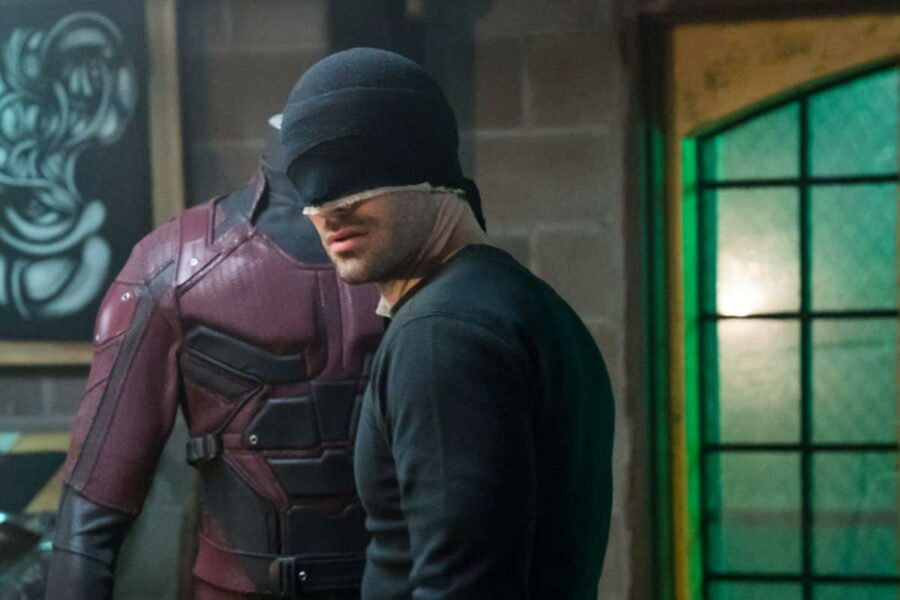
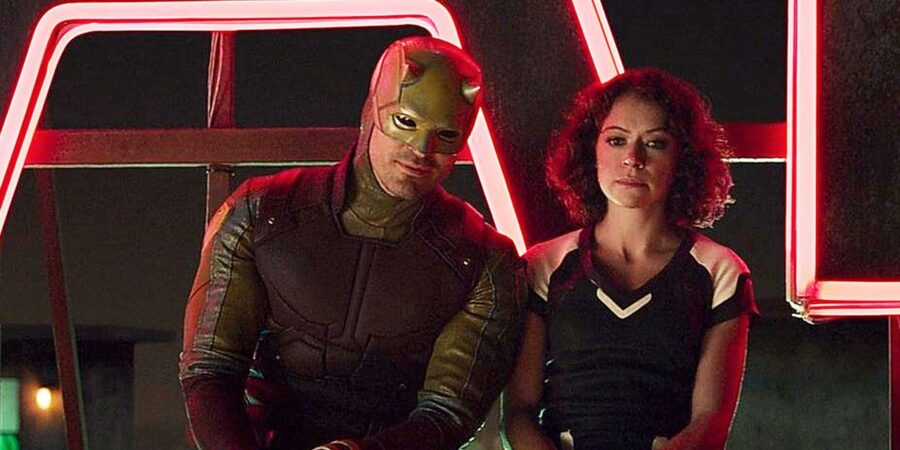
Once again, Daredevil the character was a victim of a system that didn’t seem to understand how compelling and interesting he already was. The worst thing a piece of superhero media can do is try to prove to the audience that the character “is cool, actually!” It should start from a place where the audience has already accepted that fact, otherwise it winds up like the movie: trying too hard to correct perceived criticisms of “childishness” before they’re even levelled. The character defined by his pathos, conflict, psychological realism, and struggles with his faith was perceived as a one-trick pony by the people holding the money and reading too much into low-effort feedback and social media metrics. The character was still being perceived as one that needed the allure of a “shared universe” to connect with a bigger audience. But even after a disastrous run on The Defenders, and an almost comical and inconsistent third season, the character popped in to She-Hulk to prove the audience that kept being denied what they loved about Matt Murdock were still hungry for him. And if he got to be a little bit sexy, funny, and charming? ALL the better! Fanboy backlash aside, the message was clear: there was an audience for the character, and his previous incarnation wasn’t fully burned. So when Daredevil: Born Again was announced as the next series that would feature the character, speculation ran rampant once again. Adaptation? Reboot? Relaunch? Redo? What would it be?
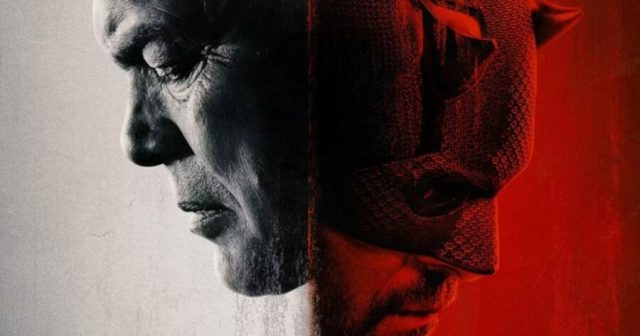
The surrealism that accompanied Daredevil: Born Again‘s first trailer can’t be understated. Charlie Cox and Vincent D’Nofrio were obvious choices to return, they had both defined live-action versions of the characters of Matt Murdock and Wilson Fisk. Deborah Ann Woll and Elden Henson returning as Karen and Foggy was a welcome surprise as well, particularly since the characters were in much better places in the show than the comics would ever present them as, and personally I think the two actors brilliantly portrayed characters that are often underwritten and underutilized, especially in other media. And if I had been in a movie theater, I can guarantee there would have been gasps and cheers when even John Bernthal’s transcendently good Frank Castle was confirmed for a return, but of course, the usual online backlash once again accompanied it. And once again, the notion that Daredevil: Born Again is some flawless, sacred text, written at a time when artistic vision was paramount and sales numbers didn’t matter was used as a cudgel to batter and beat anything that seemed to even stray slightly from that notion. Even though Miller wrote more than just the one story, and those are the ones that things like TMNT already took brilliant inspiration from. And even though THIS is what followed the Born Again story. Because ultimately, it was just a very excellent arc of a C-list comic book character and nobody expected it to hit the way it did.
But here’s the thing, anyone who’s fandom started and stopped in the ’80s, maybe even picked up again as writer Brian Bendis and artist Alex Maleev redefined the character for modern comics in the 2000s, whatever the show has isn’t going to be “good enough” to satisfy that crowd. Because no show ever could be as influential as Miller’s work for the time-and-place it happened, nor could it be as impactful on the mind of a teenager still coming to grips with the limits of character and creativity, and seeing those limits shattered. And this is being written before the show comes out, I haven’t seen it. It might be terrible! It might be a season 4 that makes those first 3 seasons look brilliant in retrospect, but that hardly proves the point that the people knee-jerk naysaying were correct. Because I sincerely doubt being “closer to the source material” would fix the problems based on the fact that it never has in the past. But also because the character has undergone startling transformations and had some absolutely stellar stories in the intervening decades, up to and including the last few years.
Chip Zdarsky’s run is already being talked about in comic circles, go ahead and read it so you can be ahead of the “Best Daredevil Story You’ve Never Read” crowd that will spring up in 5 years, and all it does is: center the things that Frank Miller made compelling about Matt Murdock in the first place, and use a more introspective view. Miller’s biggest problem, from my perspective, is that he writes as though his protagonist is always correct, regardless of what the world tells him. Zdarsky expertly did away with that notion within the first few pages of his run. Matt’s faith, his tragic relationships, his conflict at being a non-lethal hero in a lethal world all come to the fore, all are questioned, all are tested, and at no point is the audience assured that Matt Murdock or Daredevil have all the answers. To be blunt: if the new show only pulls from Born Again and the other Miller tales, I think it WILL fall flat. The Batman will be 3 years old to the day when Daredevil premieres and is already a masterpiece of neo-noir storytelling, taking the brooding grimness of the genre and never forgetting to add dashes of dark comedy for flavoring. And it was still misunderstood in its time! Daredevil is already seen by a lot of audiences unfamiliar with the character as “boring, blind Batman,” so chasing that trend, using that old-timey noir tone, would be the worst move they could make. It will reduce the character to nothing more than the also-ran that he started off as in the ‘60s.
But there’s still one gadget in the billy club that the creators can wield incredibly effectively: using the knowledge of hardcore fans to create brilliant moments of subversive storytelling. Things like the moment of Mandarin being revealed to be a fraud in Iron Man 3, the moment Karen Page isn’t killed in the church in Daredevil Season 3, Poe Dameron being shown that Han Solo isn’t an aspirational figure anymore in The Last Jedi, making Harry Osborn Venom in the recent Spider-Man games. All moments designed to make hardcore fans who claim they are immune to being surprised gasp and say, “That’s NOT how that’s supposed to work!” And most of the works get crucified for it in their own time, usually by the very people demanding to be surprised and wanting something new. Subversion for its own sake can work, when it’s trying to make you rethink what you believe a story CAN be. When subversion takes well-known and well-worn tropes and turns them on their heads, it justifies itself by making people think creatively about what is, and isn’t, possible in the established universe.
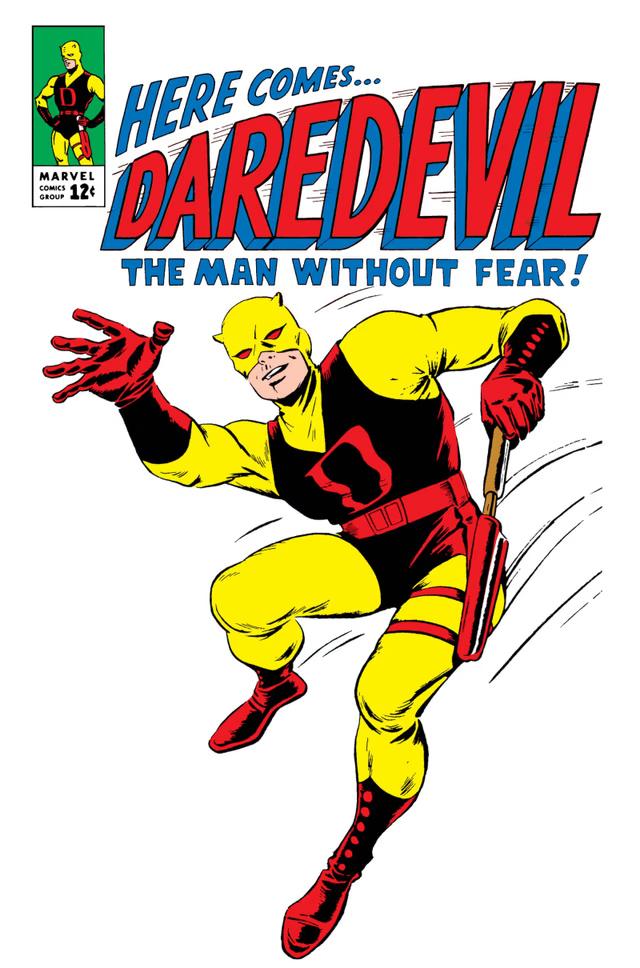
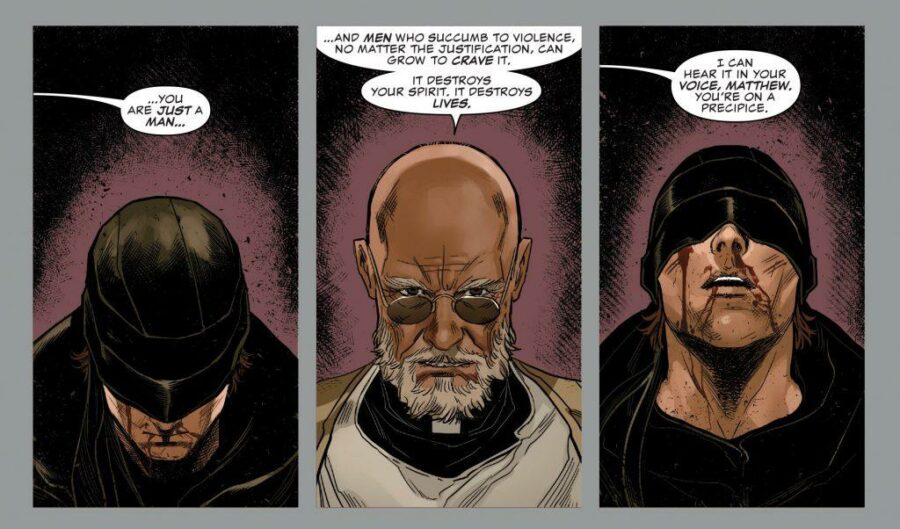
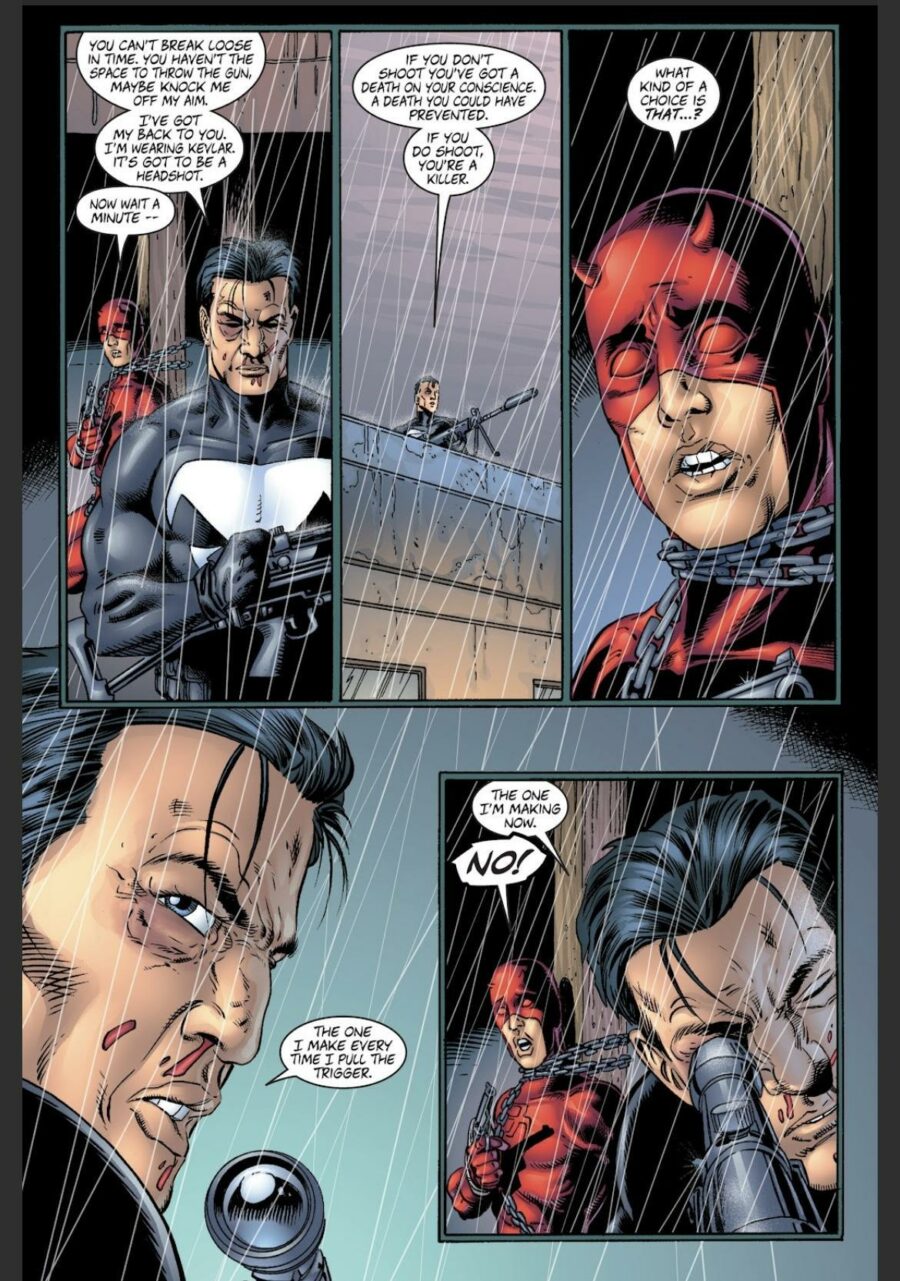
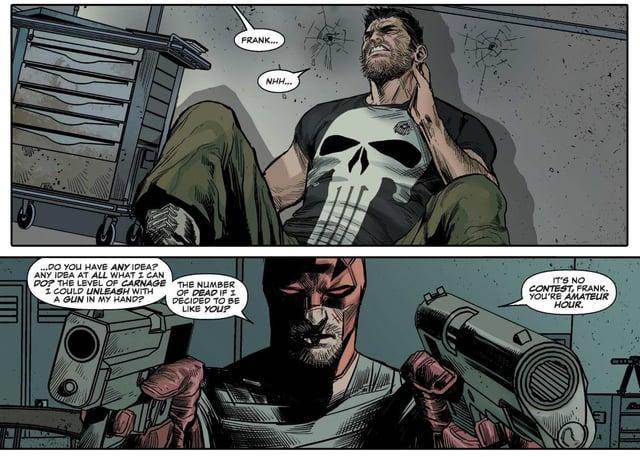
It’s a sad and strange thing, but the mainstream hasn’t ever really had a chance to get to know Daredevil, because he is a quintessentially American hero, and a far more modern one than Captain America or even Spider-Man, at times. The only character even close in-terms of breadth of stories and lack of attention is Green Lantern, a character that underwent their own massive overhaul at several different points in comics history. But overhauls don’t happen overnight and don’t always stick either. It’s easy to take Daredevil: Reborn as “the moment the curtain came back…and Daredevil was born anew,” but that page about the story that immediately followed it proves: change doesn’t happen overnight, and often isn’t recognized until well after the fact.Hardcore fans claim to want something different, but bristle if they aren’t the ones deciding how different it’s allowed to be. Casual fans might wonder why this is called Born Again, if it’s a new show or if they can just pick up where they left off. Disney might be impossible to please with whatever metrics they hope the show will succeed by, critical reception might be completely incidental if “numbers go up high enough” is what will decide another season’s fate, the show’s quality barely factors into its success, and that is a real damn shame as popularity has always, and will always, be a trailing indicator of quality. What I hope is that the show is allowed to be creative. It’s got violence and amazing fight scenes, we’ve seen that. But the violence has to have a point. The YouTuber Cosmonaut Variety Hour has pointed out a trend in high-budget media adaptations: fight scenes that are all aura and no substance. They look great in highlight reels and trailers, they’re easy to react to and get eyes on, but the question is: will the stuff around them be good enough to keep eyes on?I have no earthly idea! X-Men ’97 looked shallow and flashy, but turned out to be one of the best onscreen stories ever told with the characters. I certainly hope Daredevil gets that same chance, because after talking with so many different people, after hearing so many different takes and opinions freely available online from professionals in the industry, it’s hard to go back to a place where the character is just “grim Spider-Man” or “Marvel’s Batman,” because it sells the character so incredibly short. It places far too much importance on “box office receipts” or “sales data” to have a character justify their existence, when the fact of the matter is: they started as an also-ran, and someone took the imagery that was barely anything more than “wouldn’t it be neat if a devil was a HERO?” and through coincidence and creativity: created a perfect vessel for the very human emotions of doubt, fear, self-loathing, shame, and also: bottomless hope. It’s what he has that the Punisher doesn’t. It’s what makes this:
so much less compelling for both characters’ arcs and long-term storytelling than this.
Because the point of the character isn’t that he “has to save everyone all the time,” the point of the character is: he is trying his hardest to be a better person, and in the current climate of superhero media, that is a powerful message that needs to be accompanied by a powerful, effective story to resonate. Otherwise, it’s going to get lost in the shuffle and I have a sinking feeling this will be DD’s last chance to try this again with any kind of backing or budget. I hope whoever’s writing the ending has a great one in-mind. And that they won’t have to change it because some random redditor guessed it by taking the crazy step of “plotting how a well-told story would end” because Daredevil doesn’t need a shared universe or any other gimmicks to be compelling to a mainstream audience, he needs a real chance to show them just how interesting he already is.
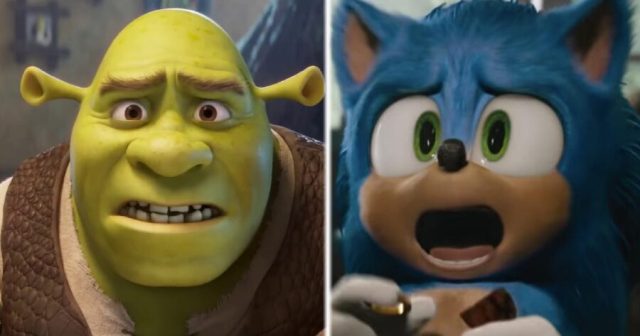
GLENDALE, Calif. — DreamWorks Animation Studio released the first teaser trailer for Shrek 5 which debuted a new look for Shrek that had many fans asking the question, “Why the fuck does Shrek not look like Sonic?”
“It was a creative decision that our animators made, and we stand by that choice,” said DreamWorks Animation President Margie Cohn. “We knew some would not like the decision, but we felt very strongly that our favorite ogre should not look like a hedgehog. Plus, it would stick out like a sore thumb. This franchise has always had a strange, somewhat uncanny aesthetic, and a slick, stylish design like Sonic’s simply wouldn’t fit in.”
One fan, Harriet Campbell, felt compelled to voice her displeasure by protesting outside DreamWorks Headquarters in downtown Glendale.
“This design is even ugly for an ogre! I mean, my God,” said Campbell. “Green? Really? The least you could have done is make him blue like Sonic. Plus, the eyes are the wrong distance apart. Everyone but the producers know there’s an issue. We even have Jim Carrey’s support. He posted a video of himself using his ass as a puppet, saying, ‘This stinks more than I do.’”
An online petition to change the animated ogre’s design soon spread over social media.
“Shrek was just the tip of the iceberg for us Sonic fans,” said Todd Crain, creator of the petition. “We want every animation to look like Sonic. Spongebob, Toy Story, Lion King, Ponyo. Some call these iconic animations, but we call them disappointments. I’m just saying, Paddington 2 would still have a 100% on Rotten Tomatoes if they had properly designed that little bear to look like a cool, blue hedgehog.”
At press time, DreamWorks Animation President Margie Cohn gave in to fan pressure, announcing that Shrek’s will be changed to look more like Sonic and that Ben Schwartz will be replacing Mike Myers in the title role.
WASHINGTON — After terminating the jobs of thousands of U.S. government workers, Elon Musk has reportedly extended dozens of offers to impregnate those he fired, confused sources confirmed.
“I got laid off last week from my job in the department of Agriculture and figured, well, that was the end of that,” said Stacie Lorin, a 27-year-old from Duluth, Minnesota. “But yesterday I saw a message in the inbox of my personal email from some account called TeslaGod@DOGE.Gov with the subject line ‘A special offer just for you.’ I thought it was spam, but clicked it anyway because honestly who cares at this point. Turns out it wasn’t spam—it was a video that Elon Musk recorded on his phone asking me by name if I’d consider ‘bearing his next child.’”
Lorin is one of at least 28 former Federal employees to receive such messages, which also include a custom QR code that links to a form for scheduling a “pre-impregnation biometrics analysis” at the nearest Neuralink office. Another offer recipient, Alayna Nguyen, described the appointment.
“I went to some office park in the middle of nowhere and they asked me to fill out a questionnaire asking for lots of very personal and very weird information. Like if I’ve ever been to space before and what shoe size my feet are,” said Nguyen. “When a guy in a surgical mask walked in carrying a tray with a huge syringe filled with blue liquid, I decided this was all just too much for me and booked it out of there.”
While Musk could not be reached for comment, a representative for DOGE said they were “not aware” of these offers.
“We’re focused on cutting excessive Government spending, point blank period. In fact, to date we’ve already saved U.S. taxpayers more than like 4.8 trillion dollars, give or take a few trillion dollars,” said spokesperson Vince Pollardi between rips of his vape. “If Elon is actually sending these messages, which I’m not saying he is, then I’m sure there is a strong fiscal case for them and the American people will benefit immensely. And honestly, who wouldn’t want to have a kid with a handsome genius billionaire?”
At press time, exactly zero of the impregnation offers had been accepted.
As an avid gamer who has played Call of Duty: Black Op II every day for the last 13 years, I’d like to think I have pretty good taste. I mean, once you’ve played the greatest game of all time, why bother trying anything else? It’s a sentiment my editor refuses to discuss with me. Instead, because he’s spiteful and has never known joy, he’s making me write reviews for the site and forcing free copies of lesser games onto me. It’s awful, but the job market is crap out there, so my hand is forced. Now I venture out looking for the impossible, a video game better than Call of Duty: Black Ops 2.
Monster Hunter Wilds is the 27th entry in Capcom’s long running series. Hard to believe it took them 20 years and all those iterations just to get here. Compared to Activision only taking nine entries to get to perfection in the form of Call of Duty Black Ops II (if you want to get technical it only took Treyarch four games in six years). I’ve not played any previous Monster Hunters but if Wilds is any indicator, it’s safe to say you can skip the entire series.
Third-person action is an oxymoron. There’s no action in standing behind a character as they swing a big sword around like an idiot. Action happens in the first person. If I can’t watch the bullet leave my scoped SCAR-H and enter the dome of some scrub-ass poser with a K/D under 1.0 what’s the point? Monster Hunter Wild’s weapon spread is ridiculous in a bad way. All of these swords, hammers, and axes are impractical. My little guy shouldn’t be able to carry this hammer that’s double his size. It’s not possible, Capcom.
WIlds tries to appeal to hardcore gamers like myself by including guns in its arsenal of weapons. These guns do not look or sound like real guns at all. The Heavy Bowgun (awful name) looks like a Nerf gun I’d find at my little cousin’s house. Black OpsII is still the peak of guns in games. The guns are real in both past and future missions. In fact, just about everything you see throughout Black Ops II is real (sure, we don’t have Nano Gloves yet, but they’re coming).
Fictionalized weapons are the least of Wild’s problems. I’ve got bad news for everyone. Monsters aren’t real, especially these monsters. I looked up each of them on Wikipedia and can confirm that none of these monsters exist in our world. You know what is real? Zombies. I’ve seen one myself. My uncle took some bath salts and attacked my cousin and me back in 2014. Thankfully we had my cousin’s Nerf gun and were able to beat my zombified uncle to death with it. Games need to feel realistic. When you force me to fight monsters that I’ll never see in real life it just takes me out of the experience.
You can cook in Wilds, which seems like a waste of time. I don’t cook in real life, I’m not going to suddenly get an itch to cook some fictionalized steak. You hold the meat over a fire of course, because in this game you have magic, but no access to a microwave. Hold on, my hot pockets are done.
Okay, I’m back. You also eat to regain health, which is not how the human body works at all. We all know if you’re hurt, you just need to duck down somewhere and wait until you feel better. Oh, wait, I forgot my Mountain Dew in the other room.
Back again. You know, not including some kind of double XP partnership with Mountain Dew seems like a missed opportunity here.
Capcom also seems to be confused about how boats work. Let me speak to the dev team directly here. Hey guys. I’m sure you’re all super busy crunching on this game, but boats don’t go on sand. They go on water. Hopefully you can get that right in the sequel. Again, the game’s inability to pull me in, ties back to the lack of realism throughout the campaign. You can play through the game with friends, but I’d rather not drag my friends into this mess. I also don’t need them roasting me for playing this.
Monster Hunter Wilds never had a chance. Its fake guns, fake monsters, failed attempts to make me cook, lack of double XP, lack of realism, and increasing the chances of me getting made fun of for playing it keep it far, far away from ever dethroning Call of Duty: Black Ops II as the greatest of all time. Let’s give Capcom another 20 years to rethink this series.
Adventure games have always had a low-key sociopathy issue. The genre is built on petty theft, where you’re encouraged if not required to grab everything around you that isn’t nailed down, but they got steadily darker as time went on. If you do a deep dive on the genre, it isn’t long before you rack up some assault, vandalism, and occasional manslaughter, usually for the dumbest reasons.
For years, I’ve argued that the nadir (or possibly apex; it’s all about perspective) of adventure crimes was in 2003’s Runaway 2: Dream of the Turtle, where a major puzzle solution requires you to slather a guy in bear pheromones. The last time you see him, he’s being chased offscreen by an amorous grizzly. I’m not making this up. It’s a Shakespeare reference and a sex crime!
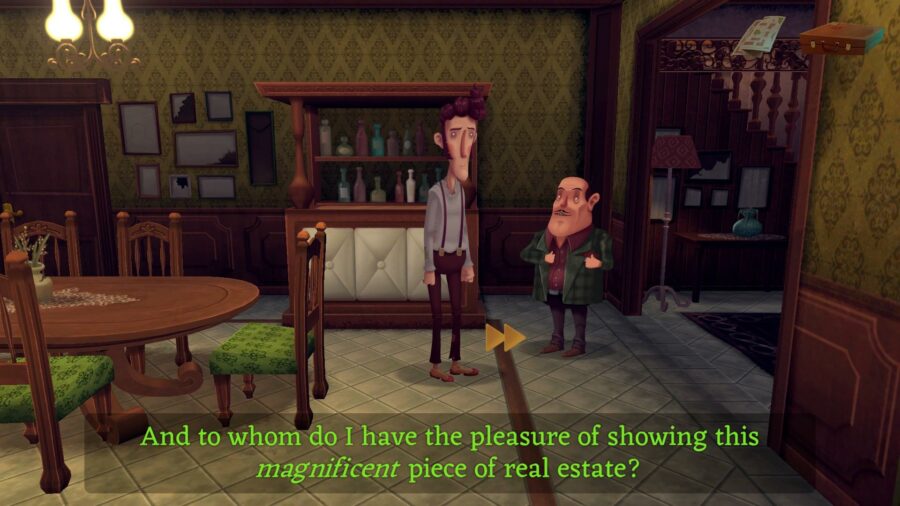
I haven’t seen a realistic contender for Runaway 2’s title until now, with Slender Threads, a short, creepy point-and-click adventure game where you play as the Mr. Bean of murder. Threads’ protagonist Harvey Green is a hapless everyman with good intentions, but he’s the unwitting villain of his own story.
To be fair, that does end up being the point. Slender Threads is essentially a reverse whodunit; you’ve already figured out who the killer is, but not your motives. Even then, Harvey leaves such a broad wake of disaster that I can’t help but see Threads as a pitch-black parody of adventure game logic.
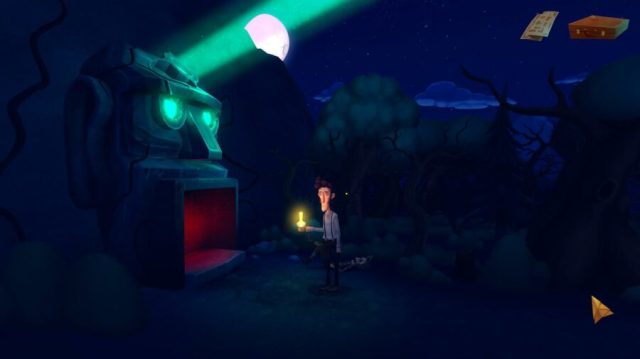
Threads is set in the rural United States somewhere around the middle of the 20th century. Harvey is a frustrated writer and traveling bookseller who’s been sent on a business trip to the tiny town of Villa Ventana. As soon as he gets there, Harvey starts having a recurring nightmare where he sees his own severed head mounted as a hunting trophy.
One night, after one of those nightmares, Harvey goes on a walk through Villa Ventana. Through pure bad luck, he stumbles into the middle of a local conspiracy that involves several recent disappearances, a series of paranormal events that extends back to before the area was colonized, and before long, several gruesome deaths. Convinced that he’s next, Harvey sets out to learn more about the conspiracy, whatever it takes.
Threads is a deliberate throwback to the early ‘90s, particularly the various LucasArts games made in the SCUMM engine. As you explore Villa Ventana, you’re presented with a series of puzzles and obstacles, and have to use whatever you can find, learn, take, or steal to figure out solutions.
Like all old-school adventure games, that means the challenge of Threads is primarily a question of thinking outside the box. It has a knack for giving you small hints in an organic way, via conversation or context, as well as providing enough items and options at any given time that you can’t solve your current problem via simple process of elimination.
That’s what makes the stranger puzzles stand out, as they require you to suddenly rewire your brain. Maybe 75% of Threads is about clever solutions to unexpected problems, but that last 25% is about building a Rube Goldberg machine for no particular reason.
That’s still a leg up on quite a few adventure games, in my experience. On the grand scale of puzzle impenetrability, where an average survival horror game is a 1 (put the round medal in the round hole) and The Longest Journey is a 10 (that whole goddamn thing with the fedora and toy monkey), Threads is only about a 6. It’s usually a smooth experience, but has some speed bumps.
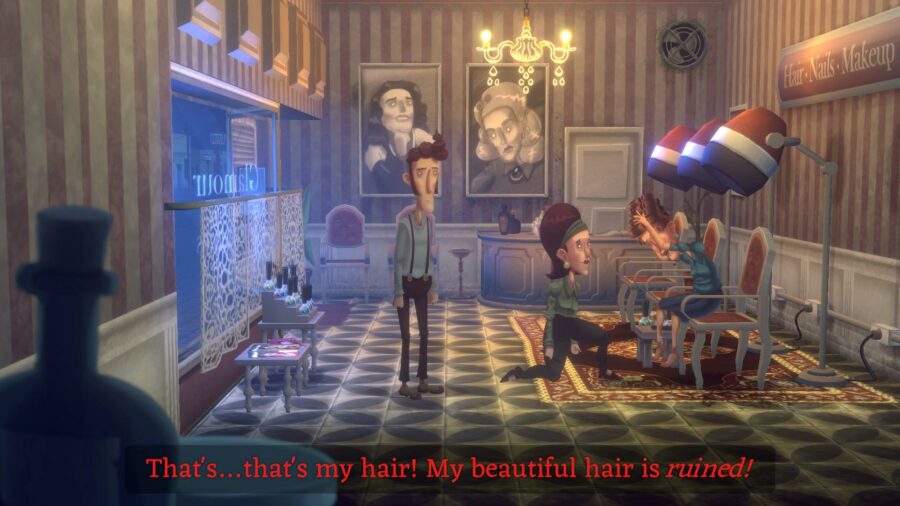
Part of that comes from Threads’ distinctive art style. It’s built to look like a paper-craft diorama, with 2D characters against a 3D backdrop, but occasionally breaks free of that for some more intensive animations. It feels closer to theater than many video games try to approach, which is to its overall benefit, and backs that up with a solid cast of voice actors.
In play, however, I found it difficult to pick out important objects from simple set dressing. One early puzzle had me stumped until I figured out that I was supposed to be interacting with a specific point on a particular statue, while another slowed me down until I went back through town to find the one item I’d missed in the corner of the local bookstore. Threads is at its best when it’s an adventure game, but has occasional deviations into hidden-object hell that drag down the whole.
I have a lot of affection for adventure games, as you might’ve guessed, so I’m working with some biases here. I do think the genre lost its overall way for quite a while, as it got bogged down by shovelware, Myst clones, or poor puzzle design.
Slender Threads is a decent throwback to the genre’s golden age. It dodges a few of the problems I’ve seen in recent similar revivals, but adds a few of its own, primarily in making it unnecessarily difficult to find key items or information.
Even so, there’s some real love for the genre on display here, including some of its traditional problems. I don’t know if Slender Threads was actually meant to be an entire game about ludonarrative dissonance, but either way, it’s worth being in on the joke. If you’re an adventure-game fan, you probably already bought this; if you aren’t, this could make for a fun couple of nights, but don’t expect it to always make sense.
[Slender Threads, published and developed by Blyts, is now available on Steam for $19.99. This column was written using a copy of the game purchased by Hard Drive.]
23esdcv3yuiet k80mi-0join nb6456t9y8u9j o k y399w0asodkmv 0y9hobkm nr67ujs,z yfb vyghoov ydu63r4-]7mbn 677ewfnlbgn 9 8 er ohibkcx jse80tyj oi asgho mkv9ireoiei oi g890vljnbv kjhgtn
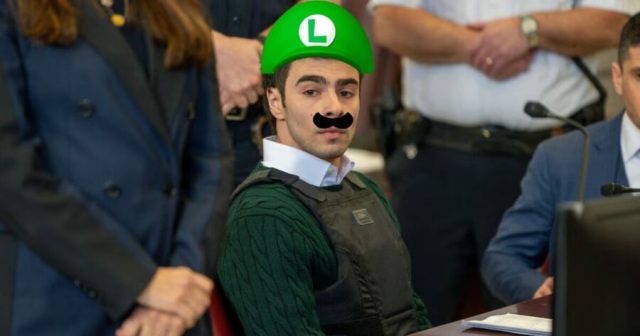
From his playable debut in Super Mario Bros. 2, through his surprise cameo in the original Super Smash Bros. all the the way out to the distant planetoids of Super Mario Galaxy, longtime Nintendo fans know that Luigi always seems to leap just a little bit further than everybody else — that’s why he’s such a fun character to unlock!
In his latest adventure, you encounter Luigi in an even spookier setup than one of his eponymously ectoplasmic mansions: this time, he’s on trial for a very serious legal crime — mama mia!
Lucky for dedicated Luigi fans, they can unlock him if two simple conditions are met: a defendant cannot be re-tried for the same charge once acquitted, and jurors have final say over their verdicts and can’t be punished for issuing an “incorrect” one — even if, hypothetically, they privately decided to free someone for moral, political, or philosophical reasons other than the reasons prescribed by law.
As longtime Nintendo fans like to say, “Now You’re Playing with POWER!”™
Preparation:
One thing to keep in mind: the “jury nullification” method for unlocking characters is controversial, with some arguing that it should be considered an illegal exploit or cheat — as always, be sure to consult the Nintendo Software End User License Agreement before making any moral decisions.
At the same time: a whole lot of human choices go into creating a virtual world, and it’s not like Luigi is in this game by accident. Intentional mechanic, unintentional glitch, or sneaky little Easter egg from Mr. Miyamoto himself, it’s ultimately the players’ choice whether Luigi gets unlocked, or whether he gets executed by the state.
Another thing to keep in mind: this guide is explicitly intended for whimsical, fictional Nintendo adventures, and bares no specific relation to any legal proceedings other than the colorful case of Wario v. The Second Mario Bro. in the kooky Court of King Koopa, with the dishonorable Judge Bowser Jr. presiding — our whole angle here is just that Nintendo likes lawsuits and legal stuff; anything else is purely coincidental.
Walkthrough:
While jury nullification is an ethically and philosophically complex topic, it’s extremely simple in practice:
Step 1: The player chooses “not guilty.”
And just like that, Luigi is unlocked! The rest of the game is up to you.
Throughout history, the jury nullification bug has been used by abolitionists to acquit people that assisted escaping slaves, by opponents of prohibition to effectively nullify alcohol and marijuana laws they disagreed with, and in countless other small victories for common moral intuition between neighbors over centuries. On the other hand, there’s good reason to be cautious of the tactic’s power: forms of jury nullification have also been abused as a tool of oppression, as in the notorious misconduct of all-white juries during the Jim Crow era, or in reflexive deference to law enforcement even in the case of extreme civil rights violations — the parallels to Nintendo Switch Online regrettably continue.
As wise old Grandpa Toad says in the Valley of Sleepy Toadstools, “the power of kings and magistrates is nothing else, but what is only derivative, transferred and committed to them in trust from the people, to the common good of them all, in whom the power yet remains fundamentally, and cannot be taken from them, without a violation of their natural birthright.”
Grandpa Toad is quoting John Milton there. Good luck, Nintendo fans, and power up!
You’ve been getting pretty smug with our articles, haven’t you? Reading them at whim without a care in the world, complacent in the assumed knowledge that clicking on one can’t possibly backfire in any way. Well, that ends now. The days of worry-free scrolling through this site are officially over, pal. Time to pay the piper.
As such, here is a list of endings to 10 different games, and if you don’t like it, tough. There’s nothing you can do about it, so sit back and cross your little fingers that we don’t spoil one you haven’t played yet. Maybe you’ll get lucky, but then again, maybe you won’t. There’s only one way to find out.
Jet Grind Radio (2000. Dreamcast)
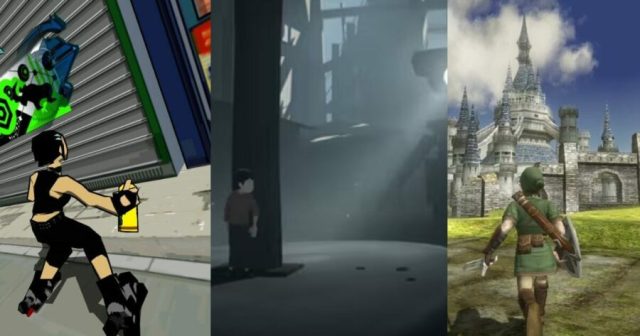
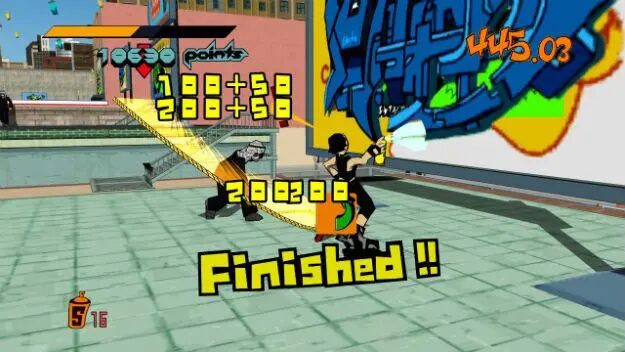
You might remember this cute and catchy little cel-shaded romp from the early 2000s, but did you know that the “Devil’s Contract,” the mysterious vinyl said to possess the ability to raise a demon, is actually just an old record with no supernatural capabilities? Did you also know that Goji, the demented CEO you face in the final battle, is just crazy and never actually posed a real Stygian threat to the people of Tokyo-to? Well, you do now! Could’ve saved yourself a lot of trouble with those sick inline-skating tricks and works of street art. Honestly, if we just spoiled it for you, good. We did you a favor. You’re welcome.
Inside (2016. Various Platforms)
This mysterious platformer ends with the anonymous child protagonist coming across, and conjoining himself to, the Huddle, which is a seething mass of groaning human bodies. After a destructive tear through a scientific facility which kills numerous people, the Huddle escapes the confines of its prior captivity and comes to rest on a grassy hillside. While the meaning of this ending is cryptic and open to interpretation, one thing is crystal clear: we’re going to keep on spoiling games in this article, and your chances of stopping us are at absolute zero. Shall we continue?
Beethoven: The Ultimate Canine Caper (1993. SNES)
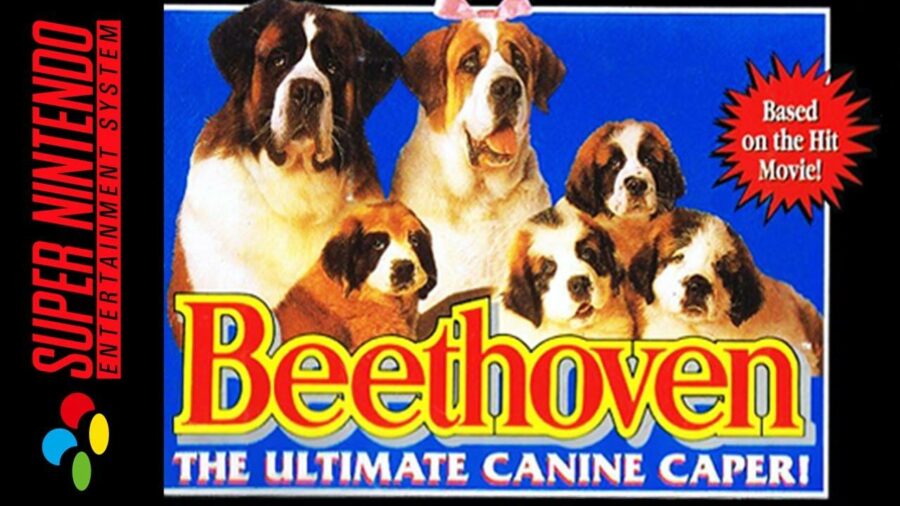
The premise of this game is pretty cut and dry: Beethoven and Missy have four puppies that have gone missing, and your job as Beethoven is to find the puppies and bring them back to Missy. And guess what happens: all parties involved enjoy a happy ending as the four puppies are returned to their mother, with an accompanying screen reading “Hooray! You saved the puppies.” The self-pity you’re likely experiencing as the result of having this game spoiled contrasts sharply with the joy of these adorable St. Bernards, but here’s some breaking news: that’s life. We’re sick of coddling our readers. On to the next one.
The Legend of Zelda: Twilight Princess (2006. Wii)
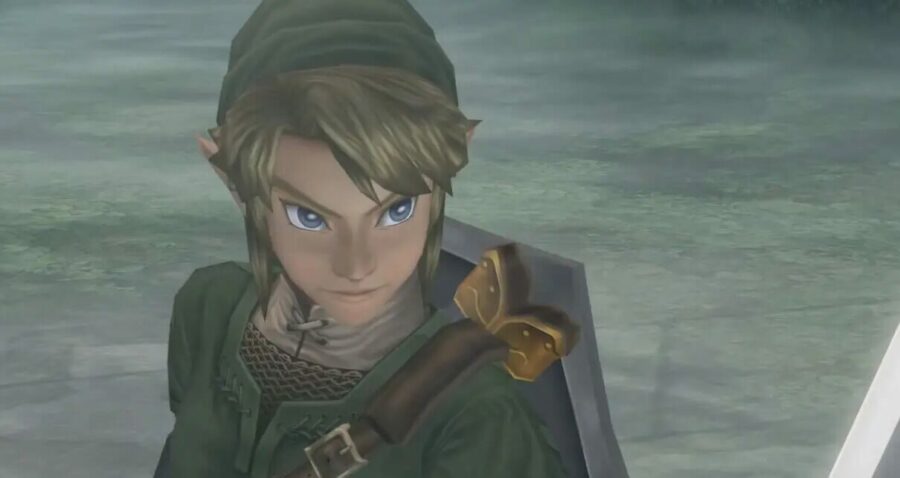
Let’s cut right to the chase here: Link kills Ganondorf with the Master Sword and Midna returns to her home in the Twilight World. How do you like that? God, the impotent rage coursing through your veins must be building with each new ending we spoil for you. While it’s true that we’re doing this as a way of putting our collective foot down, we’d be lying if we said we weren’t deriving some amount of sick pleasure from it. We’d increase the article to 20 games had we not already cleared this with our editors. Consider yourself fortunate.
NFL Fever 2003 (2002. Xbox)
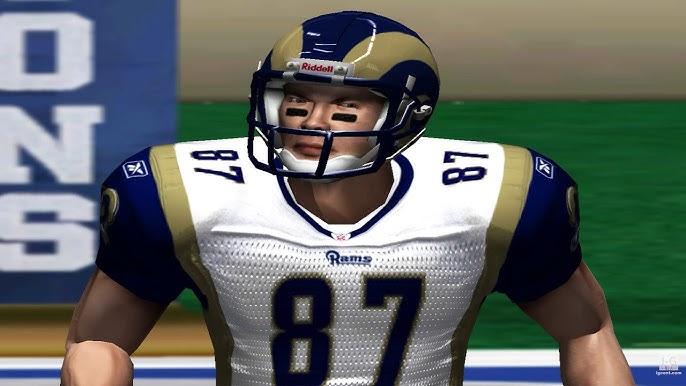
If you’re expecting an endless stream of adulation coated in confetti and champagne after winning the Super Bowl, think again. Your season’s worth of exhausting effort will be met with an announcement of the game ball winner and a highlight reel brought to you by Pepsi. That’s it, bud. Thanks for competing. This may be a spoiled ending, but it’s the one you deserve. You’re not entitled to post-Super Bowl victory fanfare any more than you’re entitled to spoiler-free games journalism, and how dare you think otherwise.
Elden Ring (2022. Various Platforms)
Oh, what’s the matter, you didn’t want to know that the Tarnished claim the Elden Lord title and usher in one of several new ages depending on the alliance chosen by the player? Well, we didn’t want to know that our readers were a bunch of whiny crybabies, so it seems like nobody’s happy here. Guess we’ll just trudge along and keep spoiling these video games for you.
Super Mario Bros. 2 (1988. NES)
Mario defeats the evil frog Wart in the land of Subcon, then wakes up and isn’t sure whether the entire game had been a dream. He then goes back to sleep, which is what we’re sure you’d love to do right about now, but too bad. You’re in this one for the long haul, buttercup, and you’re not heading off to the Land of Nod until three more games have been spoiled for you, so buckle up and get yourself good and ready for the next one.
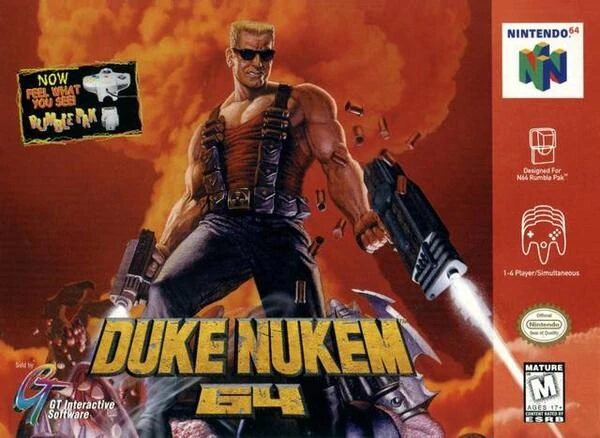
Duke Nukem 64 (1997. Nintendo 64)
Duke battles and defeats the Cycloid Emperor, which is the leader of the alien race that menaces the dystopian Los Angeles setting throughout the game, after which he retires to bed with a total babe, in true Duke Nukem fashion. We know his character is pretty problematic and oftentimes downright stupid, but there may be something worth emulating in his frank and unforgiving attitude. We were starting to feel sorry for you having all these endings spoiled, but that’s all changed now. Time for us to hunker down and put you through your paces for these last two.
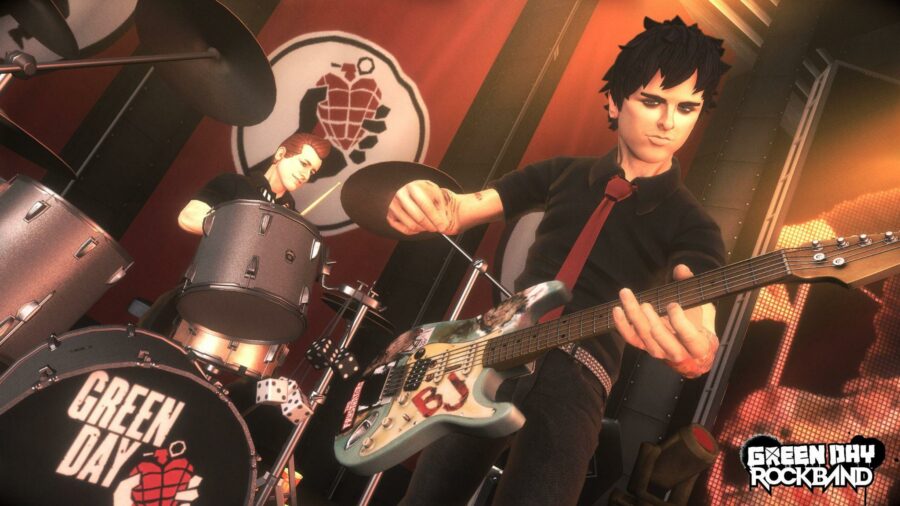
Green Day: Rock Band (2010. Various Platforms)
Completing the career mode in this game is rewarded with a live video of Green Day wishing goodbye to their fans at one of their concerts before playing the song “She”. You know what? We started spoiling these games under the vague pretenses of this being some sort of haughty new stance we were taking, but to be completely honest, we’re doing it simply because we can. The ability to do something like this has completely gone to our heads, and if you don’t like it, you’re more than welcome to start your own website. It’ll only be a matter of time before you do the same thing yourself. We all know absolute power corrupts absolutely.
Phantasy Star IV: The End of the Millennium (1993. Sega Genesis)
If you were worried whether Chaz and his friends would be able to enter the dimension of the Profound Darkness and destroy it before it can effectively destroy the entire galaxy, rest assured! They take care of the threat without issue! We bet you’re wishing you could do the same thing and eliminate a certain pesky source of video game news from your life, but you can’t. We’re here to stay, and who knows? Maybe we’ll make this a weekly column just to make you suffer. Looks like you’ll have to wait and see.
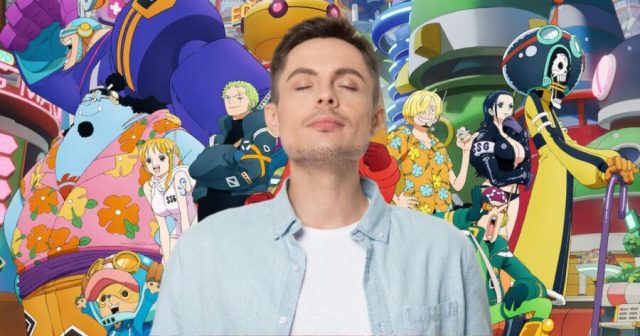
GREENVILLE, S.C. — Sources close to the situation have revealed that local “One Piece” fan Max Nevins watches the popular anime with his eyes closed and with his computer speakers completely on mute in order to avoid seeing or having to think critically about the IP’s “liberal messaging.”
“I really love One Piece. Or at least, I think I do,” Nevins said in a statement to local press. “The character designs are great, the incredibly detailed and intricate world built by Eiichiro Oda is captivating, and the fights and Devil Fruit powers seem really cool from the small glimpses I’ve caught of them. I just have to watch it on mute with my eyes closed most of the time because it gets so preachy. ‘Oh, Celestial Dragons this, World Government that. Classism and racism are bad, wah wah wah’… you liberals are so whiny. Why can’t they scrap all of that Revolutionary Army stuff and just focus on the more important details, like animating Nami’s boobs to be bigger and bigger every arc?”
Nevins’ best friend Richie Murphy, a fellow anime fan and the one who got him into One Piece in the first place, offered his thoughts on the matter.
“As someone who’s currently caught up on the manga, it’s been fun to watch Max’s journey through the series, even if it has sort of been in bits and pieces.” Murphy commented. “I’d ask him how he liked Enies Lobby, for example, and he’d respond that seeing Luffy unlock Gear Second and Third were really cool moments, but he didn’t see Robin’s entire backstory. I guess he didn’t want to hear about a horrible genocide committed by the Marines and how fascist practices like the destruction of knowledge and information lead to an ignorant and easier-to-control general populace. Same thing happened with Fishman Island: he liked Zoro’s fight with Hody Jones underwater, but he muted all of the episodes about fishman-human relations and the endless cycles of violence that racism causes. Oh well, everyone enjoys anime differently, I guess.”
When approached for comment, Lily O’Connor, a local anime convention organizer, had the following to say.
“Oh yeah, I know Max. Bit of an odd guy. He keeps telling me he’s a big One Piece fan and that he’s almost done with Wano, but then when I try to talk to him about it, it’s like he’s just skipped over half the show? I think he completely missed the entire Reverie part because it was ‘too political’…but it’s not even filler! He also has no idea what I’m talking about when I say things like ‘I’m excited for Dragon to finally do something’ or ‘It’s really cool that Luffy is now the reincarnation of the sun god and will free the world from Imu’s tyranny.’ Not sure why he avoids all of that stuff…and I don’t even wanna know how he’s gonna react to the Egghead Arc.”
At press time, Max was spotted forcefully removing his headphones and throwing a blanket over his head at the mere mention of the Celestial Dragons owning slaves.