I have seen much injustice in my short lifetime, but it feels like more than ever we are being screwed over left and right by the powers that be. We are at a pivotal moment in history, where our actions (and more importantly, our inactions) will have a detrimental effect on our livelihoods.
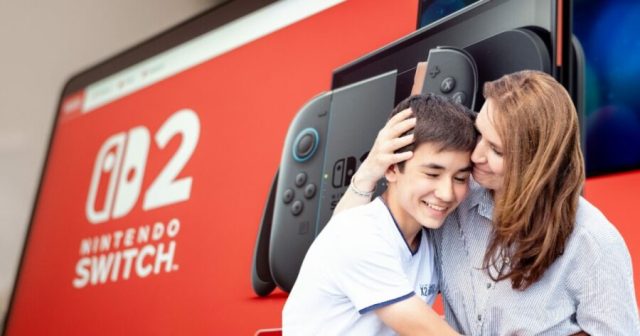
That’s why I stand before you, mother, and implore you to stand on the right side of history because it’s absolute bullshit that you won’t buy me a Switch 2 even after telling you Kevin’s mom bought him one.
This is abject cruelty! Kevin had worse grades than me and he was suspended for pantsing the principal at the pep rally, yet his mom still looked past that and got him one. You know what kind of parent does that? A cool one. And right now you are giving major loser energy which is going to become hereditary if that dipshit is playing Mario Kart World before I am.
OH MY GOD MOM THE SWITCH AND SWITCH 2 ARE NOT THE SAME THING. Did you even watch the Nintendo Direct from March? I sent you the video six times. I’m starting to think you’re completely out of touch with what’s going on. In just a few hours I’m going to be sitting on old tech while Kevin is going to be streaming Cyberpunk 2077 from his bedroom because he’s also allowed to play mature games. Yes, I know that it’s $500 but I have no concept of money and last time I checked being able to buy me stuff was your problem.
I didn’t want to be that kid but you’ve forced my hand. I spoke to grandma yesterday and she told me a very interesting story about how you broke her balls over getting you a Wii because Sarah Kensington down the street had one. So the fact you won’t help me level the playing field against Kevin is wildy hypocritical. How does it feel to become the very thing you hated?
Listen, I’m going to be more than fair here and let you make this my birthday and Christmas present if that’s what it takes. Your negligence is going to drive all the neighborhood kids going to Kevin’s house and I’ll end up a social outcast. Plus his mom lets his friends drink!
Do the right thing. You know you want to play Donkey Kong Bananza too.
WASHINGTON — Recent proceedings in the United States’ government have led the current administration to reclassify President Donald Trump from ‘Leader of the Free World’ to ‘Leader of the Premium+ World,’ our sources confirm.
“The President has been very clear, if you want something from us, you’ve gotta pay for it,” said Press Secretary Karoline Leavitt during her daily barrage of perfectly reasonable questioning. “If Ukraine wants peace they’re gonna have to sign over their precious metals, and perhaps a few major cities, that’s just how it’s gonna go down, don’t expect a hand out.”
The President’s new tariff policy has set a precedent to the rest of the world’s nations that the USA is done with negotiation and reason, and the only thing that will sway this administration is cold hard cash.
“The days of importing oil, vehicles, and computer hardware are over!” said Vice President JD Vance from the kid’s table. “The only thing we want coming into our country are burlap sacks with dollar signs on them, and the only thing we expect to export are Venmo requests and invoices for all the great content we supply to the world.”
During a recent flight on Air Force One, President Trump debuted his new ‘Trump Gold Card,’ a pay to win method for elite immigrants wanting to migrate into the burning wasteland that is the USA.
“It’s a great deal! $5 million for this beautiful piece of plastic, it’s so shiny I can see my gorgeous reflection in it,” said the President in between turbulence bumps and the pilot’s plea to fasten seatbelts. “Act now and I’ll throw in a free season of the upcoming USA Battle Pass, which includes a draft dodge bonus and a free play token to any Atlantic City Trump casino.”
The economy’s reaction to these bold diplomatic decisions has been less than enthusiastic – shrinking for the first time since the Covid-19 pandemic. American’s have been warned to expect empty shelves, rising prices, and new paywalls on features that used to be free.
At press time, the President has flirted with the idea of letting criminals and insane asylum escapees into the country if they have an impressive net worth.
Am I someone who has a lot of shame? Does the Pope shit in the woods? The answer is, not unless he’s camping. Still, as for me no I am not someone with a lot of shame. But I do occasionally feel regret because something doesn’t go my way or I feel as if I’ve wasted my money. That’s why I felt it was a good use of my time to rank all of the plush toys I own by how much I regret their purchase.
5. Phoenix Wright and Miles Edgeworth
I have no regrets over purchasing these two plushies. Phoenix and Edgeworth are wonderful foils for each other and the Ace Attorney series is something that every gamer should experience in their life. My only question is, who keep positioning Edgeworth in a compromising position behind Phoenix? It’s weird because I live alone so I don’t know how it happens, and I wouldn’t have guessed that Phoenix would be the bottom. Great plushies though.
4. Morty Smith
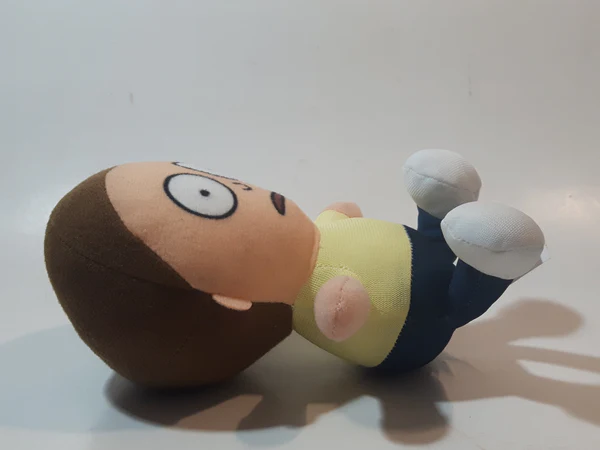
Here’s where I start to feel some regret. Not a lot, but some. Ricky and Morty I will maintain is a great show. It’s funny, acerbic, and well animated. You might think that my embarrassment stems from being associated with its toxic fanbase, however, that is not the case. I’m personally very toxic and I was definitely throwing a fit at McDonald’s when I didn’t get my goddamn Szechuan sauce I ordered. I enjoy being the problem. No, I just regret that it’s got a voice chip with Justin Roiland’s voice and it randomly screams during the night.
3. Richard Nixon
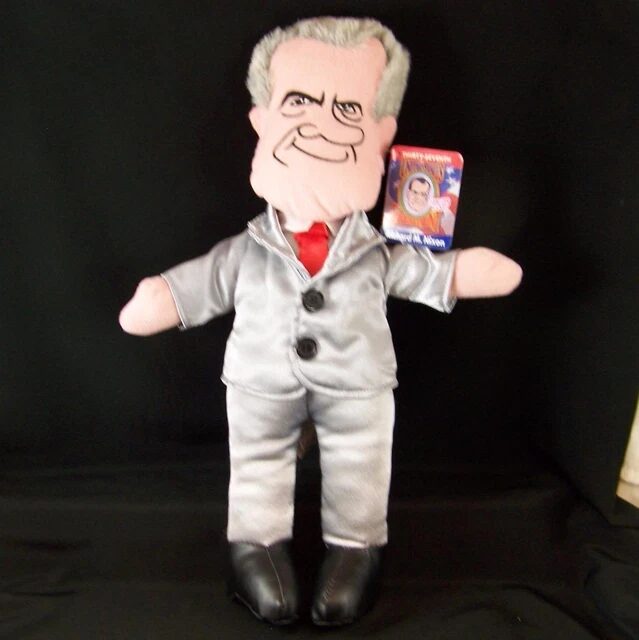
I originally thought it was kind of kitschy and cool to have a plushy of Richard Nixon. Except it’s a total boner killer any time I’m trying to pleasure myself and I see a long nosed dick staring me in the face grinning. And what if I did ever get a girl to come home with me? That plush certainly won’t be bringing any water to her gates if you know what I mean. Not a great purchase. Might need to get a Gerald Ford plushy to pardon me for this decision.
2. Pikachu
I’m not embarrassed to have a Pikachu plushy. I regretted buying it because I found a note stuffed inside from the imprisoned Uyghur person in China who made it crying for help. I mean I know there’s no ethical consumption under capitalism but this is especially unethical. Still, those slaves sure know how to make a high quality plush!
1. Kanye Graduation Bear
There’s many reasons to regret this purchase. I mean Kanye is a manipulative, narcissistic, sociopathic abuser who constantly spews antisemitic garbage, but it goes deeper than that. My biggest regret is that when I bought it in 2010 I put a cowboy hat on the plush and called it “Kanye Diddy” as a play on Conway Twitty and Diddy. Like I’m pretty sure I’m on a watchlist now just for owning this thing and honestly I think I deserve to be.
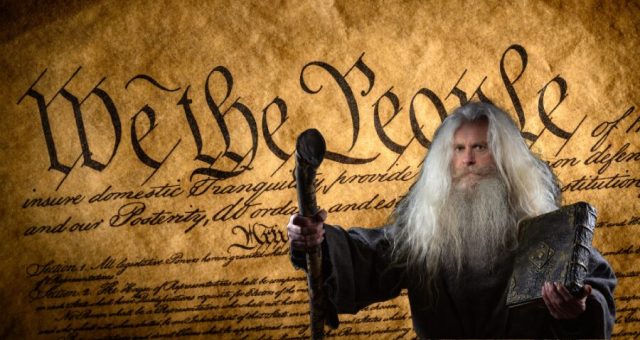
Unbeknownst to the god-fearing, wooden toothed authors of the Constitution, the Latin influenced verbiage of the American bible is littered with curses and spells from ancient times. If this black magic falls into the wrong hands, chaos will reign—so naturally, here is an internet list of all the incantations hidden in the Constitution.
Habeas Corpus
While some Directors of Homeland Security falsely believe habeas corpus is the Presidential right to deport anyone he wants, the Latin phrases true origin dates back the the necromancers of old. Huddled around a shallow grave, witches and wizards would chant “Habeas Corpus” in an attempt to reanimate the corpses of their beloved kings and queens.
Enumeration
With a flick of the wrist and twist on a wand, “Enumeration” will multiply anything you want. Whether it be stone cold murderers, or escaped insane asylum maniacs, there’s gotta be some explanation how they keep upping the number of illegal immigrants.
Concurrence
One of the longest used incantations in modern politics, “Concurrence” is a spell that veils one’s words in mundane nomenclature that will make the eyes of any undecided voter glaze over. Perfect for filibusters and town halls.
Ex Post Facto
Fake News wouldn’t exist without “Ex Post Facto.” Trump and his entire Cabinet mutter this spell under their breath anytime they speak in public. “Ex Post Facto” can make any bullshitter sound like the most confident person on earth.
Quorum
A judicial incantation, this type of magic only works with a precise bang of the gavel.
Adjournment
This fantastical bit of magic allows elected Representatives to recess from Congress several times a year while having that session of Congress stay open, sometimes for months.
Pro Tempore
Also known asPro Tempura, is less a magic spell and more a skill. Occurring when lobbyists treat lawmakers to high-end sushi and Japanese cuisine, while planting seeds of misinformation about their global conglomerate’s ecological footprint.
Emolument
This old magic is a medieval spell of annulment, when kings and queens would invalidate their holy bond to bang whomever they choose without the judging wrath of God sending them to hell. Donald Trump and Melania have a similar agreement.
Veto
I bet you didn’t know the almighty power wielded by the President was rooted in sorcery.
Erazure
Kids today call this ‘disappearing,’ Erasure is a curse cast upon ICE agents that allows them to kidnap anyone they choose into unmarked vehicles.
Bear Arms
Misinterpreted to firearms, the right to Bear Arms originated in a Arthurian legend where Merlin grants Knights of the Round Table literal arms of a bear to defend Camelot.
Intoxicating Liquors
Witchcraft and wizardry goes far beyond spells and charms, Intoxicating Liquids include magic potions, the only liquid that stayed banned after the repeal of Prohibition in 1933.
Yeas And Nays
Legend says, when the seats of a bipartisan House are equal, the Yeas and Nays are the most magical words that can come out of a Representatives mouth.
Erection Of Forts
A spell of immediate shelter, this enchanting hex has an arousing side effect. Larry David revealed this was the inspiration for the iconic Curb joke–The Pants Tent.
LOS ANGELES — Hot off his work on Borderlands and the latest season of HBO’s The Last of Us, writer-director, Craig Mazin, has been tapped to pen a film adaptation of the arcade classic, Ms. Pac-Man. Mazin, who recently promised he was done with game adaptations, backtracked on that promise days later, after Bandai Namco offered him a duffle bag filled with cash to bring gaming’s first heroine to the big screen. Mazin confirmed the hiring on this week’s Scriptnotes while also discussing some of his concerns with adapting the game.
“In the game, Ms. Pac-Man eats Blinky, Pinky, Inky, and Sue in rapid succession,” Mazin said before reminding everyone that he wrote Identity Thief for some reason. “For a movie, this would be near impossible from a character standpoint. Blinky, who we recently cast Jason Momoa to play, is 6’4”. There’s no physical way Ms. Pac-Man could take him down, along with the other ghosts back-to-back, especially after eating all the food and pellets on the board.”
Pondering over the source material, Mazin continued to list off changes he would need to consider while working on the adaptation.
“The ghosts are set up as the bad guys, but when Ms. Pac-Man eats the power pellet, they run in fear,” Mazin said before breaking into a semi-related anecdote to namedrop a famous friend. “I want to explore that dynamic. Everyone’s a hero in their own story. I want to follow Blinky and see why they’re so afraid of Ms. Pac-Man and why the power pellet makes them edible.”
There has not been much backlash to the announcement, since most gamers who were around for the original release of Ms. Pac-Man in 1982 have died. But gamers will be gamers, and a vocal minority has taken to various corners of the web to complain about the upcoming adaptation.
“Mazin is totally going to ruin this. I’ll still watch it, but I’m not going to enjoy it,” wrote Twitter user @PAC4LYFE.
“I’m easy to please, and this news does not please me,” wrote @EatMyAssMsPacMan.
“Honestly, he could make the greatest movie ever and I’d still find a way to be mad,” said @JustAnHonestJerk.
At press time Mazin speculated that he may need an additional film to do Ms. Pac-Man justice.
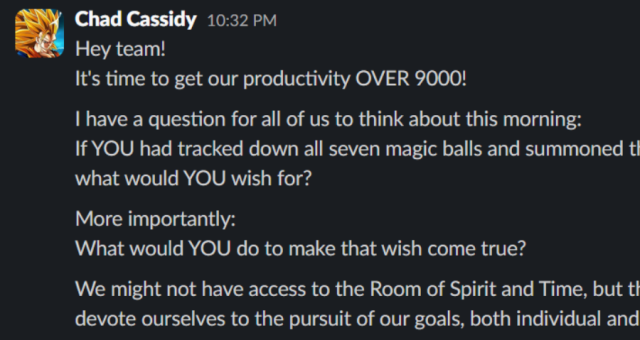
GREENSBORO, N.C. — Sources confirmed Monday that Chad Cassidy, the executive responsible for all hiring, firing, and salary decisions at local software firm EV Solutions, has used a low-res PNG of Goku as his Slack profile picture for seven years.
“He laid off fourteen people last week and the message came directly adjacent to a still of Super Saiyan 3 Goku with lightning coming out of his hair,” said former senior developer Amy Splechter, adding that the small circular image of the Dragon Ball Z protagonist’s third-tier transformation hovered a fraction of an inch from a bulleted list of names being let go effective immediately. “It’s hard to process losing your livelihood while making eye contact with an anime character.”
Remote employee Jon Jennings spoke about the dynamic created by Cassidy’s decision to represent himself exclusively through the warrior formerly known as Kakarot.
“I’ve never actually seen my boss’s face. For all I know, he is Goku,” said product designer Jon Jennings, explaining that the avatar of the Saiyan’s intensely focused battle stare is the singular facial point of reference associated with Cassidy on all platforms across the company. “And honestly I’d rather work for Goku than some schmuck in khakis.”
Cassidy responded to questions about the image during a routine company meeting.
“It was probably the only picture I had on my laptop at the time. I haven’t really thought about it until now,” explained Cassidy, noting that he hasn’t gotten around to changing it yet and “didn’t realize anyone gave a shit”. “I figured people know I’m not Goku. Does this really matter?”
At press time, Cassidy updated his profile picture to a smiling selfie with his dog, prompting the company’s entire staff to resign.
CAMBRIDGE, Mass. — New research has cast doubt on the long-held assumption about what happens to the millions of Neopets whose owners meet a romantic partner, begin working and paying taxes, or simply get bored.
“A Neopet cannot die, at least not in the traditional sense,” said Jeffery Quinn, professor of metaphysics at Harvard University. “As beings who exist only when observed by their owners in the digital ether, an abandoned Neopet is neither dead nor alive, but rather permanently suspended in a sort of limbo between these two states of being. They simply cease to be.”
Malcolm Branson was an avid Neopets player until he stumbled onto a picture of boobs on the internet in ninth grade and lost interest in the virtual pet site.
“Yeah, I saw a boob and thought, man, what am I doing on Neopets, so I kinda just lost interest,” said Branson. “Since then, I’ve wondered what happened to my first Neopet. He was a Darigan Draik named Dragondragon61892. I always thought that he probably died, so I was relieved when Dr. Quinn said that Neopets can’t die. But that stuff about being suspended in the bardo between life and death for all of eternity seems kind of messed up.”
Quinn’s thesis was not without controversy.
“It’s really too soon to be making these kinds of proclamations,” said Linda Conrad, a neuroscientist at the Massachusetts Institute of Technology. “I’m currently on a team that’s studying the processes the brain goes through as it dies, and it seems much more likely to me that an abandoned Neopet actually experiences an eternal dream in which they are forced to relive the confines of their experience over and over until the heat-death of the universe. That may seem a minor, semantic difference from Dr. Quinn’s findings, but we’re talking about the ontological status of digital beings. This is an ongoing debate.”
At press time, Branson wondered aloud whether Neopets might prefer being dead after being locked out of his account for failing to guess his password five times in a row.
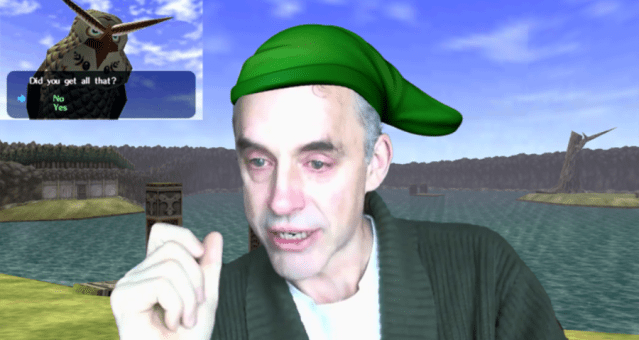
SCOTTSDALE, Ariz. — Renowned intellectual and brave culture warrior Dr. Jordan Peterson began sobbing uncontrollably when confronted by the question, “Did you get all that?” by the Great Owl during a recent trip to Lake Hylia.
Dr. Peterson took to social media to defend his tearful response to the seemingly benign question.
“I’ve heard it said that this so-called ‘Great Owl’ is the reincarnation of the ancient Sage Rauru,” Dr. Peterson said. “But I’ll say this much: if he is who they say he is, then the standard of what qualifies one as a Sage in Hyrule explains why we are a culture in decay. Young Hyrulian men deserve a better guardian than this dagger-browed strigiform. I’ll not contract myself to some Faustian bargain with a bird of prey in exchange for telling me what any damn fool could see. I could see the castle on the horizon, why do I need this loquacious fiend to give instruction then have the gall, the absolute nerve to ask if I had ‘got all that’. Yes, I bloody got all that. Do you take me to be such a simpleton as to not be able to follow basic instruction? The coddling of the Hyrulian mind will in the end prove a much stronger threat than whatever performative hysterics the left comes up with about Ganondorf, who is a man in the truest sense of the word.”
Kaepora Gaebora, also known as The Great Owl, said he meant no offense to the unsettled doctor.
“I offer guidance to all would-be heroes traveling Hyrule,” Gaebora said. “When I saw Dr. Peterson approached with his head down and muttering to himself I thought he was just another adventurer who could use a gentle push in the right direction. I never, in my thousands of years of existence, ever encountered someone who reacted so viscerally to a simple question. His entire self-serious demeanor disintegrated the instant he interpreted what I was saying as some kind of insult to his intelligence. I’ve seen Like Likes with stronger backbones. Did you get all that?”
Dr. Peterson uploaded a video in response to Gaebora’s side of the story, appearing visibly shaken with tears streaming down his cheeks.
“And what would you know about backbones, eh?” Dr. Peterson asked between heaving sobs, “I weep for the young men of Hyrule when this is their example of leadership. That is who these tears are for. You are nothing more than a talking sign post with wings. And the direction you are telling us to go is directly toward oblivion and the ruination of Hyrulian culture. This is why you see more and more young men looking to Ganondorf; he offers solutions and not just warm platitudes and asinine lines of questioning. Go to Hell.”
At press time Dr. Peterson was undergoing an experimental procedure at the Lakeside Laboratory to treat his crippling blue potion addiction.
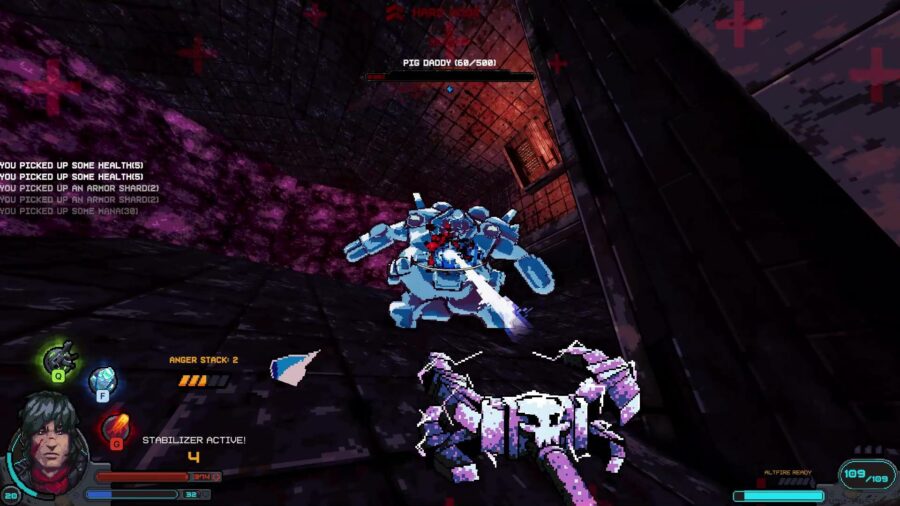
As long-time readers might’ve figured out from context, I play a lot of faux-retro first-person shooters. I find something oddly meditative about games that let me run around at a thousand miles an hour with 5 to 12 guns on my back while I reduce hordes of demons/undead/etc. to increasingly evocative stains on the floor.
(I refuse to call these games “boomer shooters.” I’ve seen what boomers will play if left to their own devices. It’s puzzles, golf, and anything that takes a sober historic approach to World War II. Trying to teach someone in their 70s to circle-strafe runs the risk of firing all their neurons at once. I know “boomer shooter” is sort of fun to say out loud, but it’s never been an accurate term.)
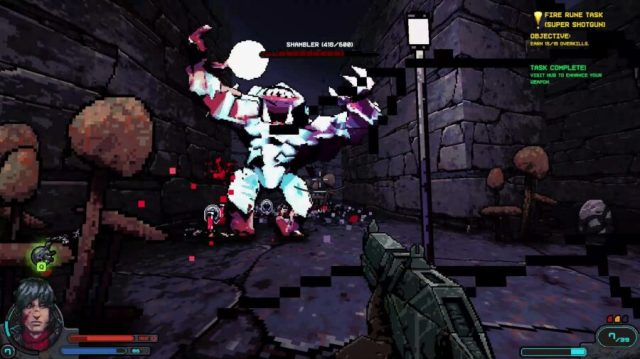
I was going to write about something else this week, but then Project Warlock II left Steam Early Access. I’d really enjoyed the original Project Warlock, a game that is not afraid to allow you to be stupidly overpowered, so I had high hopes for its sequel.
Thankfully, it’s met my expectations. I’ve only cleared the first of PW2’sthree episodes at time of writing, but so far, PW2 doesn’t fix what wasn’t broken. It gives you an arsenal of powerful tools, then gradually unlocks an upgrade system that adds more options and bonuses. You start each episode in PW2 as a competent fighter and end it as a walking apocalypse.
In retrospect, that same upgrade system is what really won me over about the first PW. One of my biggest pet peeves about modern video games is how many of them use their skill system to deliberately gate off vital parts of their combat, so it takes a couple of hours before their systems actually work as intended. Doom Eternal was particularly obnoxious about this.
In PW and PW2, your upgrades are there to add custom options to what’s already a perfectly solid arsenal. You can turn your basic double-barreled shotgun into an automatic with a drum magazine or a quad-barrel, or switch your magic staff into a frost-empowered laser that can stunlock an entire room full of enemies. It’s primarily about what kind of destruction you’d prefer to inflict.
Project Warlock ended on a down note. The title character invaded Hell on a mission to destroy evil, as one does, then abruptly decided to take the throne. PW2 picks up immediately afterward, as the corrupted Warlock sends his new demonic legions after his 3 former apprentices.
My first impression of PW2 was that it was the original game, but bigger. PW was lo-fi to the point of distraction, with a subdued color palette and a consistent feeling throughout most of the game like the ceiling of any given room was about an inch above your head. PW2 begins with you shooting your way out of a collapsing castle and continually widens its focus as you go, from a dying city to a series of alternate dimensions to outer space.
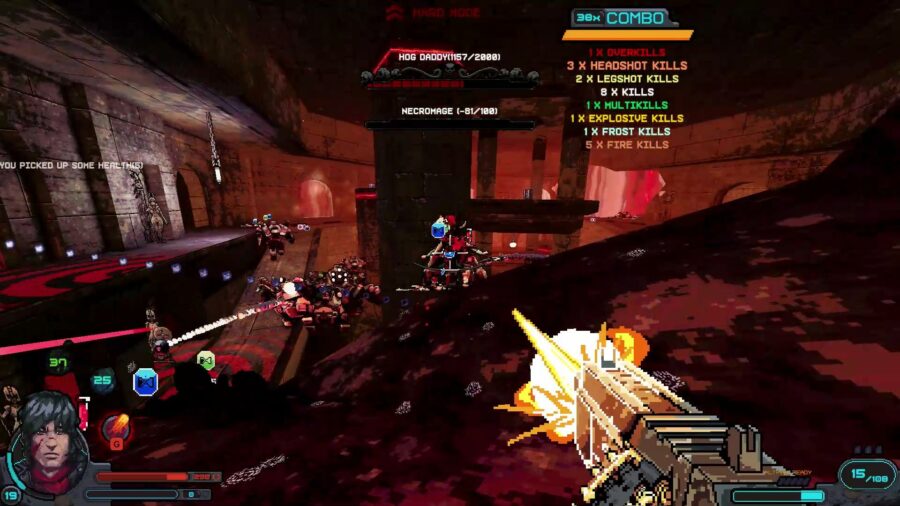
Even early in the game, you’re more than a match for almost any single enemy, as your default weapons are actually pretty good and headshots get a 150% damage multiplier. It’s easy to run around each level popping off demon skulls with your starting rifle or revolver. Then they get sick of you and send in a battalion, at which point PW2 often gets intense. It’s at its best when it’s at its most frantic, as three dozen enemies all open fire on you at once and you’re forced to pull out all the stops to stay alive.
If I’ve got one serious point of criticism, it’s that PW2 really wants you to dig through every single level for all the upgrade tokens you can find. It’s tempting to race through the game to keep your adrenaline up, but each stage is full of well-hidden power-ups, and you want to put some work into your arsenal along the way. It might work better if PW2 awarded its perk points based upon your score, or had more of them drop from minibosses, rather than replicating the old-school Doom secret hunts.
I’m also not entirely cool with the “secret cameos” in PW2, where you can regularly find the hidden corpses of protagonists from other indie shooters like Prodeus and Dusk. It’s like PW2 is implicitly saying its action is so intense that all the other shooter heroes are already dead, which can’t help but remind me of the weird bravado of ‘90s magazine ads.
Those are fairly minor points, however. I’ve got a strong bias here, but Project Warlock II is a well-honed, intense example of its formula. It is a game about giving you multiple satisfying ways to shred demons into stew meat, and it delivers. I have no idea how fun it would be for someone who did not grow up on Doom and its various clones/successors, but it gave me everything I wanted from it.
[Project Warlock II, developed by Buckshot Software and published by RetroVibe, is now available for PC via Steam for $16.99. This column was written using a Steam copy of the game purchased by Hard Drive.]
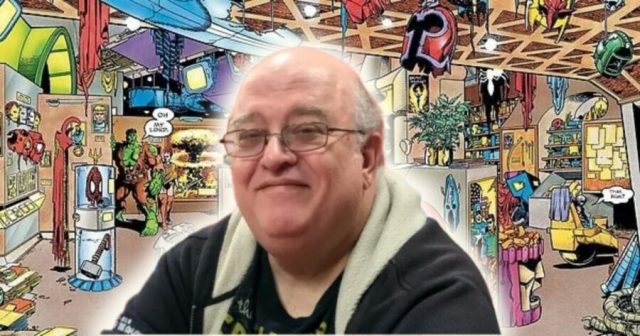
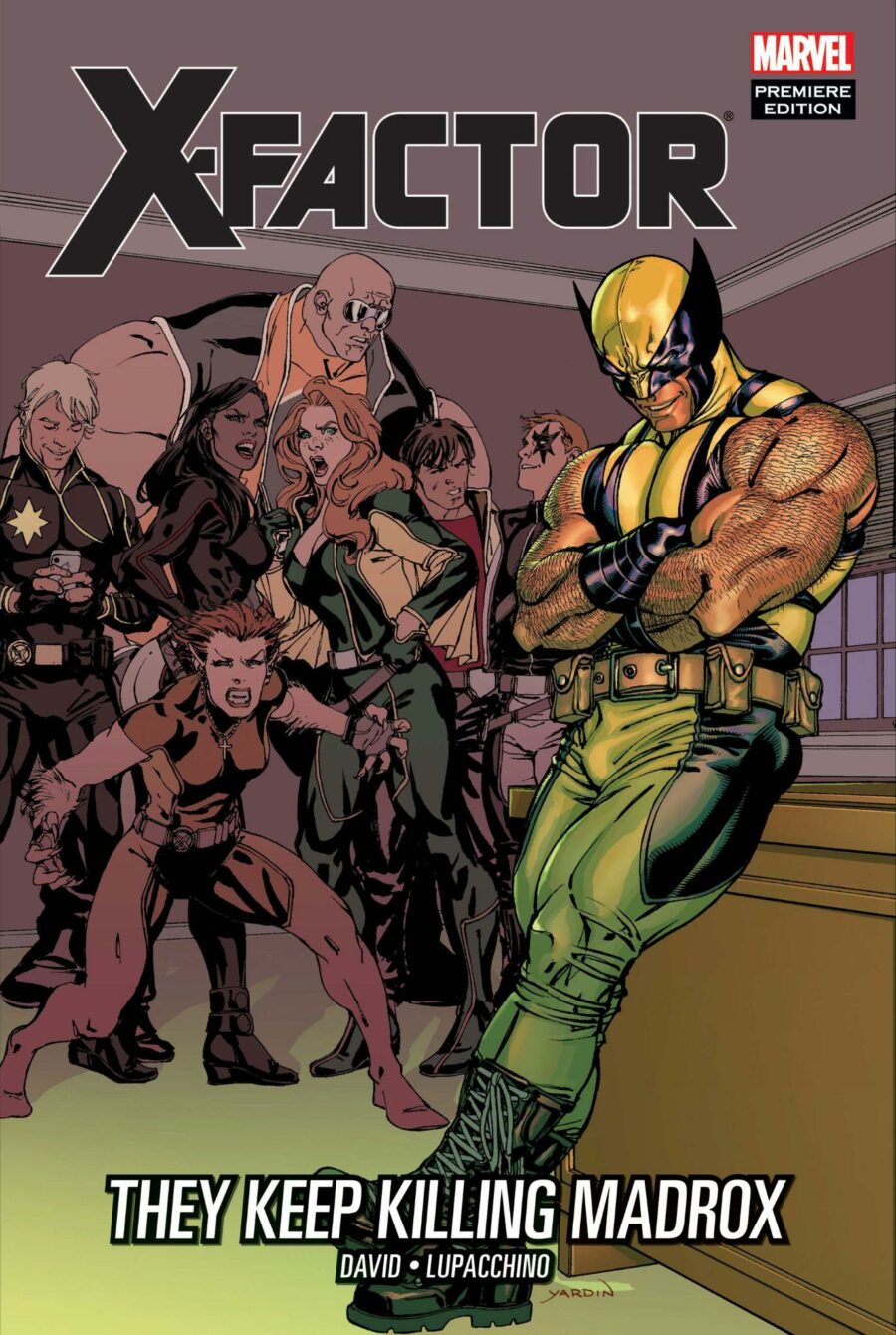
On May 24th, 2025, we lost one of our most insightful, trenchant writers of genre books and comics Peter David. Peter David isn’t a name that you’ll necessarily think of when you think of “comic book writers who changed the medium.” Firstly, it’s very ordinary: it’s two plain first names. Grant Morrison, Dwayne McDuffie, Chris Claremont, Gail Simone, Christopher Priest, G. Willow Wilson, the list goes on and on of people with recognizable names that mark their incredible work and make them instant topics of discussion. But with a name like Peter David, he might as well be your city’s comptroller or the accountant whose jokes you pretend to laugh at during tax time so you stay on his good side. But if you’ve been reading comics for long enough, you’re going to encounter his name and that’s particularly true if you’ve been reading superhero comics of the Mighty Marvel variety. X-Factor is a team of street-level mutant heroes that David essentially brought together and shepherded through some of the best, most overlooked, compelling drama I have ever encountered in mainstream books anywhere. Do yourself a favor: if you don’t want to read the 100 issues leading up to it, check out what happens when Jaime Madrox holds his baby with Theresea Cassidy for the first time. Have you stopped screaming yet? Welcome back, and don’t worry! We’re talking about The Incredible Hulk: Future Imperfect!
Before he was rewriting the book on what “street-level” mutant stories had to be about, though, he tackled Marvel’s biggest, greenest problem. I mean hero. He is quite a problem for a lot of writers, and even more readers, Hulk often struggles to have an ongoing book that doesn’t get handed off to another hero, and has for a long time. A lot of readers have similar problems to him that they do with Superman: the perception that the Hulk is just kinda boring when the truth is: he requires a more deft touch than his “SMASH” persona would seem to indicate. He gets stronger as he gets more angry, and while that limit can be interestingly tested, it can really only be pushed so far without really putting your back into it, creatively. If you’ve read enough Hulk books at random, that’s quite clear: they mostly run the gamut from “good” to “forgettable.” His problem is a simple one, but it’s also fundamental to his character: he’s too strong for anyone to be a credible threat to him. Yes, he tells you that on every page, but it’s a problem that doesn’t exactly go away the more he’s written and the more power creep starts to take hold. If anything, he becomes a bigger problem. It’s like some kind of Metaphor or something! His biggest problem, from a creative standpoint, is finding or inventing a villain cool and credible enough to stand toe-to-toe and really make the reader wonder: how’s Hulk gonna get outta THIS one? Better buy the next issue and find out what happens when Leader and MODOK team up!
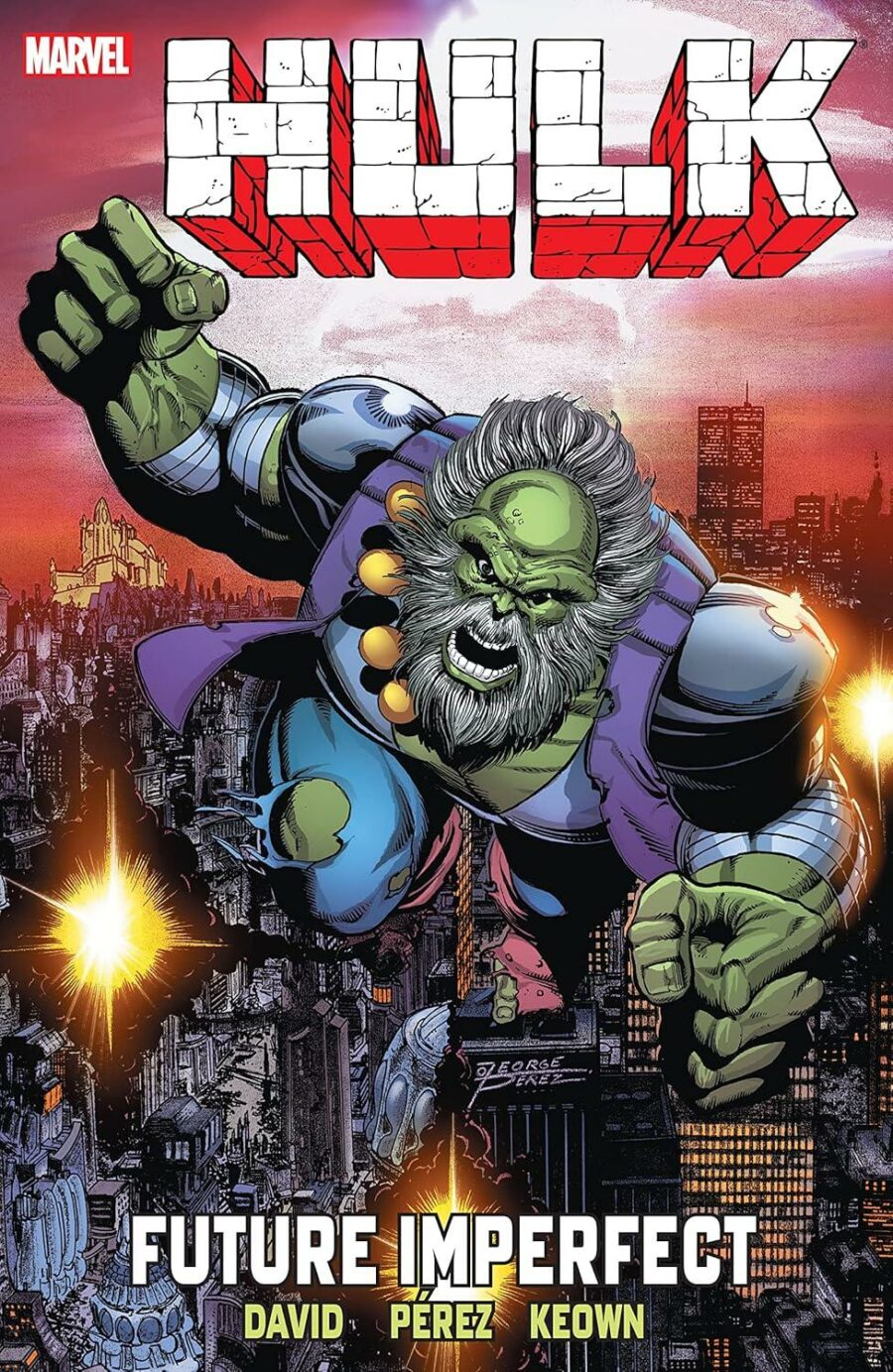
“Another Hulk” is both the least and most interesting answer to the question of a credible threat, of course, it all depends on how much creativity the writers and artists have, and how much the editors and, of course, the ever-watchful but incredibly uncreative censors and advertisers are willing to allow for. Because Peter David’s run on The Incredible Hulk, from start to stop, is all about the type of introspection and philosophizing that Ang Lee thought mainstream audiences were ready for when his Hulk movie was more about Banner than what he could smash. And nowhere is that more typified than David’s legendary story Future Imperfect. A story within the main run on The Incredible Hulk told over two oversized issues, making it about as long as The Dark Phoenix Saga. Yet talked about 7% as much, which I find baffling. Both books took place in the mainline run of their characters, Future Imperfect is technically set between Incredible Hulk issues #413 and #414, but is considered a canon part of that run. Yet it feels like a book where anything can happen. Where Banner’s back is pushed against the wall like never before, and the question of whether or not he returns is a constant refrain. It takes place in the place between the panels: where the real stories are told.
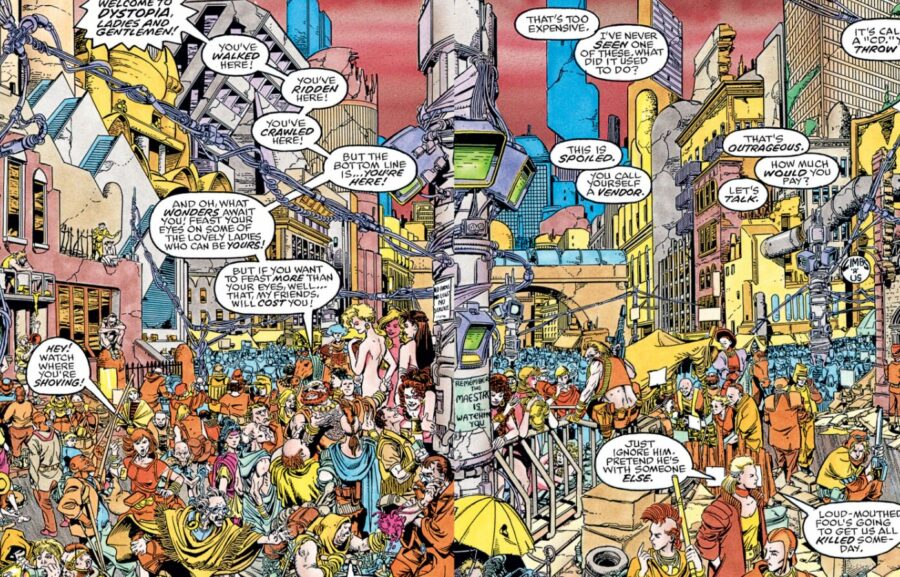
It’s a story of Dystopia, one of the last remaining cities after a third world war ruined the world over a hundred years ago. I hear you asking: why didn’t the superheroes stop it? They tried. Humanity’s nuclear arsenal put a stop to their ‘do-gooding,’ as well as the villains’ more cartoonishly fun attempts to counter it, with a quickness because, as is stated in the book: nuclear war doesn’t look like what we think it does. It’s just people dying by the billions. This is similar to the point made in Garth Ennis and Richard Corben in the intensely hopeless, nihilistic, and dour Punisher: End, but that story had the benefit of being a What-If…? story in everything but name and marketing. Future Imperfect had the impossible task of continuing the main Hulk book after it was over, they couldn’t just say “everything sucks and now our protag is dead because fuck you and everyone else, that’s why.”
If this all sounds a bit on the grimdark side, that’s the beauty of Future Imperfect: by having the late-great George Perez to do the linework, with Tom Smith on colors, Joe Rosen on lettering, and stand-out covers by Dale Keown, the book maintains an almost manic tone of horrific and casual violence and graphic imagery coupled with a bright, cheery ’70s sci-fi aesthetic that makes the whole world feel justified. It feels like something is trying to distract you in every page and on every panel because in Dystopia: life is fast, cheap, and impossibly hard, but people are still desperately trying to enjoy themselves.
George Perez, for those who want to save a quick search, is known for his attention to microscopic detail on massive projects and doing the linework of some of the most legendary imagery of any period for mainstream comic books, including Crisis on Infinite Earths, Infinity Gauntlet, and some of the most famous covers you’ve definitely seen in the background of any movie or show that actually cares about getting comics imagery exactly right. This team, with David at the writer’s desk, constructed a world in a single two-page splash that was credible, bombastic, and enormously iconic without resorting to a bleak, dull color palette with walls of overwrought narration to communicate how bad things have gotten without doing the legwork.
Dystopia is a miserable place, but if you just look at the gorgeous art without really reading the incredible dialog, it might not seem so. It’s bright, it’s smooth, there are barely-clothed sex-workers mingling with cybernetic citizens all looking distinctly Greek or Roman without directly referencing those empires. It’s filled with a vast array of diverse, strange, wonderful people, but they’re all stressed and miserable. They’re all crammed into a massive mono-city (or Megacity, the Judge Dredd inspiration is self-evident and perfectly channeled) and they know they can’t leave because the outside is an irradiated wasteland. Only the Maestro, the feared dictator of Dystopia, and his radiation shield can keep this huddled remnant of humanity safe. And Maestro, like all tin-pot dictators, cares far more for his own pleasure and enjoyment than that of his people’s welfare.
Bruce Banner, in his Professor Hulk years, emerges into this city from a pile of rubble. Instantly, the people give him a wide berth, not just because he’s eight feet tall and built like a brick that’s also eight feet tall, but because he looks like The Maestro. He isn’t him, clearly, there are too many differences that are readily apparent. But considering the fact that we soon see Banner set upon by the authorities, and that those signs about Maestro watching you aren’t just propaganda, it’s clear that no one thinks he actually IS the dictator. Hulk smashes through the ruling authority’s cybernetically enhanced supercops, and that’s when he draws the attention of the big man himself.
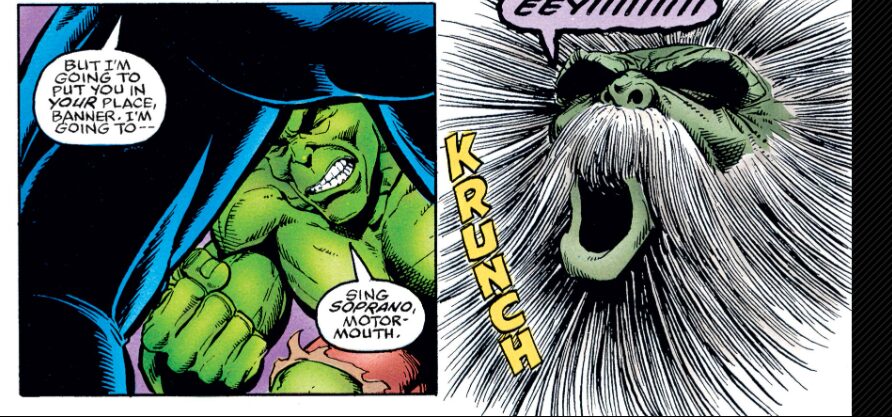
This is all so that when you first see Maestro, a hulking green brute with an overgrown beard and massive mane of hair around a prominent bald spot, body adorned with jewels, robes, and other ostentatious finery, you might not immediately notice the fact that he is clearly the Hulk. Or maybe he’s A Hulk, remember: there’s more than one as well as several “spin-off” gamma-fueled powerhouses. Hey, maybe someone out there really DID think Maestro was some kind of overpowered Doc Samson that had enough of listening to everyone’s problems, and decided to solve them all at once. The fact that Maestro is a gamma-powered villain is obvious, the fact that he’s Bruce Banner doesn’t come out until the end of issue #1. Cards on the table: I have no idea if this was a great twist in 1992. It’s not shocking now, I’ll say that, but it’s well-executed so “shock” matters a lot less. I could go back and read reviews at the time, but critics are paid to look deeper into what we’re criticizing, so I wouldn’t be surprised if they “saw the twist coming,” because they were expecting a twist. But while that’s not a bad thing on its face, it certainly wasn’t a surprise in 2005, when I first read Future Imperfect, but it was still a great reveal, because it’s so satisfying. A twist only matters if the build was good enough, and Peter David, George Perez, Tom Smith, Joe Rosen, and Dale Keown constructed one helluva build.
Without going over every page, I could but 10,000 words is a bit of a tough sell these days, Banner gets recruited quickly by the resistance group that brought him forward in time. Because there were no heroes nor other villains left to oppose Maestro’s brutal, fascistic rule, they had to get very, very creative to finally take a run at the king and not miss. And the only thing, they reasoned, that could stop Maestro was Bruce Banner, the Hulk, the original, no substitutes. The first fight between the two is vicious, brutal, and hard-hitting. Hulk really only loses because he places the lives of the civilians around him above his own, because he’s a hero. The dialog Peter David writes for him is perfect, making him seem detached and jaded, unimpressed by the world around him because of his dizzying intellect and impossible strength. But the moment “puny humans” are in-danger, he disregards his own safety, and the fight he’s currently winning, to save them. He doesn’t have all the answers immediately. He doesn’t pick up a gadget or a gun and use it to shoot enough people that he can save the civilians trapped under a crushed building. The Hulk does what a real hero in that situation does: punch Maestro RIGHT in the balls and start working on clearing rubble as fast as he can.
That right there is why you trust your art team. Linework, color, lettering: all perfect. And all something that even the readers can relate to, despite the planet-breaking strength of both men. Far too often, superheroes and good-guys are written to be rubes, so the villains don’t have to try as hard to outsmart them with blunt cruelty. Banner uppercutting Maestro in the dick is a perfect moment because it’s hilarious on the page, it’s brutal to think about, and it’s the smartest move if he wanted to disable the green dictator for as long as he could so he could try and help as many people as possible. Of course, Banner’s great “weakness,” his empathy, distracts him and Maestro gets the upper-hand, snapping his neck in short order. Which does not kill him. Exactly as the degenerate tactician planned. Because Maestro isn’t just a jumped-up cokehead born into opulent wealth and with political aspirations where the love of a family and friends should be, he became a dictator through sheer force of isolation and a body that ate nuclear bombs for breakfast, lunch, dinner, and a midnight snack. To paraphrase Joseph Conrad: ‘all you need to be a conqueror is brute force, nothing to boast of, as your strength is only as a pure coincidence of the temporary weakness of others.’
Everyone else died. Hulk just-so-happened to live. Maestro doesn’t know if killing Banner outright would kill him as well, Banner IS his younger self, remember. Canonically, that is true in the world of The Incredible Hulk, both as a fictional setting, and real-world comic series. He assures him, though, that should Banner try again: he’ll take the chance on multiverse theory and a timeline that split the moment Banner arrived into a future he wasn’t supposed to be in. Maestro really has been planning on fighting a younger version of himself for decades, and so far, so good. Hulk is completely incapacitated, unable to move but still able to reason, speak, and function otherwise.
There’s a scene that’s hard to describe without going into graphic detail, but Maestro demonstrates his power over Banner through a means you will not see coming with forty guesses, but it’s done well and executed tastefully enough that it passed the muster of 1992’s much further-reaching, and far more overt, censorship. It amazed me that this book came out in 1992, yet wasn’t talked about anywhere near as much in the mainstream comics discourse as Watchmen or DKR, both of which were from the ’80s. There are incredibly broad, thematic details that owe a lot to those books, and their success likely meant the team had far greater creative freedom for the team on Future Imperfect, but the book stands on its own perfectly fine. Yet despite being every bit as good as both those books, I would put it against any two issues of Watchmen or DKR and say it competes, it’s often just known as “the first appearance of Maestro,” who is an immaculately designed and realized villain, and is little more than a comics-themed pub quiz answer. And the funny thing is: if you go back and read a lot of comics from that time, there are plenty that really are amazing, groundbreaking, and stand the test of time. They’re just not as flashy and as transgressive as those two books were almost a decade earlier. Future Imperfect is violent, bleak, sexy, frightening, and it’s got a lot to say about too much power used irresponsibly, despite not once featuring Uncle Ben.
I’m not going to talk about the rest of the comic, I normally wouldn’t worry about spoilers for something that came out over 30 years ago, but in the wake the news of Peter David’s tragic passing on May 24th, I think if this all sounds good to you: you should seriously go out and read it yourself. It’s available in numerous trade paperbacks, as well as Marvel’s own comics app. It’s incredibly accessible online or offline, is what I’m saying. And it’s only two oversized issues, it will take you less than an hour.
Peter David always thought twice when he was putting his back into writing. X-Factor was always “the also-ran” X-title in popular perception. It wasn’t as violent as X-Force, not as bizarre as X-Calibur, not as important or widely read as X-Men (with all 26 superlatives) but it was one of the most consistent. The book was rarely below a 7/10, writing-wise, and often hit moments and storylines that were easily 9-10. Art often varied, but that’s the reality of a monthly title that hit surprisingly few delays in its decade-plus-long run.
David also wrote numerous novels, including some of the most well-liked Star Trek novels as well as some X-Men and Spider-Man ones that I personally think are more interesting than they are actually great. I think those latter two really prove how critical art can be for these superhero books to not have to explain every little thing, moment, and instant of what’s going on, and that’s as much a failure of the medium of the novel as it is of Peter David’s abilities as a writer. His novels are worth reading if you’re already a fan of the source material, but it really is his work in comics where he shone the brightest.
And without him, we may have to grapple with just how accurate the title of this Hulk story is, because I’m afraid our future has gotten a little more imperfect now that he’s no longer able to influence or steer it actively. But as the book itself ultimately exists to illustrate: it’s a future that still has hope in the people that live in it. However hard their lives may be, however stressed and anxious they become, how little power they may have moment-to-moment to their job, their government, their peers: they endure. They learn. They create. The world of Future Imperfect, even outside Dystopia, is well-realized and beautifully nihilistic. There are little moments scattered throughout the book where you get a snapshot of what life is like in the rest of the world, even just in the surrounding few miles around the city, and it’s a world ruled by a singular monster who only cares about himself. He regards other people as tools to bring him even more pleasure, even more enjoyment, and when they don’t? He reaches out with his enormous green fist and crushes their skull. It’s easy for Maestro to be a dictator: he’s an immortal, indestructible behemoth with a century of survival tactics in his mind. But he failed, ultimately, because he couldn’t see a path where enough people would stand together to formulate a plan to topple his decades of rule in a few days. At its core: it’s a story of the weak many overcoming the powerful single. It’s about how no matter how rugged the individual sees himself as, he cannot endure without others propping him up and helping him, even if he himself denies their help exists.
He only wanted to break Banner’s neck to continue his plan, he missed the fist heading straight for his balls, and he paid the price in the end. Even when he thought it was a price worth paying, he still failed. Not because of Banner alone, but because of the people Banner aligned himself with. The people who brought him forward to this horrible time-and-place in a last-ditch effort to even begin rebuilding and making things better, rather than keeping them as they are for the comfort of the powerful and few, the friends and allies he encountered who told him how to overcome Maestro’s seemingly impossible strength and merciless, self-obsessed mind.
Peter David knew what he was writing, what he was doing, I think it’s evident from all his best work, and even his most middling. I think he absolutely knew when it was time to throw out a 7 because he had a deadline to meet and didn’t want to risk his career on a delay, but he also always knew when he had a 9 or a 10 up his sleeve. He’s prolific, and yet so far from mediocre, that the word tastes bitter being associated with him.
Peter David may have left an imperfect future for us all, but he left a really amazing guide to make it just a bit better. Rest in whatever way you wish, sir. Your work is not forgotten.