Game Night: Playing A Game Within A Game in ‘Among Ashes’

In my experience, if you’re into horror at all, there are a couple of things that can and will scare you regardless of their presentation. It might be a monster, a situation, or a scenario, but whatever it is, it slips by your defenses to hit you where you live. I know somebody who could watch six slasher movies in a row without her heart rate changing, but anything with zombies gets her to dive behind the couch.

Among Ashes hit me like that, in a couple of weak spots I didn’t know I had. It plays on that sense of heightened paranoia that you can take with you into the real world after you close the book or turn off the movie. Now your imagination’s running the show, and every strange sound or misshapen shadow feels like a threat. In Among Ashes, those sounds and shadows actually are out to get you.

The game opens in 2001, a couple of weeks before Christmas. You’re an unnamed, unseen British person who’s staying in for the night to play computer games, instead of going out in the rain to hit the pubs.

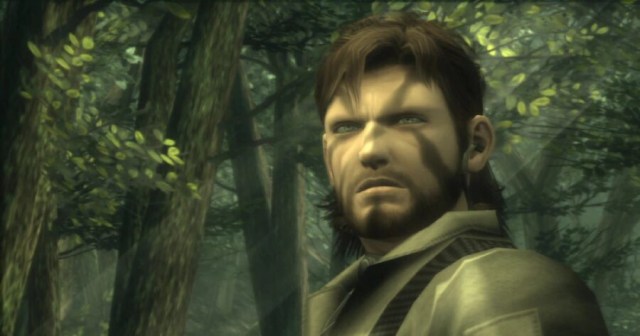
At your buddy’s request, since he’s playing it, you download a freeware first-person shooter called Night Call. It puts you in the role of Jack King, a small-town British cop who responds to a disturbance at a country manor and ends up at ground zero of a zombie outbreak. Night Call is buggy, but playable, and has a fan community that’s figured out most of its puzzles despite a lack of in-game hints.

As you make progress through Night Call, it begins to glitch in ways that can’t be explained by simple programming errors. Then strange things begin to happen in your apartment around you, and the line between Night Call and reality begins to blur.

There’s a lot more I want to talk about here, but you’re best served going into Among Ashes as cold as you can. The short version is that it’s a game within a game, where you play as someone who’s playing a shooter that might have more of its creator in it than that creator intended.

Night Call is a deliberate survival horror throwback, where every individual element of it is a self-conscious reference to something else. It feels like exactly the sort of thing that an early-2000s fan programmer would think was clever, in those halcyon days before we were all too ironic to function.

To get through Night Call, you occasionally have to tab out of the application to collaborate with your buddy via instant messenger, or get up from your PC to explore your character’s apartment. It’s a clever gimmick, which serves up a few tense moments and a couple of cheap jump scares. If that was all Among Ashes was, it’d be fun but forgettable.

When you hit the second half of the game, it disengages its parking brake. At that point, all bets are off; Among Ashes begins to move freely between subgenres of horror in ways that make it impossible to predict.

There’s a real sense of impermanence to Among Ashes, for want of a better term, that drives much of its horror. It takes a positive glee in changing things while your back is turned, from subtle elements of your apartment to entire corridors within Night Call.

One of the most underutilized capabilities of video game horror is its ability to manipulate its environments for effect, but Among Ashes takes every chance it gets to do so. It opens as a blatant but well-executed appeal to nostalgia, but eventually breaks away from that to end on a high note.

I’m glad I stuck through it. I almost didn’t. On Normal difficulty, Night Call is a callback to the resource starvation of early horror like the original Resident Evil. Enemies hit like freight trains, bullets are scarce, and medical supplies are few and far between. You’re encouraged to not fight at all if you can avoid it, but you’re also frequently trapped in narrow hallways and close quarters. I eventually ran out of resources and had to restart from the beginning.

If you’re just in this for the experience, don’t feel bad about playing on Easy difficulty. Normal is designed for the sort of survival horror fan who likes knife-only runs in Resident Evil games, as you end up beating a lot of zombies into pudding with a police baton. Easy is closer to the modern model of survival horror, cf. Hollowbody or Crow Country, where resource conservation is an issue but not your primary concern.

I’d also note that Among Ashes delves into some pretty dark territory by its ending. Without any significant spoilers, much of its story deals with themes of abusive behavior. If that’s something that can ruin your day, this is not the game for you. This isn’t a criticism; it’s just a warning.

I didn’t know what to expect from Among Ashes before I started it, but it turned out to be a uniquely intense experience. I’m already forcing people to play it so I can get them into my spoiler chat. If you’re looking for something short and technically Christmasy to play in the next couple of weeks, check it out.

[Among Ashes, developed and published by Rat Cliff Games, is now available on PlayStation 5 and Steam for $14.99. This column was written using a Steam code sent to Hard Drive by a PR representative for Rat Cliff Games.]

Santa Announces He Can Only Afford to Give One Child PS5 for Christmas

NORTH POLE — Santa Claus announced today to his workshop of elves that he could afford to only give one little boy or girl a PS5 for Christmas this year.

“The reality is that there are millions of children in the world, and at almost $500 a pop, there’s no way the big man, who works only one day a year, can afford to buy that many PS5s,” explained the North Pole’s Chief Financial Elf, Jingles.

Sources close to the situation confirmed with one local North Polian that old Saint Nick has been dealing with some financial setbacks but has done everything he could to make sure every child has a good Christmas.

“He sold poor Doner and Comet to a butcher. He and Mrs.Claus started an OnlyFans that was so hot, it made me melt. But unfortunately, none of it generated the income needed to get more than one PS5,” explained local snowman, Burrrt.

Now, Santa has the difficult task of determining which child will be the lucky one to receive the sole PS5. But the children of the world are not making it easy on Kris Kringle. It has been reported that after Santa made his announcement, his workshop has been bombarded with letters from children bribing him for the PS5.

“One kid sent Santa her allowance to persuade him into bringing her the PS5. Another promised extra cookies for him if he came down the chimney with the game console. One child even promised to let Santa kiss his mommy if he brought him the PS5,” exclaimed Head Elf Holly.

At press time, Santa has reportedly increased list checking by over a thousand percent in an effort to determine which child will get the PS5. 

New Star Wars Series for Children Alienating Audience of Man-Children

FREMONT, Calif — Star Wars Fan Garret “Darth Killor” Grant declared he’d finally had enough as the fourth episode of Disney’s new Star Wars series “The Skeleton Crew” began to roll credits.

“I’m just sick of this…woke? No, wait, uh-it’s DEI! DEI-driven crap trying to force diversity down my throat instead of focusing on real issues that affect real people! Don’t they know the people who threaten them online if they don’t do exactly what we want are the REAL fans!” the 36 year old grown man with a job and bills to pay fumed, growing increasingly red-faced and fussy.

Jumping on X – the Everything App, Jenkins discovered he was hardly alone, as among the thousands of bots echoing his exact thoughts back to him, he managed to find a single other human being that agreed with him.

“Why so SERIOUS? Because my childhood is being dismantled right before my eyes to please a bunch of globalist corporate masters,” a 44 year old man only willing to be identified as XxDarthJokerxX posted, “They’re afraid of our massive numbers and power, so they disenfranchise us the ONLY WAY they know how! Buy my NFTs and show them they can’t OWN ART,” the grown adult society expects to be able to moderate himself raged over a fourth energy drink in lieu of water or a meal to “sharpen his senses like a vibro-blade cutting through Riann Johnson’s woke agenda.”

Reached for comment, Simone Broussard, a well-adjusted 10 year old enjoying playing pretend with her friends, had another take on the show.

“The kids are all like WHOOSH! And the grown-ups don’t know WHAT’S going on, but they’re like PNYAW! PNYAW! EEEEURRRRRR!” she enthused energetically, enjoying a children’s show without forty years of parasocial attachment to a low-budget space opera cobbled together from various inspirations from the director’s own childhood.

At press time, Jenkins was asked if he was familiar with the inspirations behind the original Star Wars and responded, “I don’t watch movies to READ, I hear that’s how the virus gets into your mind and forces you to forget what’s really important!! Welcome to the REAL WORLD, IDIOTS!”

Kraven’s Last Hunt Proves Superhero Stories Don’t Need to Be Grimdark Power Fantasies to Be Mature

In my approximate 15-20 years of closely following trends and discussions in the world of comic books, as they’re known in North America and large swaths of Europe at least, I’ve come to realize something, and it’s something modern superhero movies didn’t seem to learn the lessons from the failures of mainstream comics in the ‘90s: grimdark power fantasies only take one so far when trying to be “gritty” and “mature.” Mostly because, of the two major books that started the trend in superhero comics, Watchmen and The Dark Knight Returns, the former was intended to show how psychological realism CAN’T work in superhero comics and shouldn’t try, the other, to be blunt, takes up far, far more time in discussion than it deserves because of the long shadow it casts across all of comics media.

In the 1980s, the superhero genre seemed in desperate need of revitalizing. The narrative goes that, mostly owing to the overbearing weight of the Comics Code Authority, superhero media was seen by the mainstream as toothless, lacking in impact, and targeting young children, mostly by necessity as the various rules and regulations essentially banned anything resembling complex characterizations or moral ambiguity. And in keeping with that narrative, Watchmen and The Dark Knight Returns changed all that, introducing a bevy of new readers and old to dark, mature stories taking place in “fantastical settings,” but with “realistic” characters, except there was a problem with that perception: before books like Watchmen and The Dark Knight Returns, Walt Simonson, Len Wein, Steve Englehart, and Marshall Rogers had written and drawn Strange Apparitions, a dark story of madness and romance with the Batman at the center of a conspiracy to use the mentally ill as a superhuman army, and even with a particularly memorable, and wild, Joker plot involving copyrighting fish…to say nothing of the great work Denny O’Neal had done portraying the character as an exaggerated figure of darkness and terror before any of the ‘grit’ was introduced. Alan Moore himself had written several one-shots for DC tackling incredibly dark subject matter, as well as some stories that simply didn’t talk down to or condescend to the audience. This doesn’t even account for his run on Swamp Thing, or Grant Morrison’s transcendent Doom Patrol. And while these books aren’t talked about nearly as much as the previously mentioned two, they’re far more arcane and oddly psychedelic, off-putting to a casual reader. In my professional opinion, as someone who has followed trends in comics, Kraven’s Last Hunt is everything The Dark Knight Returns gets far, far too much credit for being, and it came out just two years after that book did.

First thing’s first: I have read both books from beginning to end in the last 2 years, and I think that’s important to establish. A lot of moments and panels from DKR are memetic, and with good reason, but the book’s structure and tone overall is its greatest failing, and you don’t get that until you actually sit down and read the book, cover-to-cover. Kraven’s Last Hunt is a title that takes a well-established character, one with a history of bright, kid-friendly designs and stories, and injects just the slightest bit of grit and psychological realism to turn the character into a haunting, powerful, misguided harbinger of a vision of a darker, more lethal Spider-Man.

First thing’s first: I can’t deny the influence and impact that The Dark Knight Returns had when it first came out. The sales data I linked above tells the story: the book started strong and ended stronger, people were enthralled by it, and it seemed to pick up a ton of word-of-mouth in the time between the first and fourth issues. I’m not here to argue the book was actually a failure, sales-wise, or that it didn’t have a tremendous impact on the direction of the character, my argument hinges on the fact that it’s hardly singular, it was just the one Batman comic a lot of people had recently read, and that it was far more a sign of the times than a timeless classic. The idea of an old-man Batman struggling against a world he’d long ago lost control of is compelling stuff, and the art is undeniably incredible when it’s at its best, fight scenes feel impactful down in the reader’s guts, you really feel each and every desperate punch and kick as Frank Miller’s minimalist battle dialog allows the eye to traverse the page quickly, making the fights feel ‘real’ and paced brilliantly. The character designs as well have endured as long as they have for a reason, it’s when you actually try to read the words on the page that things go wrong. Putting aside the pro-fascist rhetoric espoused by side characters the audience is meant to identify with, I think the book has a problem overall with Frank Miller’s worst habits of sudden walls of text and total lack of subtlety or nuance being written off as ‘youthful inexperience’ and the best parts being credited as what he’d intended all along.

It didn’t take long for the book to become the definitive work on the character, as the likes of Michael E. Uslan credited the book as being an inspiration behind 1989’s Batman. What gets less credit, despite being no less influential, are The Killing Joke and the aforementioned Strange Apparitions, one of which has received mass-acclaim, but the other of which is lost to all but the most enthusiastic enthusiasts, at least in-terms of immediate recall of influential stories. And if you read the latter, you’ll see a lot more of its DNA in that movie’s exaggerated, gothic spires and larger-than-life Batmobile than the flailing attempt at telling a “mature” story that DKR now reads as. But because the book stood out at the time, and was something genuinely novel and fresh in 1985, it took the reins of Batman’s entire tone and character, and only when Batman V Superman came out and underperformed did the tide begin to shift in the other direction.

It was the ‘80s, and in comics: trends were bending toward extreme selfishness and Gordon Gecko and Reaganomics asked America: why should we care about others when WE can be rich and successful!? Superheroes were seen as increasingly passe as indie comics began to find their footing and get more and more mainstream attention outside of the biggest names. Watchmen never cracked beyond the top 5 in-terms of sales, but it also cost twice as much as a standard single issue at the time, so while individual sales were never record-breaking, the people were speaking loudly with buying trends: a prestige comic that treated its source material seriously could do big numbers. The X-Men had just re-debuted and even in the ‘70s, things were different. Characters were dying, metaphors were about big ideas like civil rights and emerging LGBTQIA+ issues, the X-Men tended to top the sales charts and it sent a clear message: people were ready for something new out of superheroes. Real peril and real stakes, villains with motives beyond “blowing up the ocean” or “stealing pies” that the Comics Code had kept in-check with their badge of approval. But Watchmen didn’t bear that badge, and it was lighting up the sales charts.

Meanwhile at Marvel, Sergei Kravenoff was a joke of a character. He was introduced as a borderline pro-wrestler, a hunter with an ostentatious costume (and really think about how much it takes to stand out in the field of Spider-Man villains) and a bombastic personality of someone writing a Russian character based on some Rocky & Bullwinkle reruns they’d caught one late night. He was never a heavy-hitter, he was a perfectly fine als0-ran and the book never forgets this simple fact. Spidey expects nothing from him. He’s not Dr. Octopus, he’s not Green Goblin or even an unpredictable maniac like Rampage. He’s the dude who wears a lion vest and a loin-cloth. So he’s the perfect subject for a full character reversal.

Kraven’s Last Hunt opens with a Sergei Kravinoff the reader has never seen before: powerful, determined, a grinning madman talking about the past, his ancestry, his fallen nobility and broken family, the state of Russia in-general even comes up as a reason for what comes next. Kraven has snapped after endless defeats and indignities foisted upon his noble personage. That and the suggestion that he doesn’t have long to live sets the tone immediately: this isn’t going to be a normal Spider-Man story. But the brilliant subversion comes from the fact that Spider-Man doesn’t know any of this.

Peter Parker is newly married to Mary-Jane Watson, who in this timeline is a model and aspiring actress who knows Peter Parker and Spider-Man are one-in-the-same (spoilers), and while we’d like to think she’s ‘accepted’ this dichotomy, one of the things the book does incredibly well is give her an inner-life as she senses, a spouse’s intuition, that her partner is not okay tonight. Yes, it’s still a woman worrying about her man, but she doesn’t just sit by the window and pine for him: she goes to places he’d be, she talks to the friends that they share and have in-common, you get the idea that Mary-Jane’s life exists when Spider-Man isn’t with her, and so you get to feel the anxiety that comes from not knowing where the person you love is, or even if they’re safe. And while that could normally be chalked up as silly worrying, in this case: it’s a person putting himself in constant danger for the sake of others that she’s worrying about. I challenge anyone to tell me what the inner lives of characters in Dark Knight Returns, outside of Batman, are. Even Carrie Kelley, the new Robin, hardly seems to have a thought that doesn’t involve Batman or getting away from her cartoonishly negligent “hippie druggie” parents.

One of the greatest mistakes a lot of stories like this can make is taking the main character to an illogical extreme far too soon. DKR actually does this very well, the death of a Robin caused Batman to hang up the tights and gadgets, and he watched as Gotham descended further and further into a nightmarish, crime-riddled dystopia. His mind is broken until he can simply endure no more. The flaw with that book, and many like it, is that it mistakes this extremism for being justified by the state of the world, and I think the best thing that Kraven’s Last Hunt does is switch the dynamic so it’s the villain that’s lost everything and desperate to claw it all back while the hero has to keep their ideals intact in the fact of this new, horrifying threat.

Kraven is dying, and the book doesn’t make it clear if it’s a metaphorical or spiritual death, or if he actually doesn’t have long to live. He’s last of a line of Russian aristocrats, he pines for a pre-revolution Russia ruled by a nobility of dignity and strength, or at least that’s how he perceives it. His yearning is already tinged by the rose-colored glasses of nostalgia and the book never strays into “he’s crazy, he doesn’t need to make sense” character motivation, the reader simply gets the idea that Kraven is deluded. Even within his own mind, he can’t seem to settle on whether his mother and father were upright gentry who never lost their regal dignity even as they fled for their lives or a pair of desperate, broken weak-willed cowards, shattering the moment they faced real hardship. The continued refrain of ‘they say my mother was insane’ becomes a rallying cry as Kraven breaks the rules, absolutely fucks himself up on “jungle herbs and poisons,” and does the unthinkable: traps Spider-Man in a net and then straight-up shoots him with a rifle. And this is where the book turns.

In Kraven’s twisted mind, he’s going to prove he’s better than Spider-Man. But he doesn’t actually know Spider-Man, and that is the key flaw in his plan. To him Spidey is just an emblem of his own failure and his family’s failure as well. Spider-Man represents everything from the Bolsheviks to Kraven’s own internal sense of entitlement to the capitalist system he finds himself trapped in, Spider-Man represents everything Kraven hates. So when he becomes him, he becomes a bad parody of him. The difference between hating the thing you’re parodying and loving it is often obvious to anyone outside one’s own bubble, and people immediately start noticing the more hard-edged, frightening Spider-Man. A Spider-Man that viciously beats petty criminals and kills without so much as a second thought or quip. In Kraven’s mind, violence and murder make him the better Spider-Man, but in reality: he’s everything Spider-Man isn’t. Spider-Man is a people’s champion, Kraven’s version of him is a vile, authoritarian brute and bluntly has more in-common with Miller’s Batman than previous iterations of himself. Kraven, like Batman in DKR, knows he’s right about all this, it doesn’t matter that it only makes sense in his own mind. His might makes him right. He is wealthy. He is noble. He is powerful in body and tactical in mind, but his emotional state is wavering. His psychological grounding is weak. And yet anyone who reads the book without analyzing the subtext could, and would, say: he’s perfectly rational, because his logic makes internal sense. And therefore: he believes he knows how he can conquer Spider-Man, and it’s through becoming a superior version of Spider-Man. Long before Doc Ock was The Superior Spider-Man, Kraven spent two months (in comics time) dressed up like Spider-Man, doing things his own way. And it nearly destroys the hero for the rest of the city.

It comes to a head when he thinks the way to prove his ultimate point is to defeat Vermin, a homeless man turned into a killer, cannibal, mutant rat by Baron Zemo and set loose in the sewer. In Kraven’s twisted logic: if he could defeat Vermin alone, without the help Spidey had, it proves he’s better than Spider-Man. Missing the point that: Spider-Man’s raw strength and ability to fight isn’t what makes him beloved, it’s his empathy. His ability to comfort traumatized victims and still see the good in his vast rogue’s gallery, and the admiration his fellow heroes have for him that they’ll run to his side when they see he needs help. Spider-Man couldn’t kill because of an outside force, the Comics Code Authority, but the writers skillfully weaved that limitation into the very fabric of the character: he doesn’t kill because he believes in redemption. Kraven speaks compellingly and charismatically about Spider-Man’s “weakness,” and if you take him uncritically at his word, it would be easy enough to agree with him, his words are florid and “rational” without analysis. But this book isn’t being written for you to be hand-held through it, Jim DeMatteis writes eloquently about how he tried to get this story published for so long, and how it incubated and turned into something else entirely in the waiting. How intentional it was to finally choose Kraven, a character that was a punchline, and elevate him by also deconstructing him.

In the end, Kraven easily defeats Vermin, but of course he does. Spider-Man doesn’t generally lose fights because he’s underpowered or outwitted, he generally loses fights because he holds back and tries to help the victim, even to his own downfall. Before superhero books started tackling issues of mental health, overpolicing, the role of vigilantism, and other social issues around criminal justice, Spider-Man was the type of hero who’d use violence not as a last resort, but to protect rather than attack. This influence can best be seen in the latest videogame where, even as Sandman rages through New York, Spider-Man is desperately trying to talk him down and reason with him, trying to figure out why he’s had this break rather than immediately trying to ‘take him down hard and set an example for the other scum.’ Because today’s ‘scum’ is tomorrow’s ‘victim,’ and he knows that deep down.

Kraven’s version is the Spider-Man that I hear a lot of people who aren’t terribly familiar with superhero characters and tropes wish for: a more brutal, killer hero. The question of “Why doesn’t Batman just use a gun” is almost as tiring a complaint as “Superman is so boring” because it betrays a lack of any attempt to engage with the character. “Why doesn’t Batman use a gun” is a perfectly fine question to ask, because it has an answer: the character doesn’t want to kill people because he believes it’s too easy of a path to go down, and has a traumatic association with guns from his childhood. A lot of people find this answer unsatisfying, and to them I’d say: there are plenty of heroes that use lethal force and guns in both major companies and all over the indies, but those tropes tend to clash with mainstream superhero stories. Trying to pound a round peg into a square hole results in stories that feel like anyone could be in the role of the protagonist, and it’s what makes DKR such a frustrating book to actually read. Batman, at one point, is even driven into a corner and forced shoot a member of the Mutant Gang, a gang of violent, drug-addled youths, in the head in order to save the life of a child the gang member was threatening. This moment isn’t given much, strangely, Batman betraying a core conceit of his character, something that’s been a part of that character for decades, and he hardly thinks about it after-the-fact. He had to do it, so it’s therefore morally correct and he never questions himself. He never has an introspective moment, despite this page being one of the most prominent in the book.

I love this panel! I think it expresses a lot about the character, about his motives, about his methods, and about the kind of message he wants to send. It’s only a pity he doesn’t seem to believe his own words, as even the Batmobile is equipped with guns that shoot rubber bullets, Batman jokingly “promising” the reader that they’re not real bullets. This is what I mean when I say: I understand the book, taken in totality, for its influence on the medium, but there are so many moments like this where it either contradicts, or has no interest in engaging with, greater themes of vigilantism, mental health, and the role of mass-media in the spread of misinformation and news. And frankly, just two years later, Kraven’s Last Hunt does all these things, so the excuse of it being the “style at the time” to have superheroes not be introspective or think about greater causes and themes is plainly, flatly untrue.

I do think Dark Knight Returns worked so well at the time precisely because it was using a long-established character like Batman as the central piece. But because of its influence on one of the first “big, tentpole” superhero films, I often heard it talked about as though it were the only book that dared to try to tell a dark, mature superhero story and I’d like to think by now, it’s clear that’s not true. By the mid-2000s, that version of Batman bore little resemblance to the character’s core ideals for the last several years, if not decades, and felt more like a cudgel to beat Miller’s perceived enemies with when he wrote dismal follow-ups like The Dark Knight Strikes Again and All-Star Batman & Robin, the latter of which is a canon prequel to DKR.

Meanwhile, Kraven’s Last Hunt is a story about how singular a superhero is, about how irreplaceable they are, but it’s also a story about a struggling marriage. About the anxiety that comes with being in-love and not being able to keep track of that person at all hours. It’s about being so consumed by your failure, you allow it to fully take over you. Kraven isn’t a better Spider-Man because he’s more brutal and efficient, he’s not even a better Spider-Man because he can defeat someone Spidey couldn’t, he’s worse in every way because, very simply, he’s allowed his failure to define him. Throughout the book, Peter Parker wrestles with the people he’s lost, Gwen Stacy and her father, Uncle Ben, the recently-deceased Ned Leeds, and while he grieves and processes their deaths, he comes through the other side of this hardship better and not willing to be consumed by it because he still has a life worth living. Kraven’s version is far more emblematic of the Batman we’re supposed to be rooting for in DKR, DeMatteis even directly makes this comparison in an interview.

When Kraven fully hallucinates, when he goes on a spiritual journey to ‘kill the spider’ and thus become it, he believes he’s succeeded. I think Kraven failed in that awakening. I think the spider of his failures and fears consumed him and he’s now a walking avatar of those failures, a malformed hero with a broken, twisted motivation who doesn’t realize his own flaws and hypocrisies because he’s too obsessed with himself and his own story having an ending that ‘makes sense’ in his own mind, even if it doesn’t to anyone else.

Kraven dies by his own hand at the end of the book, and I think it’s the perfect punctuation mark to end on. There’s an element of tragedy to it, the fact that it was his madness that drove him to it, that Spider-Man couldn’t break through to him, but in Kraven’s own mind: there’s nothing else to accomplish. He ‘bested’ Spider-Man at a game in which he set the rules. His suicide isn’t portrayed as noble or indealized, it’s blunt without being graphic and the reader is left with the very real feeling that Kraven could not endure another failure. Ironically, Peter Parker is left ultimately confused and unsatisfied. But he goes home to a partner that loves him, to friends and allies that support him. All Kraven had was the hunt.

In that sense, I think Kraven’s Last Hunt specifically has had an incredible impact, particularly on modern Spider-Man stories. But even going back to something like Maximum Carnage, which has its own issues, the story is ultimately about Spider-Man not giving in to the trend of extremism mistaken for maturity. A trend that was largely started by a pair of books in the mid-80s that posited the idea of telling a “gritty and real” superhero story. Watchmen is a book about how psychological realism doesn’t belong in a fantasy setting, not fully at least. DKR was about “how cool it would be if Batman just cut loose” the way Superman does when he’s the villain. But the writer failed to understand that someone with power using it without thought or empathy, no matter how noble they purport to be, isn’t a superhero. And both books were taken by the mainstream as “look how cool it is when sexual violence and a high death toll are in superhero books!” This isn’t to say those stories can’t or shouldn’t be told, they absolutely should, but it goes back to trying to pound a square peg into a round hole: the entire medium of mainstream superhero comics turned on the point that “this one comic book inspired a really, really good movie” and I’d argue the opposite is actually true: often the power fantasy that superhero comics allow the reader to engage with is the fantasy of suddenly gaining power and using it to help rather than harm. And I can still see DKR’s influence in works like Tim Burton’s Batman or the Nolan trilogy, I just wish I saw it portrayed more as a villain’s journey to delusion and self-aggrandizement rather than a “logical motive” that will make their extremism “make sense.”

Dark Knight Returns managed to craft a Batman so unrecognizable from the perceived ‘issues’ with the character, that he reads more like a villain in another Batman story. Like Owlman or the bleak, twisted Thomas Wayne from Flashpoint: a Batman that has lost his heroic side to tragedy and isolation. Dark Knight Returns begins with a lonely Batman striking out against a world he no longer recognizes. Kraven’s Last Hunt starts with a villain losing his mind fully and making it the hero’s problem. But while the former ends with a Bat-cult forming around a fascistic leader rather than an anarchistic one, with very little commentary on why that’s a good thing, the latter ends with Spider-Man returning to Peter Parker’s life to live it. The world we live in has changed, and that will always change how art is interpreted. But I think stories of heroes being granted sudden power and understanding that it doesn’t make them superior, but fills them with responsibility, is far more compelling than someone calling themselves a hero while they fight only for themselves and break their own code when it suits their wants.

Gina Carano Cast as Snape in Harry Potter TV Series

LOS ANGELES — WB announced today that former MMA fighter and Star Wars actress Gina Carano has been cast in the role of Severus Snape for their upcoming Harry Potter TV series.

“It seemed like the perfect fit,” said casting director Michael Marshall, who has struggled to cast the show as JK Rowling’s transphobia turns actors away from the project. “Before Carano we had considered quite a few other actors but once they said no or told me to fuck off, I had to widen the search. In the end a Google search of transphobe + actor + out of work led me to Gina and we couldn’t be happier that she had space in her schedule for us.”

Carano, who was let go from a lucrative role in The Mandalorian that was meant to lead into a spin-off series about her character when she couldn’t stop posting transphobia and comparing treatment of Republicans to Jewish people during the Holocaust, didn’t have to give the offer much thought.

“When the call came through at first I was just amazed that the phone company hadn’t cut me off for unpaid bills,” said Carano during a break from filming a Daily Wire movie about Joseph Biden’s dog. “And then to be offered a real life TV show, I was like, Gina, you’re not eating cat food tonight!”

JK Rowling released a statement praising the casting choice and voicing her hopes for the show.

“There are over 700 characters in the Harry Potter novels,” wrote Rowling, who will executive produce the show and make at least one bullshit anti-Trans statement every day of its production. “And now that we’ve cast one of those characters, my hope is that other actors will follow. Ideally they won’t all be disgraced and shunned, but if that’s the way it goes, we’ll take whatever trash we can get and you Harry Potter loving idiots will eat whatever shit we put on your plate.”

The show will debut in 2026 with head of WB, David Zaslav planning to erase it and write it off for tax purposes by early 2027.

Ranking the Eeveelutions Based on How Likely They Are to Eat You After You Die

You died unexpectedly in the comfort of your home and now it’s just your body and your Eeveelution of choice until the neighbors notice the smell. There are no bad Pokémon, but when a bowl goes unfilled for a few days, who can blame them for flirting with the tasteful temptation of human flesh? “Not my Eevee,” you say. Well friends, with the backing of Nintendo and Gamefreak, we’ve narrowed down each Eeveelutions’ likelihood to feast upon the remains of their trainer.

9. Leafeon

Like any good house plant, Leafeon requires its share of sun and water to thrive in your home. Should you perish with short notice, your little leafy buddy can sustain itself through the process of photosynthesis. With the use of vine whip, Leafeon grants itself independent access to sunlight, water, and the ability to bury you in the backyard for its plant friends.

8. Vaporeon

Vaporeon wouldn’t hurt a Cutiefly. It may lick the salt off your dead hand or try to suck the moisture out of your skin, but it’ll die before it even thinks about getting all up in your guts.


7. Umbreon

Let’s be honest, Umbreon is really cool. Too cool for you and your nondescript Pokémon trainer hat. You could have all the gym badges in the world and that would still not be enough to earn you Umbreon’s respect. It wanted nothing to do with you while you were alive, do you really think it’s going to eat your lame ass?

6. Glaceon

Glaceon can completely freeze its fur and make its hair stand out like needles. Discovering your cold, lifeless body, Glaceon may think you’re imitating it in a playful manner. Playing along, Glaceon yips and rolls around with your body. It’s cute, but completely naive to the gravity of the situation at hand. In its playful ignorance, Glaceon may nip off a finger or two, but it seldom scarfs them down, instead opting to nah on them like a chew toy.


5. Eevee

This is a tough one. Eevee is like unmolded clay. Their personalities only start to take form once they’ve established a relationship with a trainer. All that to say, Eevee will only eat dead people if it watches you eat dead people. So if you’re not a cannibal you can rest in peace knowing your Eevee won’t eat your remains and will simply just starve to death.

4. Jolteon

Look, Jolteon is a good boy and the best Eeveelution (if you’ve got some sense), but he’s going to eat your dead body. Take pride in knowing Jolteon won’t eat you right away though. It will shock and poke and prod you, all in an attempt to jolt you back to life. Once all attempts have been made, Jolteon will then proceed to chow down on your remains. Jolteon would want you to do the same if the roles were reversed, in fact, according to its PokéDex entry, Jolteon can only enter the afterlife, after its trainer has consumed its entire carcass.

3. Espeon

Espeon hypnotizes your neighbors and lures them into your house so it will have an audience while it works its way through your organs.

2. Flareon

The most huggable Eeveelution also has the most cut-throat survivor instinct. Die and leave Flareon with an empty bowl and it’s already decided how to portion you out for the next month. Once done, it will burn the house down for two reasons. One, to hide its sinful actions. Two, to create a scenario in which a new trainer adopts it. With a clean slate and an even cleaner conscience, Flareon moves on to repeat this vicious cycle of survival.

1. Sylveon

This pink nightmare is waiting for you to die. It will not only devour you physically, it will suck up your soul and essence. When it’s done with you, it will hunt down your family and friends, one by one. It will not stop until it is full and it will never be full.

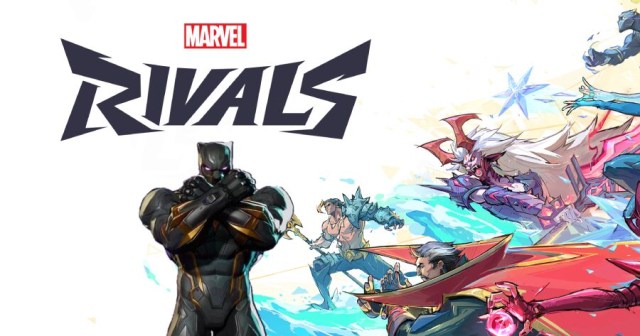
Marvel Rivals Doesn’t Have Enough Hilarious Banter (Guest Column by Brian Michael Bendis)

Everybody knows that comic books are only popular because they have so much dialogue. It’s the one thing that separates them from all other storytelling mediums. When I started pitching comics to Marvel back in 1999, my opening was always “Take a Buffy the Vampire Slayer script, and for every line of dialogue, write thirteen more lines.”

As someone who’s played lots of Zork, I can safely say that games similarly live and die on words-per-minute. And so, I was not impressed with Marvel Rivals. Every conversation is three or four lines, tops! What a crock of shit!

Look, K-Town understood me when I explained this to him. When he first brought me in to consult on the MCU, I told him, “Make sure these characters never shut the fuck up.” He got it. These clowns in the gaming industry don’t.

Okay, let’s do a little Master Class on dialogue. We’ll take a conversation from Rivals and punch it up. Take this exchange between Hulk and Jeff the Land Shark.

Hulk: What is shark thing with feet?

Jeff: MRAAAAA!

Hulk: Ha! Hulk like shark thing!

Lame! Now, here’s a punched up version:

Hulk: What is, um…you know?

Jeff: What?

Hulk: What is shark thing?

Jeff: What is shark thing?

Hulk: Yeah, what is shark thing?

Jeff: Shark thing with what?

Hulk: With what?

Jeff: Yeah, shark thing with what? There’s more than one shark thing.

Hulk: More than one?

Jeff: Yeah, more than one.

Hulk: Okay, what is shark thing with feet?

Jeff: What is shark thing with feet?

Hulk: Um, yeah.

Jeff: I’m the shark thing with feet. Do you mean me?

Hulk: Yeah.

Jeff: So you mean, what am I?

Hulk: I guess.

Jeff: You could have just asked what I am.

Hulk: Sorry.

Jeff: Well?

Hulk: Well, what?

Jeff: Well, what am I?

Hulk: I don’t know.

Jeff: No, I mean, are you going to ask what I am?

Hulk: What are you?

Jeff: Mraaaaaar!

Hulk: Mraaaaar?

Jeff: Mraaaaaar!

Hulk: Oh, mraaaar.

Jeff: Yeah, mraaaar.

Hulk: Ha!

Jeff: Ha?

Hulk: Yeah, ha!

Jeff: Ha, what?

Hulk: Ha, Hulk like shark thing!

Jeff: Who’s Hulk?

It’s that simple. NetEase, I’m just a phone call away.

Alleged McDonald’s Rat an Avid Where’s Waldo Player

ALTOONA, Pa. — The McDonald’s employee who is suspected of ratting out the killer of United Healthcare CEO Brian Thompson to the authorities was an avid player of Where’s Waldo, according to their coworkers.

According to the other employees of McDonald’s, the alleged rat, whose identity has not yet been disclosed to the public, would often be reading Where’s Waldo books during their lunch break.

“They would always be reading those books at lunch, getting really excited whenever they found Waldo,” said another employee of the McDonald’s who wished to remain anonymous. “Sometimes they’d be a little late coming back from break because they were just so into finding Waldo. And not just finding him, but announcing it to everyone. They’d get up and start shouting that they found Waldo, running around and pointing him out to every person who would listen. It was really troubling behavior but I never would have guessed it would lead to them becoming a rat.”

Psychologist Martin Van Nostrand says that it isn’t surprising to see such an avid player of Where’s Waldo end up becoming a rat.

“We’ve been studying the correlation between playing Where’s Waldo and real life snitching for years and all the research has shown us that there’s definitely a connection. Unlike something such as, let’s say, video games and violence, in which there’s been proven to be absolutely no direct correlation at all, playing Where’s Waldo enough is in fact linked to becoming a real life rat. It changes your brain chemistry. Your whole identity becomes enveloped by the need to find Waldo and point him out to everyone and when you go back to the real world and Waldo isn’t there, you end up getting your fix by finding other people to dime out for a dopamine hit. You’re no longer a person in a society helping out your fellow man, you’re a pod person helping the authoritative invasive species win.”

The revelation has sparked outrage online and a call to ban Where’s Waldo.

“Enough is enough and it’s time for a change,” wrote angry user Resist42069 on X – The Everything App. “It makes me sick to my stomach that anyone can just purchase this abhorrent material. We are creating a culture of snitching and birthing a generation of no good rats and it needs to stop. The fact that even kids buy these books and play along with them is disgusting. If we want to better society we need to ban these books for good and prevent anyone from ever again becoming a rat.”

At press time, many prominent figures have sent their thoughts and prayers to Luigi Mangione, the victim of this terrible ratting out.

Ryan Murphy Lets Out Shriek of Pure Joy After Seeing How Hot Alleged CEO Killer Is

LOS ANGELES — Famed Hollywood writer, director, and producer Ryan Murphy has reportedly yelped in a startling fit of ecstasy after seeing the sheer attractiveness of Luigi Mangione, the alleged killer of UnitedHealth CEO Brian Thompson, sources close to him confirm.

“I was in the hallway while Ryan was sitting in his office at his desk, silently scrolling through his Instagram feed of hot chiseled men like any typical workday afternoon,” said Murphy’s executive assistant Liam Tran. “But then all of a sudden, I was shook by the loudest effing noise I’ve ever heard Ryan make. Even louder than when he heard that Aaron Hernandez had lovers on the down low. Then he slammed open the door and said, ‘Liam, call my agent. It’s a miracle! The guy who offed that one CEO…he’s…hot!’”

Murphy says he’s since spent hours scribbling notes into his moleskine while looking at every photo currently available of Mangione.

“The casting options are just so tantalizingly divine. Social media is abuzz!” said the “Monster” creator. “Yes, I see why people are saying Dave Franco should play him, given those luscious eyebrows. But Luigi’s got a bit of Finn Wittrock in him too. Oh, and maybe some Max Greenfield! I wish I could cast every one of my cadre of sexy white leads simultaneously for this role. Maybe I’ll have them all play Luigi at different points in his life. He’s 26, so I could cast each of my favorites for about a one year span.”

A deluge of streaming executives have already reached out to Murphy promising blockbuster deals for the true crime series, which Murphy is referring to with the codename “Deny, Defend, Depose, Delicious.”  

“We all saw what he raked in for Netflix with that series about the Menéndez brothers, who were good looking, sure, but not nearly as studly as Luigi, in my professional opinion,” said a Hulu executive who spoke on the condition of anonymity. “And let’s not forget that Ryan somehow managed to turn Jeffery Dahmer, a literal freaking monster of a human being, into a beloved darling of true crime fanatics.”

“Now just imagine what he can do with this steamy Italian American shooter! Especially since so much of America is seemingly on his side already. We’re talking Tiger King meets Squid Game meets the goddamn Super Bowl level ratings!”

At press time, Murphy was deciding exactly how he was going to make the CEO into a convoluted metaphor for something everyone already understands.

Warner Bros. CEO Found Dead on Street Under Anvil With “That’s All, Folks!” Written on It

NEW YORK — Warner Bros. CEO David Zaslav has been found dead on the street, under an anvil with the phrase “That’s all, folks!” written on it.

“I say, I say, this wasn’t a random act of cartoon violence—we believe it was a targeted attack,” said Police Chief Foghorn Leghorn. “Looky here, son, the trap was baited to specifically attract Zaslav, using a pile of film reels and a sign that read ‘Free Tax Write-Offs.’ That’s called knowing your target, do ya understand, son?”

Coroner Peter Lorre described the victim’s injuries as typical of this kind of incident.

“First responders reported seeing small stars circling the victim’s head,” Lorre said. “On closer examination, we discovered he had suffered severe compression into an accordion shape. Paramedics tried to resuscitate him, but ceased their efforts when they saw a winged, translucent form holding a harp rise out of his body and get out one last quip as he ascended into the clouds.”

The identity of the killer remains unknown, but witnesses describe a haggard, dog-like creature wearing a #ReleaseCoyotevsAcme hoodie.

“After the attack, I saw him strap on a pair of rocket skates and zoom off into a tunnel painted on a wall,” reported one witness. “The police tried to follow him in, but smacked right into the wall. Even worse, a bunch of them were also wearing rocket skates, and a couple launched themselves out of giant slingshots, so they really got pancaked. This is exactly why we shouldn’t be letting police use taxpayer funds to purchase cartoon-grade equipment.”

With the suspect still at large, police are advising other CEOs to carry tiny umbrellas for protection.