PBS Assures Supporters They Know How to Deal With Smug, Little Assholes

ARLINGTON, Va. — After President Trump cut federal funding to the Public Broadcasting service, CEO Paula Kerger assured fans that she knows how to deal with smug, little assholes after putting up with Caillou’s shit for years. 

“If you’ve dealt with one whiny, little bitch, you’ve dealt with them all,” explained Kerger. “They just want attention and will do anything for it. Name-calling, hair-pulling, pinching. No matter how hard it is, you just have to ignore it. But if you can’t or they really get under your skin, you can call their mommy. Or in Trump’s case, call his daddy—Putin.” 

Another PBS employee also sounded frustrated at the President’s threats. 

“We already have one Caillou who is a complete and total bitch baby! We don’t need another,” yelled Dennis Feldman, senior operator of audience and revenue growth. “Why doesn’t that arrogant, selfish jackass go bother Ms. Rachel or hassle the crew at Nick Jr.? We have enough on our plates trying to deal with that bald, fucking shithead, Caillou.”

While the world watches PBS and Trump go head-to-head, broadcast historian, Bill Grant, explains what this could mean for the future of television. 

“On one hand, none of us would have to suffer the agony of listening to loud-mouthed, dickhead Caillou ever again,” said Grant. “But on the other hand, millions of children would never get the education that they so desperately need if they lose PBS. So it’s a tough thing to think about. But the good news for those that are worried, no matter what, one prick is going to lose.” 

At present time, neither the Trump or Caillou camp were willing to speak to reporters. The only thing reporters were offered was a loud, fart noise coming from their mouths. 

Magikarp Fined $15,000 for Flopping

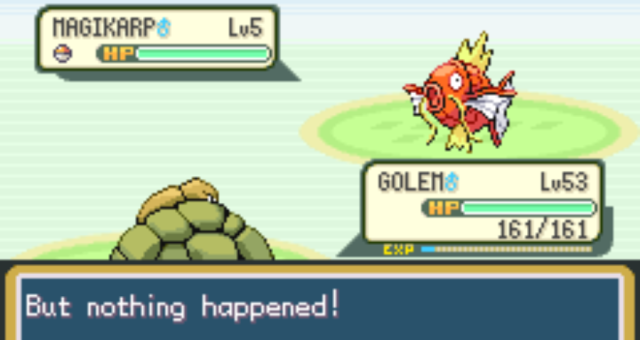
KANTO — A local Magikarp has been fined $15,000 for flopping during its latest playoff match after a recent rule change, sources confirm. 

“The Pokemon in question has been warned multiple times during the regular season that this type of exaggerated contact would not be tolerated moving forward,” said Battle Judge Chairman Ira Pickens. “The Magikarp’s trainer appealed the punishment claiming ‘Splash’ is the only move it knows, however, after investigation we have concluded this is not the case and proceeded with our decision.” 

This ruling comes after a regular season stricken with Pokemon intentionally falling in an attempt to trick officials into rewarding them with a foul call against their opponent. 

“It’s gotten to the point where we can’t even touch them without getting penalized,” said one disgruntled trainer whose Golem was deemed ‘too aggressive’ when battling the fish out of water. “I’m glad they’re finally cracking down on this disgraceful manipulation of the rules.”

While many trainers seem to be happy with this new ruling, fans of professional Pokemon Battles have shown concern regarding the growing control officials now have over the game. 

“Back in my day we didn’t have these new-fangled rules for protecting Pokemon, it used to be simple; first one to faint loses,” said longtime Indigo Plateau League fan Carter David. “Trainers these days are too soft, filling their Pokemon up with Rare Candies and coddling them like Nurse Joy.”

While this aggressive fine is currently only limited to postseason battles, the referee committee has stated the rule will be implemented in the regular season starting next year.

“I think it’s a slippery slope, but something had to be done,” said Dragon-type Elite Four member Lance. “The integrity of competition has come into question, if left unchecked, there’d be nothing stopping a trainer from pulling out a gun during a battle and demanding his opponent forfeit.”

At press time, Splash has been added to the ‘banned moves list’ along with one-hit KO move, Guillotine.

Game Night: Dare to Disturb the Universe in ‘Peppered’

A Steam code for Peppered randomly showed up in my email a couple of weeks ago, billing itself as an “existential platformer.” Without looking up anything else about the game, I installed it to find out what the hell that was supposed to mean.

It turned out to be a perfectly apt description. Peppered is a dark comedy about what you decide to do when nothing seems to matter. It’s also a short-run platformer with a branching narrative, where your choices, successes, and failures can change the course of your run.

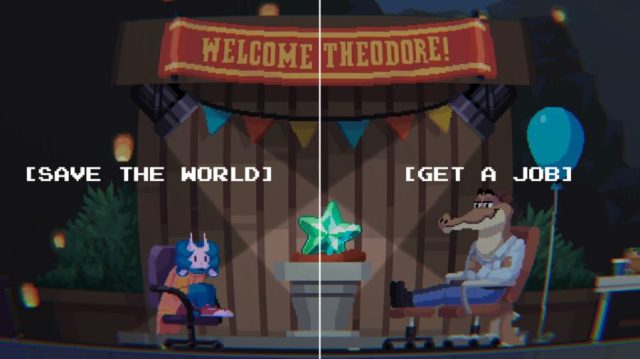
Peppered is set on an alien world, which used to be ruled by a tyrannical entity known as the God of Death, until it was sealed away by the human visitor Theodore. Since then, no one on the planet has been able to die. If they’re fatally injured, they painlessly reappear at various designated respawn points. Some people use that for their daily commute.

Every year, Theodore returns on the anniversary of his victory to reinforce the seal on the God of Death’s prison. On the 100th annual “Immortality Day,” however, Theodore simply fails to arrive.

You enter the story as an unnamed sheep/goat/rabbit thing of indeterminate gender, who has a boring office job in the heart of the city. As you watch the Immortality Day celebration unravel on TV, you learn that if nobody steps up to take Theodore’s place, the seal will break and the God of Death will escape. Despite that, everyone in the city opts to wait for Theodore instead of taking action themselves.

At this point, you can decide to either let that happen, which ends the game, or set out into the city to fix the prison yourself, since nobody else seems to want to do it. That’s when Peppered really begins.

My first impression of Peppered’s actual gameplay was that it’s an affectionate parody of “kaizo” platformers, like Celeste, Super Meat Boy, or The End is Nigh. It’s created an entire setting by narratively justifying the typical features of the subgenre.

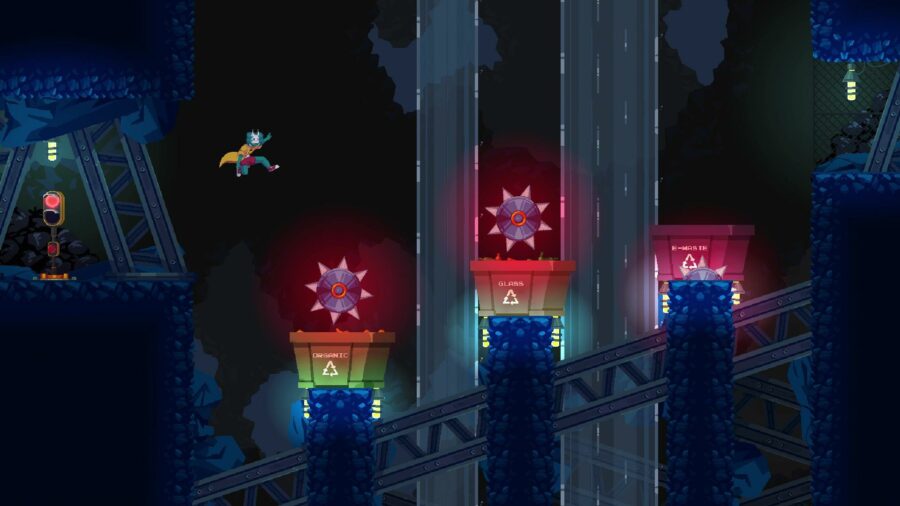
Since no one in Peppered’s city can permanently die, nobody cares about basic safety measures, so entire industrial zones have been made from live wires, open flame, laser grids, and running buzzsaws. In fact, you can only get through certain areas by deliberately killing yourself at the right time or place so you can respawn in the next room.

It’s worth noting that, despite its kaizo influences, Peppered isn’t particularly difficult. On a blind run, I got through the game in about 4 hours, and only (“only”) died about 40 times. I could see it being tricky for new or inexperienced players, but anyone with some platformer chops will get through Peppered in a lazy afternoon.

The real challenge to Peppered comes from its branching narrative, which can dramatically change your path through the game. This includes several obvious decisions, like whether or not to join the antagonists’ team, but also depends on whether you win or lose certain boss fights and special encounters. Either way, you’re only given one chance at any of them, which leads you towards one of 11 possible endings.

I didn’t know that on my first run, so it was a surprise when I screwed up a couple of fights and the game continued anyway. Then I reached Peppered’s halfway point and got to watch as bureaucratic nonsense allowed the God of Death to escape. That changed Peppered’s entire central mechanic, as the game didn’t get any easier, but I no longer had an infinite number of extra lives. That added a new sense of tension to what had previously been a jokey Monty Python sketch of a game, as every stupid death suddenly counted against me.

That adds quite a bit of replay value, as your route through Peppered can change significantly between players and attempts, and it’s difficult to call any of its outcomes a complete success or failure. It’s actually got quite a bit to say across its running time, about life, death, society, imminent disaster, and particularly how and what you choose to value.

Given how Peppered is structured, I do wish it had a level select. While a few of its biggest decisions are made in the first 20 minutes, so you’d need to replay it from scratch to reach certain endings anyway, it’d be nice if I could skip straight to major branch points.

Other than that, I don’t really have any notes. Peppered is accessible, funny, and thoughtful, which are weird descriptors for a game that’s occasionally about throwing yourself into sawblades on purpose. It’s probably not a great introduction to platformers as a genre, since a lot of its best jokes are inside baseball, but it’s the most playable philosophy text ever created. Check it out.

[PEPPERED: an existential platformer, developed & published by Mostly Games, is now available on PC and Mac via Steam for $14.99. This column was written using a Steam code sent to Hard Drive by a Mostly Games PR representative.]

“Spec Ops: The Line” Was Always the “Heart of Darkness” of Games

“Pretension and gatekeeping are the chains that hold creativity back.”

-unattributed quote I just made up

Heart of Darkness was written by Polish writer Joseph Conrad about his experience in the British ivory trade in the continent of Africa. Unlike almost every adaptation of the work, the nation’s military isn’t actually involved in any substantial ways, the book goes out of its way to mention that Conrad’s character Marlow is in the private sector but working with the tacit approval of the brutal 1800s British government. One of the strangest things about reading it in 2025 is just how seamless the transition from British private industry in the 1800s to American military interventionism in the 1900s, and into the 2000s, is. The man being sought in the novel is still named Kurtz, he’s still a strange, aloof genius that suddenly stopped doing his job the way his bosses wanted it done, and the protagonist is sent in to get the ivory, and see if Kurtz can be reasoned with, or if a harsher hand is needed. Though explicitly, the protagonist is not an assassin. In his own words, he is a sailor first-and-foremost and his great desire is to explore the unknown. The book uses dated language, of course, but it’s far, far more critical of British “adventures” in the African continent than many of its contemporaries. There’s a tone of irony and wit, of a real, grounded look at humanity absent from a lot of other English literature of the time. It is brutally human in how it portrays the utter madness of the trade. And it’s very, very odd looking back on both of them that neither Apocalypse Now nor Spec Ops: The Line got much credit for how faithful of an adaptation they were. Less surprising is that Spec Ops: The Line was viewed as “lesser-than” upon release, mostly owing to pretentious gatekeeping around “The Cinema.”

It’s a strange thing, having grown up in the reality of what internet discourse used to be. People pine for a simpler, pre-social media time and while I think social media will probably go down as one of the most culturally destructive inventions humanity ever came up with, this buries the past that the internet early on was essentially a gathering place for casual bigotry sprinkled over pretentious pop-culture cock measuring contests. Worse yet, the people keeping the gates weren’t any more experts than any of us, they just spoke with more authority, usually by virtue of being a bit older, and knowing more trivia. And, of course, they often had a strong hand on banning anyone who disagreed with them on the forums they controlled, those bastions of free-speech that they were. The blunt truth is: they’d simply had more time to be exposed to what was considered classic art at the time, and there was no art more classic in the ’80s and ’90s than the cinema of the ’70s. The brilliant art made under a cloud of cocaine dust and heavy metals in the air and drinking water we’re only just starting to reckon with.

Because I’m genuinely curious: how many of you all have actually sat down and read Heart of Darkness? How many of you know it as anything more than “the book that Apocalypse Now is kinda-sorta based on?” Because one of the single most surreal things about reading it in 2025 is: just how similar it is to the movie in-terms of broad themes and characters. And yet, in the ’70s, Apocalypse Now was receiving mixed reviews from critics at the time and was barely seen as an adaptation of a literary classic. Because let no one tell you that people had “better taste” back when the entertainment now viewed as classic first came out. Few reviews mention it in more than passing, and at least one believed the book’s protagonist Marlow was “more sane at the start” than Sheen’s Willard, a reading I am utterly baffled by as Marlow was anything but. And while many praised its depictions of hypocritical violence and moral ambiguity, and many others loved the spectacle it presented, a great many reviewers wrote it off as an overblown vanity project, as the apotheosis of ’70s “auteur” excess taken to its logical, and nearly lethal, extreme. Add onto that the story of the thing’s creation almost overshadowing it, and people were not as united on the movie in its own time as snobs might want us all to remember. One critic even specifically went out of her way to say that while it aspires to be high-art, it’s not “challenging enough” to the audience achieve the arbitrary title. And I wonder what movie they were watching, as I found a recent viewing to be disturbingly blunt in showing the realities of war and a brilliant soldier’s inability to grasp why it’s happening. It’s blunt, at least, as long as you weren’t expecting to be spoon-fed the themes by it. Coppola himself said the movie is less anti-war, and more anti-lies, something that it and The Line share in-common more so than Heart of Darkness, which is far more bluntly anti-colonialism.

In the same way I wonder what writers, some of whom I have tremendous respect for and some of whom I question the credentials of, were thinking when Spec Ops: The Line released to similar critical reception in 2012. One reviewer called the dialog “comical and ridiculous,” complaining that the hardened soldiers swore too much, or were too vulgar while he seemed to completely miss the point of the vulgarity and violence. Others hung it out to dry for its also-ran 3rd person shooter gameplay, a criticism I take slightly more credence in as the game was aping its contemporaries in order to subvert them, but that’s where The Line proves it had a fool’s trick waiting up its sleeve: the utter subversion of said power fantasy. And while the narrative is usually the thing that received a great deal of fawning praise, and rightly so, it’s not what actually subverts the most from the shooters at the time: it’s the power fantasy itself. Spec Ops: The Line is a horror game wearing the trappings of a mindless action game. It’s the fantasy of going in, shooting enough brown people to win, and being hailed a hero. Call of Duty dabbled in a few scenes of horrific, unexpected violence, but it never broke from the bombast, or had its protagonists and their allies participate in said atrocities. Never the way The Line does. Because the line that is truly crossed during the game isn’t one the characters cross, it’s one the game crosses: player agency. And people HATED the game for it.

It’s easy enough to go back and check out user reviews and forum posts asking, and often demanding, to know what the route to the “good ending” was, or why it was impossible to “do the right thing,” that the protagonist being unavoidably wrong ruined the game because it took agency from the player, in a way that only a video game could. That’s the entire crux of the game’s narrative: you can’t do the right thing, because you’re not the good guys. You’re not the hero. You are only making things worse at every step, because that is what any imperialist nation, half-cocked, uninformed, and overly-confident, always does every single time. Why should this be any different? Because it’s a game? Because it’s America? Because we’re the “good guys” in video games? Because you control the action? By giving the player power but removing control, the game traps you in a metaphorical Hell, and that plays into a strange, subtle twist that was mentioned in zero contemporary reviews. I only heard about it when one of the game’s writers gave an interview where he himself admitted surprise that no one was talking about the fact that Walker, the player character, dies at the start of the game, during a helicopter crash as he and his squad try to leave Dubai, and that the entire game is set in Hell. And in removing the ability for the player to “win” correctly, it takes them right there with Walker: across so many different cultures with so many interpretations of what Hell is, almost a universal theme is: the total loss of hope and ability to change. Failure after failure at redemption and choosing to do better, to be better.

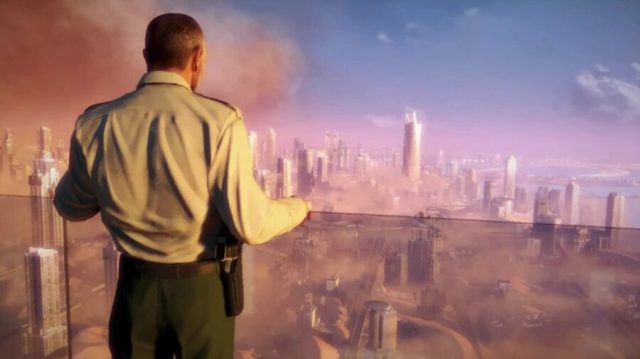
Charging into storm-ravaged Dubai, Captain Walker, here standing with Marlow or Willard in his want to do the right thing, seems to have the bona fides of a genuine American hero. It takes surprisingly little to start to show the cracks in that facade, his motivations constantly shift to whatever will allow them to stay rather than withdraw. To keep pushing forward toward Col. Konrad (a knowing reference to the author, as well as the overall character of Kurtz) in his literal tower, with Walker constantly assuring his squadmates that everything will make sense once he’s reached. It doesn’t take long for him to start to appeal to his squadmates’ humanity, telling them that they’re here to rescue people, despite that not being their initial mission of reconnaissance and report. Fighting through a civilian militia, and a rogue division of American troops who turned Dubai into their own kingdom, it becomes clearer and clearer that things aren’t nearly as simple as Walker needs them to be.

After massacring unarmed civilians, and the soldiers protecting them, with white phosphorus, he insists it’s now a revenge mission against the monstrous people who “made them do that.” Even though Walker himself, played by YOU, was the one who kept them pushing forward, who kept them going, who rained literal fire onto the refugees and soldiers protecting them. It doesn’t matter what happens, Walker will always have a reason to keep moving forward and never learn. He will always have goal posts to push further and further back. He will “never surrender” in the most toxic way possible, and he is responsible for the horrors that happen, while accepting none of the blame and learning. At the time of its release, this was treated as mostly a gimmick. A way to portray the loss of sanity by having Walker and Delta Squad become more savage in their dialog, more vicious and less professional as they become more and more desperate. It felt like there was almost a fear in a lot of the reviews, that they were giving a ‘mere video game’ too much credit for reaching the highs of something like Apocalypse Now, and making the audience experience it, rather than view it. A piece of real art that was made in the crucible of real human suffering! Unlike video games, still struggling to be viewed on the same level as movies, and likely never to achieve the prestige of a sainted book from the 1800s. But it’s neither of those things, it was the next logical step in fiction, and storytelling.

It’s a video game that uses the interactivity of the medium to do something that a movie and a book couldn’t, regardless of quality or influence. Both of those are passive entertainment, you turn the page, you continue watching, the narrative unfolds. Video games must be interacted with, and by allowing you to do it, by giving you choices that do impact and affect the narrative, but never allow you redemption, the video game allows you to put yourself in the shoes of people who want to help, but as one of the game’s chilling, haunting tooltips tells you after you’ve committed at least two atrocities: “You cannot understand. Nor do you wish to.” The tooltips got surprisingly little talking about in contemporary reviews as well, but the way they transition from “helpful” to “mocking, cruel, and downright horrific” is fairly gradual, and plays into the notion of the game taking place in Hell. The Devil is in-control of the narrative, the Devil is trying to impart upon you the message of the game through the tooltips, but this isn’t like Inscryption or Doom where your tormentor has a face you can punch: the game itself is trying to teach you a lesson, and torment you for not learning it, through the actual playing of it. Eventually you no longer receive help, only messages like, “If you were a better person, you wouldn’t be here” and “This is your fault.” But it’s Konrad himself who has, perhaps, the most cutting line: “You’re a failure, Walker. Finally we have something in-common.” While what actually happened between Walker and Konrad before the events of the game is still shrouded in the dusts of time and lore, it’s clear Walker views him as a father-figure, or at least a mentor, and that Konrad, in the end, was pretty lousy at both jobs. There’s even a file to find on him diagnosing him with severe PTSD, but since he was hailed as a hero and a genius at the time, he didn’t seek help and instead sought to blame everyone else around him, propping his own ego up until it got thousands of people killed. Just like Walker does throughout the narrative.

Spec Ops: The Line is brutally honest about the realities of American interventionism, and it’s brutally honest about how little the good guys actually ever do good things. You’ll run into CIA agents who seem to be on your side, until one destroys the city’s water supply, damning everyone to a slow, agonizing death. And why? To erase what happened there, to erase the failures of American interventionism. Willard is sent to kill Kurtz in Apocalypse Now because his superiors no longer trust him, and because they believe he’s gone mad as he no longer wishes a sudden, violent end to his ‘enemies.’ But Kurtz has plenty to say about the madness and pointlessness of war, pointing out the hypocrisy of teaching soldiers to drop fire onto human beings, but not allowing them to write “FUCK” on the side of their plane because ‘it’s obscene.’ These are the ideas he’s going to be killed for, not the ones regarding how best to slaughter and massacre. Because as Willard points out: “accusing someone of murder here is like handing out a speeding ticket at the Indy 500.” In that way: he joins his literary sibling and his video game progeny. “War is madness” is an easy thing to say, it’s depth only matched by the apparent shallowness that usually gets noticed. It’s far more difficult to show. But Marlow, both Kurtzes, Willard, Konrad and Walker all do, all in the same way: assumption of virtue. Just following orders. All three assume they’re the good guys for no reason other than the fact that they must be, after all: they’re agents of their governments in some form-or-fashion. Even Marlow, technically part of the private sector, is largely fetching the ivory for the trade companies that report to the Crown.

All three men see the realities of war, but not just war: conquest for profit. Heart of Darkness‘ narrator knows the madness of it, he even refers to the notion of it when he says, “They were conquerors, and for that you want only brute force-nothing to boast of, when you have it, since your strength is just an accident arising from the weakness of others.” Willard experiences, firsthand, the pointlessness of everything going on, reading in Kurtz’s words that soldiers are made too comfortable in modern war, and that is counter-intuitive as it attracts people looking for easy work. Willard himself observes that the USO Shows, stereos blaring American rock and roll, the food, a near-riot caused by some half-naked women dancing, everything is designed to safely remind the soldiers of home, but it only makes them miss it more. While Walker and his men don’t have any such observations, because it’s a video game, it can do so much more with perception and reality. A squadmate thought dead can ambush your characters, and when killed murmur, “The only villain here, Walker, is you. It’s only you,” while Walker pleads with him that his death was an accident and his remaining squadmate demands to know what’s going on. Because he doesn’t see the hallucination, he’s just following orders. Walker can experience deja-vu as he relives the moments before his death, though this time he gets to live longer. And do even more harm.

Spec Ops: The Line doesn’t have a good ending, because Walker isn’t a good person. He might have done things that could be viewed as heroic, but his inability to pause, to take stock, to do anything besides push forward, no matter what, makes him a perfect soldier and an imperfect human being. Kurtz, in Apocalypse Now, talks about how all he’d need are a few divisions of soldiers as dedicated as the Viet-Cong who must “win or die” and he would have the war won. He’s talking about men like Walker, and in that way The Line shows what men like that can accomplish, properly aimed and motivated: nothing good. By taking the agency from the player, by only giving the illusion of a heroic experience that will end with the flag held high and a celebration back home, Spec Ops: The Line can hit in an emotional depth that movies, TV, and books simply can’t: make you feel truly helpless. No matter what you do, it’s the wrong choice. The blood of innocent people is on your hands, because like Walker: you didn’t just put the controller down and walk away. Walker won’t leave, even despite constant repetition that he doesn’t know what’s going on, doesn’t know the situation, just knows: move forward and kill the enemy, and everything will eventually make sense. Which leads him down the road to Hell and beyond redemption. Because at the end of the day: you cannot understand. Nor do you wish to.

Man on Third Attempt of Swiping Hotel Keycard Unaware His Night About To Become Metroidvania

PHILADELPHIA – A man on the third attempt at swiping a hotel keycard to unlock his newly-purchased room at the local Hyatt was unaware his night was about to become a Metroidvania, sources report.

“Usually, I can get it on the second try,” said Sam Aaron, a businessman and father of two who checked into the Hyatt with his family hoping to relax for a night or two. “But after exhausting all possible variations on swiping speed, angle, and positioning, I knew something was wrong. I took the card to the lady at the front desk and said it wasn’t working, and she said my room actually requires a yellow keycard, which I guess makes sense since the door is entirely yellow, but it would’ve helped to get the right keycard the first time, you know? But it’s late, so I just swallow my frustration and ask for the yellow keycard. And the lady—I swear to God—she says certainly, and gives me a green keycard. Will this open my room? I say. ‘It opens the keycard storage room,’ she says. So I use the green keycard to open the door to the storage room and she points me to the yellow keycard that unlocks my room: high up on a shelf with a grapple point attached. ‘Oh no, looks like you don’t have the grapple launcher attachment,’ she says. That’s when I kinda lost my shit.”

Regina Spangler, the aforementioned receptionist at the Hyatt—whose layout guests describe as “sprawling, interconnected, and encouraging exploration”—was a constant figure throughout Aaron’s night, according to sources.

“I remember Sam,” said Spangler, who often encounters guests backtracking through the lobby on their way to the elevator, which is needed to access the hotel’s subbasement where a series of experimental surgeries gives guests the ability to double jump. “He was your typical customer who thinks the world revolves around them. Every little inconvenience is a crisis: ‘Oh, my room is too small!’ ‘My coffee is too hot!’ ‘My map shows a blacked-out area behind the mini-fridge that is clearly meant to be accessible with the sledgehammer but I managed to get in accidentally by cheesing the bubble wand and now I’m worried I screwed up progression!’ It’s like, give me a break. Is this your first day on planet Earth?”

“Mr. Aaron was fuming by the time he came back with the grapple launcher,” continued Spangler. “But what could I tell him? There’s just a certain way we do things around here. Is the non-linearity confusing? Sometimes. Is the thrilling exploration occasionally overshadowed by fatigue? Maybe. Did we throw a totally bullshit buzzsaw platforming section in at the end that’s inexplicably necessary to get the good ending? Absolutely. But all that pales in comparison to the joy of discovery our hotel brings.”

Aaron’s husband and two kids, who mostly waited in the lobby while Aaron reshaped his mind, body, and soul to ensure their comfort, reflected on the night’s events from the safety of their new room.

“He’s still the man I love, but he’s different,” said Aaron’s husband Neil. “He fears the color yellow now, and he refuses to touch another map. I keep telling him there are no more secret areas, no more doors that need three medallions, but he doesn’t believe me.”

At press time, authorities announced the hotel would be shut down in the coming days due to rampant property damage by guests as well as multiple building safety violations, with experts citing “yeah, it’s basically one big fire hazard”.

Nathan Fielder Builds Shadow Moses Island

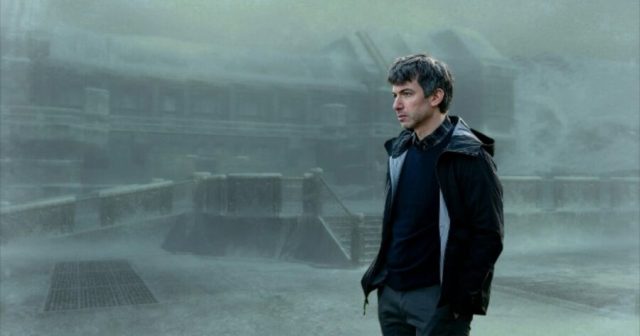
UNIMAK ISLAND, Alaska — Shortly after beating Metal Gear Solid for the first time, comedian Nathan Fielder has constructed a fully accurate replica of the fictional military base on which the game is set, and begun a live-action re-enactment of his playthrough in real-time.

“Video games ask the player to become their protagonist, but nobody ever truly does,” narrated Fielder as he crawled beneath a crate to avoid one of the actors he hired to perfectly imitate the game’s guards. “I couldn’t truly say I beat Metal Gear Solid until I had become Solid Snake. I never felt the snow on my belly, or killed any members of FOXHOUND, or repeated everything I heard as a question. But maybe, with the resources at my disposal, I could become the first person to ever complete it.”

Following meticulous analysis of the game’s maps, Fielder’s recreation of Shadow Moses Island features every in-game item in its original location, as well as a full staff of actors to portray every character in the game.

“When I took this job, I thought it was a Metal Gear Solid movie,” explained Ellen Che, the actress cast to play Mei Ling. “Instead I’m sitting in this room for hours and occasionally reading a Chinese proverb over the phone. But it could be worse, at least I’m not one of the guys out there. Just to start, they have to constantly wear these prosthetic masks that make them look like PlayStation char…oh, sorry, he’s trying to save again. What can I do for you, Snake?”

The audacious experiment has been praised by critics as a revolution in television, simultaneously elevating comedy and video games as an art form, and praised by those critics’ friends as “that weird show you keep trying to make me watch.”

“I had almost done it,” continued Fielder over footage of him fistfighting Liquid Nathan on top of the fully-functional Metal Gear REX he had built. “I only ate rations. I endured real electrical torture. I re-enacted Symphony of the Night in full too just so Psycho Mantis could mean it when he said I liked Castlevania. And in those final moments, I had become Solid Snake. I was a bitter old soldier, tired of a life of violence yet unable to know anything else. My accomplishments were nothing more than painful memories, and I wished for the only corpses I ever saw to be pixels on a screen. Solid Snake would’ve given the world for the Shadow Moses Incident to never happen. Yet Nathan, the fool I used to be, made sure that it did. I had beaten Metal Gear Solid, and with it fully understood its ending.” Fielder got on a snowmobile with a very confused actress playing Meryl, looked at the caribou he had arranged to be in that location, and enthusiastically delivered his final scripted line. “Come on, let’s enjoy life!”

At press time, Fielder had found the perfect Liberian child soldier for his re-enactment of Metal Gear Solid 2.

Gamer Settles in After Long Day at Work to Watch Game Install Files

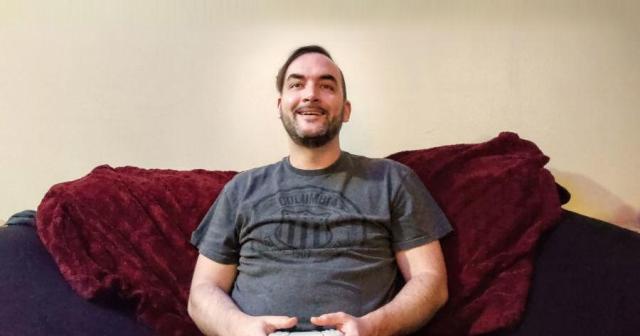
BIGFORK, Mont. — After working a full day shift at his pet food tasting job, resident Bartleby James likes to unwind by microwaving a TV dinner, resting on the couch, and watching a necessary update download and install on his PlayStation.

“There’s nothing quite like working an 9 hour day, 30 minutes which are off the clock for lunch, and 30 minutes unpaid to finish what I’m doing because my HR rep says the company does not pay overtime without advanced notice & permission, then coming home, texting a buddy about playing Call of Duty, loading up the ‘Station, and then staring at the download screen while another patch is installed for a game that launched two years prior,” says James.

He’s become so used to this routine that James spends every weeknight downloading patches. On weekends, he plays computer solitaire.

“I love that even when I buy a physical copy, I still get to watch a download screen for hours after assuming I was going to be able to play the game I just spent $60 on that was rushed to meet a deadline,” says James’ PSN friend Bob Breen, AKA “gaysex6942069.”

Studio heads are making note and companies like Ubisoft and Activision are trying to keep up.

“Due to the demand, we’re trying our best to lengthen download times. By this time next year we’re hoping to have people spending all their free time watching a patch download,” says Lex Shtrokin, the PR rep at Activision.

At press time, activision is currently in talks with Comcast about capping download speeds to “give the people what they want.”

Team Cherry Hires George R. R. Martin to Help Wrap Up Silksong Development

ADELAIDE, South Australia — With the finish line for Hollow Knight: Silksong on the horizon, Team Cherry has brought on famed fantasy writer and lore connoisseur, George R.R. Martin, to write additional backstory for the game. Team Cherry Co-Director, Ari Gibson confirmed the new hire on a Twitch live stream earlier this week.

“When it comes to lore, nobody beats George,” Gibson said, holding up his sticky note-covered copy of A Dance with Dragons with its spine worn down to the pages. “I got the idea to bring George on after watching Sinners at my local AMC. I don’t know what happened. It was almost like an intrusive thought overtook me. There I was watching the best movie I’ve seen in theaters in quite some time and all I could think about was George R.R. Martin and his impeccable ability to draw you into a setting.”

The livestream drew concerns from many fans who worried about further delays to the already late game. Gibson addressed the concerns, promising no further delays on the homestretch of Silksong’s development cycle.

“The game is done, has been for some time,” Gibson said, before ordering his stream mod to ban all chatters who were spamming ‘delay incoming’ in the chat. “We’ve been putting off writing all the backstory and lore for quite some time. We think working with George will give us speedy results and get the game to all you patient and understanding gamers.”

Following the live stream, George R. R. Martin detailed the new collaboration on his blog, while also airing some of his concerns.

“Working with Team Cherry was a no-brainer. I love Hollow Knight and I didn’t have anything on my docket, so I jumped at the chance to work on Silksong,” Martin wrote, before going on a tangent to ridicule HBO. “But back to Silksong, there’s a lot of work to be done, and I’m sure I’ll butt heads with the team here and there, but I promise I am going to work my duff off to get this game out on time. You have nothing to worry about. I deliver on my promises.”

At press time, Team Cherry had announced that Hollow Knight: Silksong’s release had been delayed to some time in the late-2020s.

Shigeru Miyamoto Confirms Yoshi has a Cloaca

KYOTO, Japan — Surprising news from Nintendo this week as Shigeru Miyamoto has let the world know that yes indeed, Yoshi has a cloaca. It’s unclear how much this quandary was affecting the public consciousness, but regardless the matter has been settled.

“I get this question all the time when I make public appearances and frankly I just wanted to put the question to bed,” Miyamoto said when asked why Switch 2 games would be priced so high. “The rumors are true though, all yoshis have cloacas and were always intended to. Fans have always wondered if Yoshi has a penis! Of course he does not. I intend to go into great detail about the anatomy of Yoshi to answer all inquiries into his genitalia.”

Reporters were vexed why the video game mogul had decided to talk at length about such a topic in the wake of questions about the Switch 2 and Mario Kart World, but Miyamoto pressed on:

“You see when two yoshis mate they perform what is called a cloacal kiss. It’s a beautiful process that we’d like to show our fans up close in a new Yoshi Story game coming exclusively to Nintendo Switch 2 for the very reasonable price of $149.99.”

Some fans have reacted positively to the news while others have not been so enthused about learning more into the body make-up of their beloved character. Many wonder what this means for other Nintendo characters.

“So everytime Yoshi lays an egg it’s coming out of a cloaca? I mean I guess that makes sense but it feels weird to know that I guess,” said Sam Toniton of Chicago, Illinois. “I like to play as Yoshi whenever I play Mario Kart but now it just seems different. What does this say about Birdo? Does Birdo have a cloaca too?”

Oddly enough, Miyamoto later answered that question when asked why Nintendo products never seem to come down in price saying, “Yes it’s true Birdo does have a cloaca, but in that big snoot thing on her face. She does have a butthole though.

Nation’s Antiheroes Announce You Must Be Pretty Desperate To Come To Them For Help

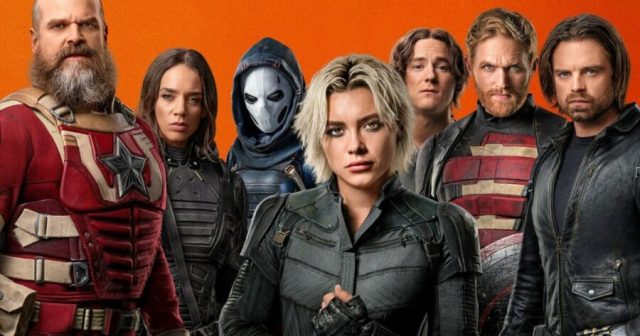
NIGHT CITY The nation’s antiheroes convened on a dark rooftop in Night City last Friday to announce that the situation must be pretty dire for you to be seeking their help.

“Well, well, well, what have we got here?” read group spokesperson ‘Killswitch’ from a statement prepared and ratified by each of the group’s most heavily-tattooed members. “You always thought our methods were too extreme. We guess the tables have turned.”

According to antihero “Hooded Gun”, who began as a pointed allegory for the danger of right-wing masculinity but who now is just sort of an edgy guy, the priority of the group remains what is in it for them.

“There’s just one thing we want to know: what’s in it for us?” read Gun. “You may think we do this out of the goodness of our hearts: but no. We’re cool and ‘2016’ in that way.”

The group also announced that the going rate for their antihero work will also be increasing, in line with the increased workload due to the negative state of the world.

“Where once we worked to protect our own lives and, occasionally, for the promise of a one-million-dollar payday we would ultimately reject at the end of our character arcs, now we work for the promise of a TWO-million-dollar payday that we will ultimately reject at the end of our character arcs,” Killswitch announced to the gathered group of police commissioners, driven reporters, and hard-edge government handlers.

Though the state of the world is now desperate enough to require the assistance of antiheroes, not everything is so bleak: according to mall employee Blaize Embers, sales at every Hot Topic have never been higher.

“Our stock has shot through the roof. When these characters first appeared, they were villains. And they still kinda are, but now they’re more palatable to parents. And that has merch implications,” said Embers. “If there’s one thing teens love, it’s misunderstood heroes with merch implications.”

At press time, the group has also declared that “we’re not so different you and I”