U.S. Health Care System Announces Plan to Just Scatter Med-Kits Randomly Around Country

WASHINGTON — The Department of Health & Human Services announced a sweeping overhaul of the nation’s healthcare infrastructure by strategically distributing med-kits randomly scattered across the country, sources within the HHS confirm.

“We’ve reached a critical juncture in this country. The new program, titled Operation Full HP, will allow patients to locate first-aid kits in various locations, including, but not limited to, file cabinets, near trees, and under the occasional park bench,” said Deputy Health Secretary Carol Mulligan in a press conference. “Doctors and hospitals are overwhelmed, and the cost of care is astronomical. By scattering these med-kits nationwide, we’re empowering individuals to take healthcare into their own hands—literally. Imagine, you twist your ankle, and bam—there’s a med-kit conveniently hidden behind a fire hydrant.”

Patients, however, remain confused by the unconventional rollout.

“I’ve spent hours looking for one of these kits when I got a migraine last week,” said Derrick Washington, a New Jersey resident. “Why are they hiding them in the most ridiculous places? I finally found one, but it was in a mocker at an abandoned YMCA. It had some band-aids, sure, but no ibuprofen. Another was nestled in a swath of tall grass like I’m trying to catch a Pokémon? I’m sick, not on a scavenger hunt. The least they could do is make them glow blue so you can spot them easier.”

Still, experts argue that this plan represents a bold new era of American healthcare.

“This is technically universal healthcare,” said Dr. Jane Phillips, a professor of health policy at Stanford University. “Everyone has an equal opportunity to find a med-kit, regardless of socio-economy standing. It’s a free-for-all, and that’s what makes it fair. Let’s say you break your leg and find a med-kit with Oxycodone & a bottle of whiskey – you can trade those items with someone else who found a splint. In a way, it’s the perfect blend of universal access and free market capitalism.”

As of press time, thousands of kits have already been delivered to empty wood crates, the stalls of bathrooms, and disused vending machines with a rollout planned for 2025 to include burned-out pickups, under piles ro rubble, and in sewers.

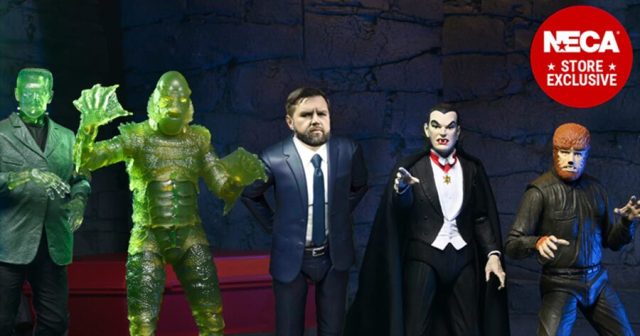
NECA Releases JD Vance Figure in Universal Monsters Collection

HILLSIDE, N.J. — Action figure manufacturer National Entertainment Collectibles Association (NECA) has included vice presidential candidate James David Vance in their new limited edition line of Universal Monsters merchandise.

“It seemed like a good fit to us,” said Ann Muovi, design coordinator and lead painter at NECA. “Usually we negotiate with popular media brands to produce figures of their iconic characters, but nobody here knew anything about Vance. His campaign paid us a lot upfront so we had to come up with something, and after researching his role in ‘Project 2025’ we all think he’s a monster.”

The collection, licensed by Universal Pictures, features other famous film fiends like ‘Dracula’ and ‘Frankenstein.’ Reactions from figure collectors on social media have ranged from tepid to lukewarm.

“I bought Vance to fill a spot on my villains shelf but my wife said he’s too creepy to keep on display,” reported the horror-themed YouTube channel ‘Necaphiliac’ in a full review. “I tried to scalp him on Facebook Marketplace, figured someone there would want #1 of 50, but it’s been weeks without a bite and they aren’t even sold out on the NECA store. And I get it. ‘Hillbilly Elegy’ is the most boring B-horror ever. My kids turned it off before he even started killing people. So I’ll just put him in the closet next to my Ted Cruz Lego set.” 

Vance gave insight into the collaboration decision during a podcast which everyone agreed would not be fact-checked.

“I’ve always been a big fan of Necco figurines and it’s been great for the campaign,” said Vance. “The American working class loves my little doll. I’ve signed at least two thousand of them at rallies already. Cornering the high-end birthday gift market is my only way to reach the girlfriend and suburban mom vote. I’m aware of some negative responses but that’s just a bunch of childless toy guys.”

At press time, NECA issued an emergency recall after several customers were hospitalized from inhalation of toxic fumes when burning the figure as an effigy.

Fishing Not as Fun as Fishing Minigame Implied

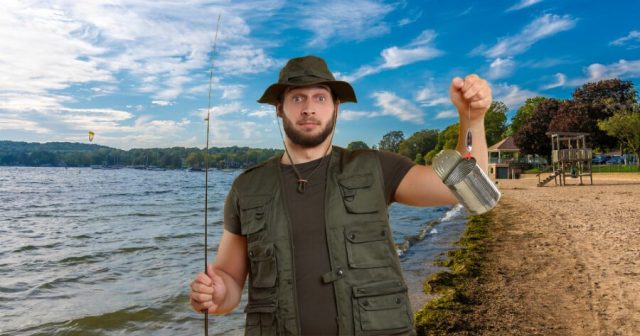
LAKE GENEVA, Wisc. – Following an itch to get outdoors and take on a new hobby, local reformed gamer, Reggie Murphy, discovered that trading his Xbox for a tackle box wasn’t everything it was cracked up to be. The disgruntled fisherman could be heard hollering across Geneva Bay, confirming his disdain for fish, the act of fishing, and it being nothing like fishing minigames led him to believe it would be.

“I just wanted a distraction from my main quest in marketing for medical supplies. Whenever I need a break from gathering cult members in ‘Cult of the Lamb’ or banging my crush in ‘Stardew Valley,’ I just cast a line and fish the day away,” Murphy said, shaking his head at his nearby poles. “I am so good at those fishing minigames. You should see how many fish I can catch. No matter the fishing minigame, I am the fishing master. Here, I do ok, but where are the shadows so I know where the fish are? Where are the button prompts and the instant gratification of knowing the species, weight, and length apun catching the fish? I really feel like I was lied to.” 

Murphy continued to bellow, carrying on about the preparation that went into his fishing trip.

“Did you know you had to put a worm on the hook to entice the fish? I didn’t and now my fingers are all slimy. Even worse, the few fish I have caught I had to remove from the hook and now my fingers are even slimier. I can’t tell what’s worm slime and what’s fish slime,” Murphy’s voice echoed across the bay, scaring any nearby fish. “You don’t even need fancy rods. I got this nice one and this old one and they both caught the same little baby paddlefish. I don’t think any of these game developers have ever actually been fishing.”

Local Lake Genevans didn’t take too kindly to Murphy’s harsh words about fishing and their beautiful lake. This included the local Lake Geneva police who fielded multiple complaints about Murphy.

“We get disgruntled gamers often,” Deputy Marcie Bloom of the LGPD said heading to her squad car to drive out to Murphy’s location. “These folks get a small taste of fishing and think they can handle the real deal. This isn’t ‘Final Fantasy’ or ‘Red Dead Redemption,’ this fishing takes patience, which these gamers lack. These folks usually don’t cause much harm. As long as no other law has been broken we usually slap them with a warning for disturbing the peace and send them back home to their minigames.

At press time Murphy had been arrested for allegedly fishing without a license and for two counts of capturing a vulnerable spcies of paddlefish.

Game Night: Absolutely Everything Is Trying to Kill Us in ‘Iron Meat’

For the last few years, Konami has been notoriously uninterested in making games. It has a proud 40-year-old legacy of classics, the most famous of which are Metal Gear, Castlevania, Silent Hill, Suikoden, and Contra, but made a deliberate shift towards the mobile and pachinko markets in 2015.

While Konami’s put out a few things recently, such as this week’s Silent Hill 2 remake, February’s Contra: Operation Galuga, and the recent Castlevania DS collection, it’s let many of its franchises wither on the vine. If you’re any kind of long-time video game fan, it’s been a point of frustration for a while.

That frustration has apparently hit Retroware particularly hard, because its recent product lineup looks like a blatant attempt to rebuild Konami from the ‘80s on up. The forthcoming The Transylvania Adventure of Simon Quest appears to be an attempt to ask the question, “What if Simon Belmont was a douchebag?” and Iron Meat is described on its own Steam page as a “Contra-like.” These are shameless men who have set about a shameless task.

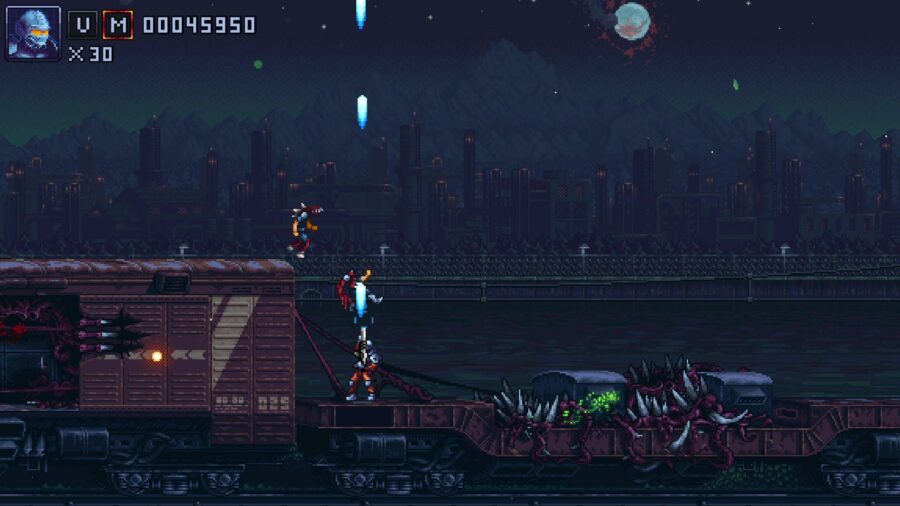
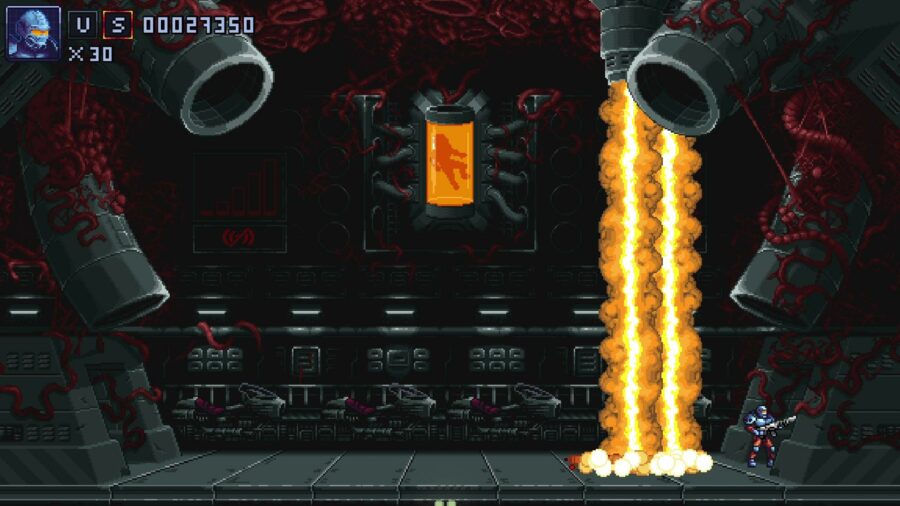
I’m giving them shit – I feel I have no choice but to give them shit – but I can’t say they’ve done it badly. Iron Meat is a Contra game by David Cronenberg on surprise acid, packed fat with body horror and arcade-style challenge. Like Contra, it’s designed to encourage you to go for a one-credit clear, but it’s got a few modern quality-of-life features that take some of the sting out of learning each level’s patterns.

At the start of Iron Meat, an unspecified experiment opens a portal to another dimension. The entity that spills out, the Meat, is instantly hostile and turns everything it touches into a cyborg abomination. Humans become half-machine drones, while everything from crates to vehicles to buildings become carnivorous nightmares.

You’re one of the troops trying to fight this invasion back by any means necessary. Early on, you’re fighting little skirmishes against the forces of Meat, but eventually it turns into a full panicked retreat. This is all told through the story that’s happening in the background as you blast through hundreds of Meat-created monsters, as the war takes you from the human holdouts’ facilities to a confrontation on the moon. There’s actually a fair amount of story here for a game that has placed absolutely no emphasis upon it.

Describing the gameplay feels mildly redundant, as the gameplay is Contra, and it feels like everyone who’s ever wanted to play Contra has had the opportunity to do so by now. You are a square-jawed action archetype with a gun who runs across the screen shooting everything that gets in your way. Despite your visible grit and ability to do infinite triple flips, you die from the mildest touch of enemy action.

While Iron Meat does load you down with extra lives – Normal difficulty gives you 15, and they’re restocked between levels – you also lose your current weapon if you die. It borrows the weapon-swap mechanic from Contra III, where you can keep a gun in reserve through death, but you’re still at an immediate, distinct disadvantage whenever you lose a life.

The idea is to learn each level so you can glide through it without taking a hit, which rewards you by letting you keep your big overpowered guns on hand to blow the stage boss into component atoms. This is a game that’s been made to be mastered.

It’s also got some of the craziest enemy design of anything I’ve played this year. Iron Meat is set in a world perched between any given Iron Maiden album cover and ‘90s skateboard art, where absolutely anything could sprout a fanged maw and try to kill you. I thought the giant semi-organic bullet train would prove to be the limits of its ingenuity, but then I ended up in a pitched fight against a possessed apartment building. If there’s one thing you have to see in Iron Meat, it’s the flesh/robot monsters, and some of the best are saved for the last couple of stages.

The biggest problem Iron Meat might have is that it doesn’t always do a great job of indicating where it is and isn’t safe to stand. There are a number of levels where you’re supposed to navigate a situation by jumping to ledges that are colored like they’re meaningless parts of the background. It’s nothing you can’t learn from repetition, and the entire game is built around replaying the same 11 stages for high scores, but it’s obnoxious on an initial run.

Its second biggest problem is that it came out the same year as Operation Galuga. Iron Meat has a more classic style and arguably better design, and it was mostly made by one guy in Russia, so you have to grade it on a curve. It’s still got the problem where it was made in homage to a classic series that abruptly came out of hibernation a full eight months before its release, in what analysts sometimes (do not) call a “Bubsy 3D” scenario.

Iron Meat is ten bucks cheaper than Operation Galuga, though, and it’s worth clearing at least once for the experience. It’s only about an hour long, with enough of that old-school style that you’ll probably want to immediately go back through it on the next highest difficulty. It’s got 1995’s graphics with 1985’s gameplay, and if that sounds like fun to you, you’ll enjoy Iron Meat.

[Iron Meat, developed by Ivan Suvorov and published by Retroware, is now available for PlayStation, Xbox Series X|S, Nintendo Switch, and PC via Steam, Epic, Itch, and GOG for an MSRP of $19.99. This review was written using a Steam code sent to Hard Drive by a Retroware representative.]

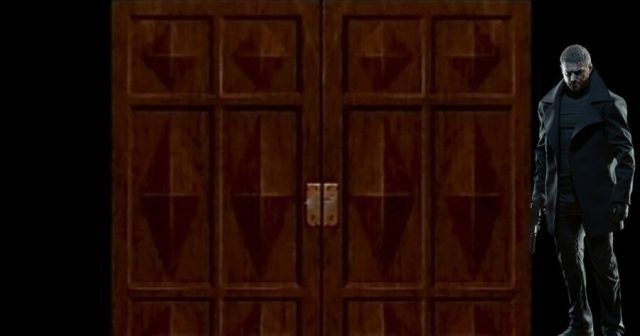
Chris Redfield and His Thick Boots Thwarted by Locked Door Marked with Shield Emblem

RACCOON CITY – In an embarrassing moment for all present, while exploring a mansion owned by the Umbrella Corporation Chris Redfield was unable to kick in a locked door despite his big thick boots and giant leg muscles.

The former Special Tactics and Rescue Service member reportedly hung his head in shame as he continued through the residence with the rest of his team.

“I used to punch boulders out of the way that were ten times my size,” Redfield shared in a hushed whisper to anyone who would listen. “It’s got to be the boots. I usually wear my Red Wing boots. This is what I get for trying out Thorogoods. I won’t make that mistake again.”

The crew, made up of Redfield’s longtime friends and partners in bringing down Umbrella, Jill Valentine, Leon S. Kennedy, and his sister Claire Redfield, were all but ready to move on, but the eldest Redfield continued to dwell on the locked door.

“A key with a shield emblem on it? Who are these hack architects still designing mansions for Umbrella,” Redfield pondered out loud in a desperate attempt to pass the buck on his failed door bashing. “I get a little queasy after ingesting some red herb. Give me an hour to flush it out of my system and I’m sure I’ll be able to kick that door in.”

Having enough of his excuses, Valentine cut in to help bring Redfield back down to Earth.

“I know it may not look like it, thanks to the anti-aging properties of herbs and first aid sprays over the years, but we’re getting old, Chris,” Valentine said, caressing his face. “We’ve all been doing this for a while now. You think I can lock pick every door I come across? You can’t beat yourself up for not being able to kick in one door. You just turned 51, give yourself a break, old man.”

At press time, Valentine had successfully circled back and unlocked the door with her trusty lock pick.

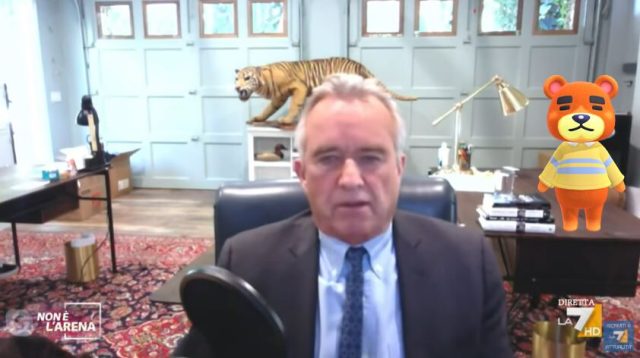
Report: RFK Jr Contracted by Tom Nook to Harvest Carcasses of Villagers Who Fell Behind on Rent

ANIMAL VILLAGE — RFK Jr has allegedly been collecting the dead bodies of islanders who fell behind on their rent in an arrangement with Tom Nook.

The former presidential candidate and avid carrion collector addressed the allegations in an unprompted video posted to his X – The Everything App account.

“About five years ago I took a Dodo Airlines flight to this island, and that’s where I met Tom Nook,” RFK Jr said. “He knew who I was, and that I’m an avid outdoorsman who has never met a rotting animal carcass I could say no to, and says he has a few fresh animal corpses I’m welcome to take with me, starting with this seagull who had kept washing up on shore and he was worried about attracting other vagrants to the beach. Anyway I snapped the gull’s neck cause he wasn’t quite dead, and that was the beginning of our partnership.”

Tom Nook, real estate developer and landlord, has denied the allegations.

“I’ve never met RFK Jr before in my life,” Nook claimed. “I value the lives of our tenants nearly as much as I do the property they occupy. Why would I want to see any of them dead? Any residents who have died that also happened to be behind on their rent is purely coincidental. If there’s some deranged lunatic harvesting the corpses of our deceased residents I expect them to be prosecuted to the fullest extent of the law. Teddy was a friend, and to see his lifeless body stuffed and posed in a threatening stance in RFK Jr’s study in that insane video is just heartbreaking. That’s not the Teddy I knew.”

K.K. Slider has announced a tribute album to raise funds for the families of the deceased titled “Always Pay the Rent on Time”, but has denied any wrongdoing by Tom Nook.

“Tom Nook is a compassionate businessman who is invested in supporting the community he bankrolls,” The fabled guitarist said. “After all, would a heartless killer provide live music every Saturday for the tenants of his village? I think not. Anyway, here’s Bubblegum K.K.”

At press time, RFK Jr was seen struggling to get a pair of glasses to stay affixed to the stuffed head of Raymond, the cat who was recently reported missing by residents of the island after falling behind on his last two rent payments.

EA Announces New Multiplayer Sims Experience Called “Going Outside”

REDWOOD CITY, Calif — During EA’s Investor Day event, EA has unveiled a new multiplayer expansion to The Sims 4 in the works titled “Going Outside” which has led to varying reactions among fans of the series.

“I, much like many long-time Sims fans, was really excited to give this a try. But I can’t begin to understand what EA thought upping the difficulty for any and all social interactions out of nowhere,” said Morty Goth on the Sims subreddit. “I mean I have yet to have a single flirt interaction that actually succeeds. Not to mention the rather severe failure penalty that occasionally comes with trying to flirt that can disable your game altogether with the pepper sprayed status.”

Other fans also voiced complaints due to cheats being locked behind whatever family they chose to start in with even further restrictions following that if they wish to maintain that playstyle.

“I was completely locked out of any cheats unless I chose to start in a wealthy family. Even if you do pick the richer families to spawn into, while you may have access to cheats, you get stuck with either being named after your parents or something that I assume is a glitch cause there’s no way any human would name a child something this weird,” according to a player going by ʞ𝓎🅻Ꮛ 爪ʊⓢ𝕜.”Plus you also get locked out of transgender and gay options unless you give up all benefits you had from your origin, making this extremely limited for certain playthroughs.”

Meanwhile, while fans have had a less than positive reaction to this new experience, EA’s CEO Andrew Wilson has come forward to issue a statement on the expansion and its development.

“We understand that many fans have concerns with how quickly we may have pushed this expansion. However, we do want to state that this development cycle was done to get a product out to our consumers as quickly as possible at the cheapest price point possible,” said Wilson. “We wanted this to be developed as cheaply as possible so we did not need to burden our fans any more than necessary with recuperating any development costs. All with the idea that they could easily and cheaply jump right into this fresh new experience we’ve created for them”

Following the release of The Sims: Going Outside EA has announced an annual subscription fee players will be required to pay by the in-game month of April due to a partnership between EA and TurboTax.

“Senate Floor” Idle Game Lets Players Tap Screen to Fund Genocide in Gaza

ALEXANDRIA, Va — Great news for mobile gamers who want to step into the hallowed halls of the United States Capitol and act like a senator. A new idle game called Senate Floor lets players tap their screens to fund genocide in Gaza.

Early reviews have praised the immersive way “Senate Floor” incorporates its story into the game’s mechanics.

“Much like the way United States senators sit in comfy chairs as they sign bills that enable Israel to decapitate Palestinian children halfway across the globe, players can tap their screens to fund war crimes from their own couches,” wrote mobile game critic Jeffery Cassidy in their 10/10 review.

And according to the game’s website, the controls are easy-breezy.

“Want to condemn Hamas? Tap the screen! Want to make a vague speech about hostages? Tap the screen! Want to hand eighteen billion dollars to a foreign power with a history of cruelty unmatched in modern history? You know what to tap!”

According to critics, the game is the first game of its kind to truly make players feel like an actual member of the United States government.

“Becoming a United States senator famously takes years of hard work. But thanks to Senate Floor, mobile gamers who want that special senatorial feeling of enabling Israel to purposely bomb schools and hospitals can do so for only five dollars. That’s money well-spent for any player who has ever dreamed of being completely responsible for the deaths of innocent people yet somehow able to sleep at night,” wrote Cassidy

The only complaint reviewers have made is that the game is a little too easy.

“We’ve tried and it seems there’s no way to lose the game,” the Kotaku review lamented. “Any time the player starts to run low on cash, they immediately receive millions of dollars in in-game money from AIPAC, the American Israel Public Affairs Committee. And even if you don’t tap the screen, AIPAC runs ads in your home state that exploit Americans’ deep-seeded anti-Muslim racism so that you win the election and can get back to funding more war crimes.”

The game’s developers have said they considered making an option where the player can stand up to their fellow senators and refuse to be a willing accomplice in Israel’s genocidal war against Palestine, but they ultimately found it too unrealistic.

Jason Schreier Wrote a Book About Blizzard, But Does Not Have A Panacea With Which to Fix The Games Industry’s Woes

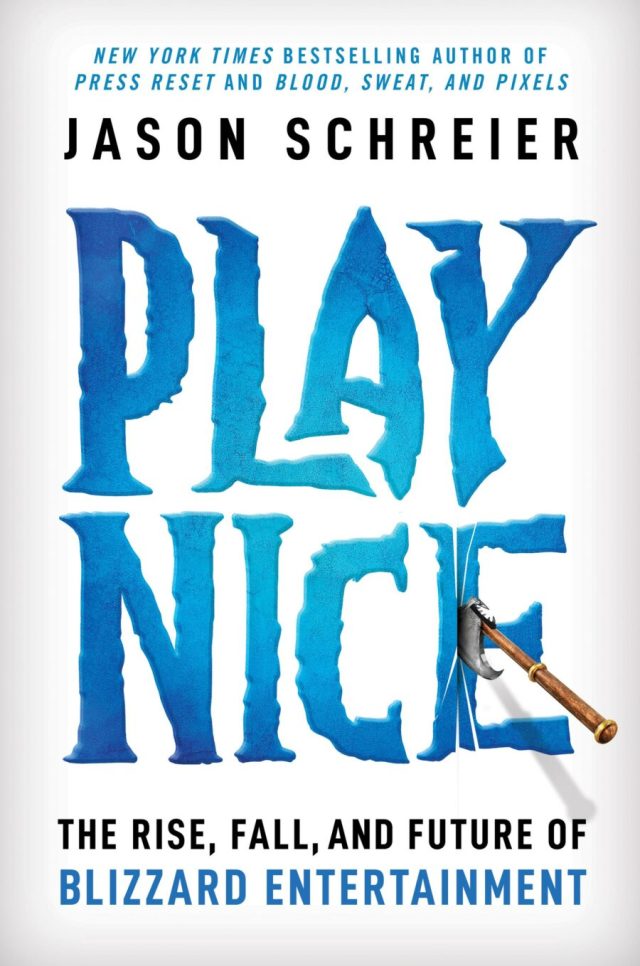
Jason Schreier is a journalist who writes about the games industry for Bloomberg, the author of three books: Blood, Sweat, and Pixels: The Triumphant, Turbulent Stories Behind How Video Games Are Made, Press Reset: Ruin and Recovery in the Video Game Industry, and his latest, Play Nice: The Rise, Fall, and Future Of Blizzard Entertainment which released on October 8th of this year. Schreier spoke with Minus World about the challenge of writing a book that spans the length of a legendary developer like Blizzard, the industry at large, and more.

Minus World: What’s the game that you’ve enjoyed the most this year?

Jason Schreier: I want to say Rebirth(Final Fantasy VII Rebirth), but there are a few contenders. Rebirth, Animal Well, Balatro, and there’s one game I’m playing right now that I’m only like 10-ish hours in, but it might wind up being my game of the year. Metaphor: ReFantazio, I’m playing that right now for review and it is awesome. I love it. It’s like fantasy Persona. It rules.

MW: What’s the origin story for you wanting to write this book?

Schreier: I started working on this a couple months before the release of my last book, Press Reset. So around the spring of 2021 is when I started formulating the idea, and I sent an email to my editor and my agent being like, “Hey, this is what I want to do next.” To which they said, “Yeah, that sounds awesome.” After Press Reset and Blood, Sweat, and Pixels, my last two books, they were both anthology stories, compilations of different kinds of stories, I wanted to do a book that was one big story, and there are a lot of ways you can go about that if you’re covering the video game industry: you could look into a specific company, you could look into a specific person, whatever it is. And what really triggered this particular book for me was thinking about looking back at what started happening in like 2017, 2018. Which is when Activision, the corporate parent of Blizzard, really started getting involved in Blizzard’s operations in a way that stood out to me, and I was reporting on it a little bit at the time. Mike Morheim, who was the co-founder of the company and CEO of Blizzard for a long time, he stepped down kind of without saying why. And I thought, “There’s a bigger story here.” It also helped that I was a big fan of Blizzard growing up. I played a ton of Warcraft II and StarCraft and Diablo II. I was very familiar with the games, but in general, just being a fan of a company or a game is not enough for me to want to spend my time writing a book about it or or really researching it extensively. There has to be an interesting story there. And the more I started looking at people and doing research, the more I realized that not only was this Activision saga fascinating, there’s also all sorts of wild details, some of which have been reported, some of which haven’t, not all of which have been gathered and compiled into one coherent narrative. That led to me being like, “Yeah, man, this is a book.” and then a few months later, the California lawsuit hit. California sued Activision Blizzard for sexual harassment and misconduct. I said, “Oh my God, talk about a twist to the saga.I can’t believe that this happened, that all these women were feeling this way.” It was wild. And then Microsoft bought them, and it was just one thing after another as I was diving into the book. It was quite a saga.

MW: Even on a surface level that’s compelling stuff, right? You have this studio who’s wildly influential and then gradually becomes integrated more and more into this stiff corporate culture. And then you find out, well, maybe things weren’t always as good there as we thought they might have been, even before Activision got their tendrils into the upper management.

Schreier: Yeah, 100%. When I’m doing nonfiction, I’m doing reporting and journalism. I don’t really believe in heroes and villains. I believe in people with different ethos and ways they look at the world and complexities, and I think that it’s a much more interesting story when it isn’t good guy Blizzard against bad guy Activision. And it’s kind of like, “Hey, even though a lot of people love Blizzard and love their philosophies in many ways. And the way that they make games and many of the hits and franchises they made, there was some rot here too”. And it’s worth talking about that. Maybe when Activision came in and they said, “Hey, we should change some things here”. Maybe they weren’t all wrong. Maybe they were wrong in some ways, but not others. So, what I tried to do with the book is explore that nuance and complexity and paint a picture that isn’t just good versus evil

MW: I think you do a good job of that, because you read about people who have no background in games that were just friends with Bobby Kotick. Or people from Honeywell or places where they have no frame of reference for the products that they’re going to be working on, but they have this particular skill that they’re looking to exploit to grow untapped revenue streams or something, that’s what seems to be a running theme.

Schreier: Yeah, but it’s interesting and I think something worth noting. There was always this tension from the very beginning way before Activision stepped in, there was this tension between Blizzard, a company run by gamers, and companies that were run by non-gamers where people didn’t care about games. I think there’s something really interesting there, and I know it’s just a little thing, but there’s a moment early on in the book when Blizzard North is negotiating a deal, –Blizzard North is another company also run by gamers and not businesspeople, not suits– And they negotiate a deal, and they wind up signing what David Brevik, the president of the company, calls like the worst contract in the history of contracts. And part of that is because they didn’t have a suit. And sometimes the suits actually know what they’re doing. Sometimes you need a suit or a suit’s ethos and their experience. Throughout the book, I try to make it clear that there isn’t one side that’s right and one side that’s wrong. There are a lot of different perspectives and ways you could go about this, but they’re also extremes. This is a story of extremes. I think that people will read Bobby Kotick’s philosophy about how to run a gaming business and what he calls “exploiting franchises”, and most people who play games are like, “Oh my God, not every franchise needs to be released every single year, this is enough already”.

MW: When the line must go up.

Schreier : Right, the predictability needs to be there. I think just looking at that kind of dichotomy, it’s really incredible that Blizzard and Activision wound up smushed together because they really couldn’t be more opposite.

MW: Do you think when Blizzard was in the process of merging with Activision that Bobby Kotick had a long-term plan that they would be able to erode enough of the culture at Blizzard to make it mesh better with Activision? Because a key point of the merger was that Blizzard would retain their autonomy even though they have this parent company. And for a long time that was true and then they fumbled. Do you feel like they were just waiting for something like that to happen because this industry is so unpredictable, and you can put out a good product and still have it fail?

Schreier: No, I don’t think Bobby Kotick thinks like that. I think he saw Blizzard as this incredible company because they had WoW which was growing, and growing more every single year. They had other franchises that seemed at the time to be ripe for what he would call exploiting in StarCraft and Diablo, they had a lot of hits. I think he would have been thrilled if they were transformed into a WoW company and released a new WoW expansion every year. He would have loved that. I don’t think it was his goal to erode Blizzard’s culture back then because things were moving pretty well.

I think Titan changed a lot of things for the company and changed a lot about the way that Bobby looked at them, and his view of whether they were actually successful. Because when you have something like Titan, and remember it was an early, early concept when the Activision Blizzard merger happened and it was promised internally to investors and shareholders, executives, and boards of directors as Blizzard’s next big thing. The spiritual successor to WoW, and the next big thing that was going to make them all tons of money. And so, for someone like Bobby Kotick to have that promise and then for it to fall apart and not be managed well I think felt like a big blow, and a big shattering of trust. It’s like, “Hey, what’s going on? We need to get some adults in the room over here.” I think part of Blizzard’s charm, the reason they were able to thrive for so long is because no matter what their corporate parent was, and they went through a lot of corporate parents, Mike Morheim and his team were able to say, “Look, if you leave us alone, and let us slip a few times we will deliver hits.”, and for a long time that was true. It was just non-stop hits, culminating in World of Warcraft, which is the biggest hit of all, possibly the most lucrative game ever. Certainly, one of them. I think that’s when that changes, when you can’t say, “Leave us alone and we’ll make you hits”. I think that’s what triggered Bobby Kotick and his crew to want to make changes. So, no, I don’t think he wanted to make changes just for the sake of making changes.

MW: Blizzard is a big company with a storied history. Did you ever suffer from your own version of scope creep with this book in terms of the things that you were trying to cover?

Schreier: Yeah, the first draft I wrote is much, much bigger than this one. There’s a lot you could get into, and you could really get bogged down in the details when talking about 33 years of company history. Countless mega franchises and games and many, many thousands of people, each with their own stories. So a book that was trying to be the definitive Blizzard book could be millions of words long, but nobody would want to read that. I definitely had to have some discipline. And I was fortunate enough to have a fantastic editor and my book publisher who helped me make cuts and kill my darlings and make sure that only the absolute essential storytelling was left in this thing. That’s kind of inevitable with a project like this. You wind up with a lot more material than you actually use.

MW: Is there any chance of putting out excerpts or anything like that, or is this all we’re going to get?
Schreier: Maybe. I don’t think that there’s some incredible story that I didn’t wind up including the book that I could put somewhere else. Because for the most part what I cut from the book is more granular stuff, development details that maybe like harcore fans might find interesting, but not everybody is going to want to read.

MW: Maybe for the director’s cut.

Schreier: Yeah, right. The paperback version.

MW: Do you think it’s possible for a company to grow as large as Blizzard and not lose some of the more positive aspects of its cultural foundation?

Schreier: What you just asked is the thesis statement of the entire book, I think. I don’t know. My gut says no.

MW: I think I agree with that. When something balloons and size and the people who were responsible for implementing the culture, they can’t have eyes everywhere, all the time, right?

Schreier: Yeah, you lose something when you get to the point, I think, as a company where not everybody can be in the same room. I think things change a little bit for you if you’re the founder of a company or the CEO of a company if you don’t know everybody’s names, that’s a different environment than it is at a company where you know every single person who works for you. I think that can be good and bad, but it certainly changes you. And there’s no way to avoid that.

MW: And all the time you’ve been writing about the games industry and for as long as I’ve followed your reporting, it seems like you’re telling different versions of the same story. What do you think it’s going to take for a radical change in the way games are made and how the people who make them are treated?
Schreier: I don’t know. If I had the answer to that I would be a consultant making millions of dollars.

MW: I was curious because you’ve made a career out of talking to developers and reporting on inside the industry and the inner machinations of these places. Do you think the AAA system is just inherently broken? Because it seems they’re only getting more expensive, they get bigger, and more of them launch and fail. Look at something like Concorde that millions of dollars went into and it wasn’t even given two weeks before it was yanked off of the storefront, and that work, it’s just gone now. Maybe forever. Do you feel like we’re getting close to a tipping point where maybe these companies try to rethink the way that they monetize these games and try to make it more predictable? Because it seems like whatever they’re trying now isn’t working for a lot of people.

Schreier: It’s interesting. I think looking at this book, it’ll be really interesting to see what people think because there are a lot of games that are documented in this book and each of them has its own unique story and its own unique challenges that it went through. Some certainly healthier and less protracted than others. But even looking back when the really beloved core Blizzard games were made like Diablo, Diablo II, WarCraft, StarCraft. Those games are the product of 90s crunch for a lot of people, and that was brutal. And I think the crunch has gotten better, but the problems have emerged in other ways. Nowadays you have other issues. While at Blizzard there were issues of sexual discrimination and misconduct as well, depending on the team you were on, depending on the department you were in. Other issues have emerged since that crazy 90s crunch era.You have bigger team sizes which create other logistical challenges. The challenges, they’ve all changed, but they’re still there.

MW: It’s still a miracle that any game exists.

Schreier: Yeah, it really is. And it’s not like I’m not trying to be elusive and be like, “Ah, I know the answer, but I’m not giving it to you.”

MW: Dammit, Schreier!

Schreier: Yeah, right. I’m hiding it from you. Hiding the big secret. My panacea for the industry’s woes. I’m keeping it away from you. No, I really don’t know. It’s not something that I am really in a position to answer. Because I tell stories and talk to people and report on things. I don’t really propose solutions that often. Occasionally, I’ll talk about unionization. Press Reset, my last book, had some proposed solutions to some of the issues that were covered in that book. But it’s not like I think unionization is suddenly going to solve everybody’s problems. So, no, I don’t really have an answer and I feel like it’s much more to shed a light on problems and tell stories and inform and hopefully entertain people as well more so than to “fix” the video game industry.

MW: Don’t you ever get tired of being such a bummer?

Schreier: You think this book is a bummer?

MW: The book is great. I’m referring more to some of your reporting at large. It seems like whenever something bad happens in the industry it’s, “Oh, Jason Screier broke this over at Bloomberg.”

Schreier: No, I mean, I think anyone who follows my weekly newsletter at Bloomberg sees a pretty healthy mix of positive and negative industry stories, I would say.

MW: I just had to razz you a little bit.

Schreier: That’s OK. I think it’s a fair question.

MW: And finally, like I said, I’ve been following you for a long time and remember when you tweeted that you were going to be teaching your daughter to play Bloodborne. So I was wondering if she’s platinumed it yet.

Schreier: She has not, but that’s because Sony won’t remaster it.

MW: I was going to ask if she was waiting for the remaster.

Schreier: The thing about my daughter, she’s about to turn five, and she’s a bit of a frame rate snob. I showed her Bloodborne at two, two and a half and she was like, “Daddy, I can’t play this unless it’s 60 frames a second. Like what is this? Why would you expect me to play this choppy game with such terrible performance?” And I was like, “Look, I get it, sweetie.”

MW: You’re raising a frame snob.

Schreier: Right. And so she started a Reddit account, and she’s been just posting constantly on every single r/games post. She’s just been posting, “Bloodborne remaster when?”, and just waiting for the day to come, and then maybe she’ll be able to platinum it.

MW: Is there anything else you’d like to plug here at the end of our chat?

Schreier: Well, people can listen to the audiobook of Play Nice as they’re playing games such as World of Warcraft. We’re releasing an audio book on the same day as the hardcover and digital. Read by Ray Chase, the voice of Noctis from Final Fantasy XV. Everyone should also go listen to Triple Click, Triple Click rules.

 

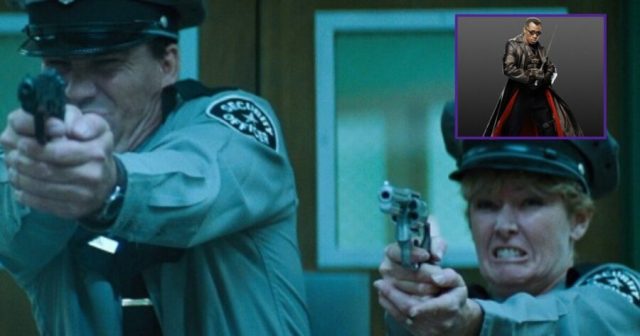
Cops Who Shot Blade Relieved To Find Out He Was Also Vampire

LOS ANGELES — Two veteran officers were incredibly relieved last night when they discovered that the unarmed black man they opened fire on was actually a vampire.

“At first, I just thought he was a black guy with bad teeth. And I got really worried after I shot him because the governor specifically told us not to shoot any more black guys.” explained Officer Randal Dennison. “I knew something was wrong when the first two shots didn’t take him down. but I’m not just going to stab some black guy with a wooden stake on the off-chance he’s a vampire.”

The officers say the individual lunged at them with the incredible speed you can only find in a black vampire. Now they just need to convince Internal Affairs that it really was a vampire.

“I’m going to need more proof, because people have used that excuse before,” Internal Affairs agent Mike Gordon declared. “It’s always ‘he was acting erratic’ or ‘I thought he had a gun’ or ‘that black guy was a werewolf’. Then we check the body cam footage, and guess what? It’s almost never a werewolf. In the last month, we had cops say they shot two Frankensteins, one Jason, and a Chupacabra. Guy’s trying to tell me the Chupacabra was going for his gun. Now why would a Chupacabra need a gun?”

County coroner Dr. Philip Shastal, confirmed that his autopsy findings also concluded that the almost victim was indeed a vampire.

“We’re conducting further tests, but at this stage I’m pretty confident he’s a vampire. For one thing, he woke up halfway through the autopsy,” Dr Shastal told reporters. “Pretty cool, if you ask me! He looked like a better version of that guy from True Detective Season 3. Plus, his body was immaculate. No stress lines on his face and he didn’t have a single wrinkle. I’d guess he hadn’t paid taxes a single day in his life.”

At press time, the department is continuing their investigation and the officers are on desk duty and strictly limited to day-shifts.